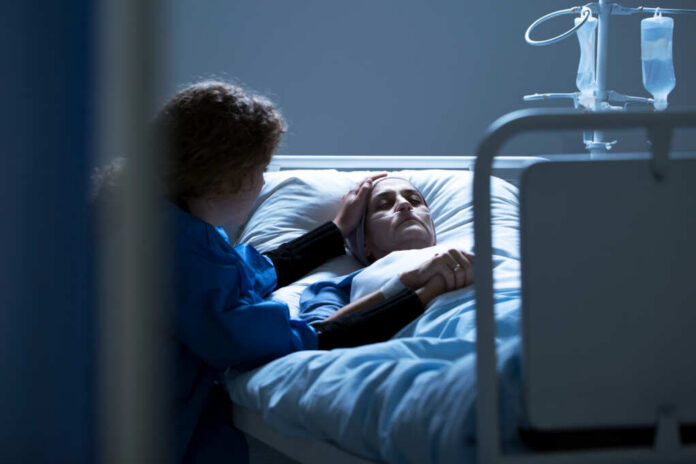
Waking up from a coma without your memories is terrifying enough; realizing someone may be rewriting your life while you are helpless is worse.
Story Snapshot
- A 20-foot fall from a redwood tree erased much of Brooke Knisley’s life overnight, leaving her dependent on others to tell her who she was.[2]
- Into that vacuum stepped a man she had broken things off with, telling doctors and family he was her devoted boyfriend.[2]
- What began as “help” morphed into control, guilt, and demands that sidelined her brain recovery.
- Her ordeal exposes how vulnerable injured people are to narrative hijacking—and how families and systems should respond.
The Fall That Erased The Script Of Her Life
One moment Brooke Knisley was climbing a redwood tree in California; the next, she was falling twenty to twenty-five feet toward the ground.[2] The impact fractured more than bone. She spent roughly ten days in a coma, and when she woke, her memory was “shattered.”[2] Names, histories, emotional context; gone or scrambled. She knew she should trust the people around her, but her internal compass spun. In that fog, whoever showed up at her bedside held enormous power over what counted as “true.”
The hospital did what hospitals do: stabilize, assess, chart. They could test whether she recognized objects, follow commands, recall three words. They could not test whether the man standing by her bed, confidently telling staff he was her boyfriend, actually belonged in that role.[2] When he said, “I’ve been telling the doctors and everyone that you’re my girlfriend. Is that okay?” she had no counter-memory to push against. She answered the only way a disoriented patient can: “I guess so.”
From Casual Fling To Claimed Caretaker
Before the fall, Brooke describes the relationship as lopsided at best: a guy she was sleeping with who “vehemently denied” they were seeing each other. She portrays him as refusing boyfriend status when she was healthy, then seizing it when she lay incapacitated. That detail matters. American common sense tends to cut both ways, yes, adults are responsible for their choices, but you do not upgrade your title the moment the other person cannot object. That is not romance; that looks like opportunism.
To be fair, the public record is almost entirely her own telling. There is no text thread, no nurse’s sworn statement, no recorded outburst from him admitting, “I lied.”[2] There was some pre-accident intimacy, so he did not appear from nowhere. That nuance keeps this from being a simple villain story. Yet the pattern Brooke describes, disinterest when she was independent, possessiveness when she was disabled, tracks with a familiar kind of character: the person who wants control, not partnership. Conservative instincts about personal responsibility land hard here; if you claim the mantle of caregiver, you owe actual care, not self-serving theater.
When “Help” Becomes A Tool Of Control
Brooke’s accounts converge on one core allegation: once she tentatively accepted his “boyfriend” label, he used it to insert himself into her rehab and daily life, often in ways that undercut her recovery. While she struggled to rebuild language and logic through puzzles and reading, he pushed grooming and appearance, suggesting she should focus on shaving rather than brain exercises. That priority list says a lot. A person who genuinely loves you after a brain injury wants neurons firing, not leg-smoothness optimized.
He allegedly criticized her efforts, pressured her into strenuous hikes, and framed his parents’ medical careers as if their expertise transferred to him. Her mother, seeing this, reportedly disliked him and described him as nagging and intrusive with staff. Those are not neutral observations. They indicate that people closest to the situation perceived discomfort and imbalance in real time, even if they did not yet have a language of “manipulation” for it. You do not need a law degree to smell something off when a self-appointed boyfriend seems more invested in control than in clinical guidance.
The Silent Danger: Narrative Hijacking After Injury
Brooke’s story fits a broader pattern: someone with a brain injury or memory deficit becomes dependent on others to supply the story of “what happened,” and a partner or ex-partner steps into that vacuum. That is not speculative; it is a known risk in disability and brain injury circles, where cognitive impairment increases vulnerability to undue influence and coercion.[1] Society spends plenty of time warning about financial scammers targeting the elderly. We talk far less about emotional or romantic scammers targeting people whose memories are scrambled.
This is where conservative values, personal accountability, family responsibility, skepticism of self-serving narratives, should sharpen our response. Families must feel not only permitted but obligated to question anyone who claims special access to a disabled relative. Hospitals should not treat the loudest person in the room as the default spokesperson. And adults who walk into a room where someone they once casually dated now lies vulnerable have a choice: step up with integrity, or step back entirely.
What We Can Learn From Brooke’s Ordeal
Brooke eventually pieced enough memories and patterns together to see the relationship for what she believes it was: months of manipulation layered onto a catastrophic injury. She left, rebuilt her life and writing career, and now speaks publicly about disability and exploitation.[2] The man, as far as the public record shows, has not offered a point-by-point rebuttal. That asymmetry does not prove every detail exactly as told, but it does mean her narrative sits largely unchallenged by hard evidence from the other side.[2]
For the rest of us, the assignment is clear. If someone you love loses memory or capacity, you cannot outsource discernment to whoever claims to be “the boyfriend” or “the partner.” Ask questions. Confirm histories. In an era obsessed with feelings, this case reminds us of an old-fashioned, deeply conservative truth: love shows up as duty, not as self-promotion at a hospital bedside. When someone’s mind is fractured, the stories we allow around them can either heal—or harm.
Sources:
[1] Web – ANXIETY & AMBITION: The Reality Of An Invisible Disability
[2] Web – L.C. Spotlight: Brooke Knisley – Emily Collins Writer