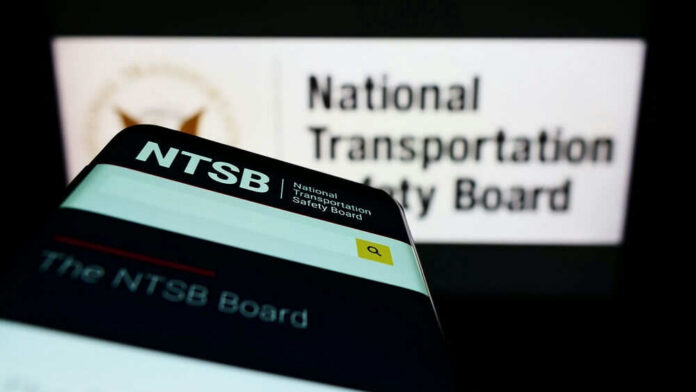
A sudden White House firing inside the nation’s top crash-investigation agency is raising fresh questions about whether transportation safety can stay insulated from Washington politics.
Quick Take
- NTSB board member Todd Inman says the White House personnel office fired him effective immediately on March 6, 2026, without providing a reason.
- Inman had been a public face of two major 2025 aviation disaster investigations, including a deadly midair collision near Washington, D.C., and a UPS cargo crash in Kentucky.
- The NTSB’s board is now listed at three members, tightening capacity at an agency handling roughly 1,250 investigations.
- The move follows other mid-term removals involving independent-agency board members, including former NTSB Vice Chair Alvin Brown.
What the firing notice said—and what it didn’t
Todd Inman said the White House personnel office notified him on Friday, March 6, 2026, that he was terminated effective immediately, and he publicly described the dismissal as coming with no explanation. Inman’s statement emphasized that the NTSB’s work should remain focused on safety, not “political or personal agendas.” As of the initial reporting, the White House did not provide an immediate public response addressing the specific reason for his removal.
Inman’s removal matters because NTSB board members are not simply administrators; they often become the public-facing leaders for major investigations and the officials who help translate technical findings into safety recommendations. Inman had served as the on-scene board member for a January 2025 collision involving a passenger jet and an Army helicopter near Washington, D.C., that killed 67 people, and he also led the investigation into a 2025 UPS cargo plane crash in Kentucky that killed 15.
Why the board size is a practical issue, not just a political one
The NTSB was established as an independent federal agency in 1967, and it is designed to investigate civil aviation accidents and significant transportation incidents across multiple modes. The board is structured as five members, nominated by the president and confirmed by the Senate, generally serving five-year terms. After Inman’s termination, the NTSB’s public board listing showed only three members, a change that can complicate internal workload and public confidence during high-profile probes.
The agency’s workload is not small. Reporting described the NTSB as handling about 1,250 investigations, a figure that underscores why staffing and continuity matter. When the board is short-handed, the day-to-day investigative staff still works cases, but fewer confirmed board members can strain leadership coverage, public briefings, and the process of shepherding final reports and recommendations. The sources available do not quantify the exact operational delay from this specific firing, so any precise timeline impact remains unclear.
The precedent: earlier mid-term removals and legal challenges
Inman’s firing did not occur in a vacuum. In 2025, former NTSB Vice Chair Alvin Brown was dismissed before his term ended, along with Robert Primus of the U.S. Surface Transportation Board. Those removals were described as unusual enough to draw legal action, including discrimination claims filed by Democracy Forward. The White House position described in reporting was that it had legal authority to remove appointees for performance, while denying bias.
Congressional criticism also entered the record around those earlier removals. A statement from the Congressional Black Caucus framed Brown’s dismissal as part of a broader pattern of ousting Democrats from independent agencies, and it connected the issue to public concern about transportation oversight. Those assertions reflect lawmakers’ views and political context, but the core verified facts in the reporting remain narrower: the removals happened mid-term, court challenges followed, and the administration asserted its removal authority.
Independence vs. accountability: the tension the public will watch
For Americans who want limited government but competent core functions, the NTSB is a classic test case: it does not regulate airlines or punish companies, yet its findings often drive changes that affect everyday life, from pilot training and aircraft design to air-traffic procedures. Inman’s warning about keeping investigations free of agendas speaks to the agency’s credibility, while the administration’s claimed right to remove personnel points to executive accountability over federal performance.
A member of the National Transportation Safety Board says he has been fired without explanation by the Trump administration. https://t.co/kVbOM7mSY3
— WTOL 11 (@WTOL11Toledo) March 9, 2026
The immediate unknown is simple and important: why was a board member tied to major aviation investigations removed without a stated public rationale? Until more details emerge—either from the White House, Congress, or ongoing litigation—Americans are left weighing two competing concerns at once: the president’s authority to manage the executive branch and the need for independent, trusted safety investigations that serve victims’ families and the traveling public. The next indicator will be whether nominees are advanced to restore a fuller board.
Sources:
NTSB member says he was fired without explanation by the Trump administration
NTSB member says he was fired without explanation by the Trump administration
Congressional Black Caucus statement on NTSB Vice Chair Alvin Brown
National Transportation Safety Board — Board Members