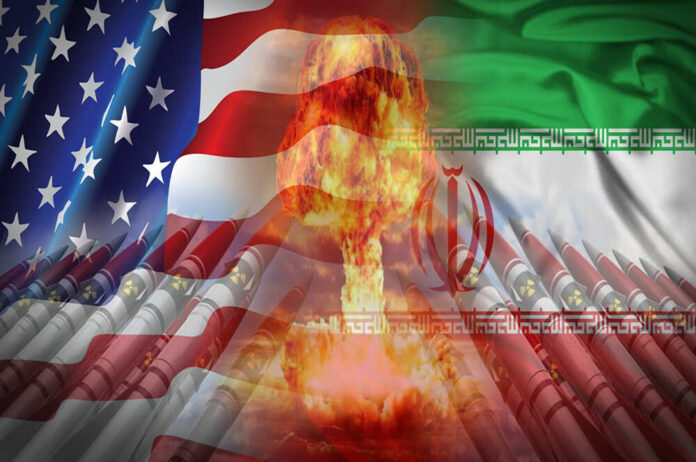
Thirty days into the Iran war, the biggest danger to American families isn’t just missiles overseas—it’s Washington sleepwalking from “air campaign” into an open-ended ground war with no clear, publicly confirmed plan.
Quick Take
- U.S.-Israel strikes that began Feb. 28 have continued into late March, but open-source reporting does not confirm an announced Pentagon decision for ground operations.
- Force posture changes—an additional carrier and bomber deployments—signal contingency planning even as public messaging remains focused on air and naval dominance.
- Iran has retaliated with missiles, drones, and proxy pressure across the region, keeping Americans on edge about escalation beyond Iran’s borders.
- Energy markets remain vulnerable to threats around the Strait of Hormuz, intensifying frustration at high costs and the feeling of “another forever war.”
Day 30 Reality: Heavy Strikes, but No Verified Ground-War Order
Late March marks roughly day 30 since Operation Epic Fury began on Feb. 28, when U.S. and Israeli forces launched a large strike campaign that reportedly killed Iran’s Supreme Leader Ali Khamenei and hit military targets. Open-source timelines describe sustained air operations and intense regional aftershocks, yet they also concede a critical gap: no mainstream, verifiable announcement that the Pentagon has formally initiated ground operations. What exists instead is mounting inference from deployments and war tempo.
The distinction matters because “preparing” can mean many things in military planning, from staging medical capacity and logistics to drawing up options that never get executed. Reporting indicates naval dominance and expanding air power posture, which can be prudent insurance in a volatile theater. But for voters who backed a promise of fewer foreign entanglements, the lack of clear, confirmed public lines around mission scope fuels suspicion that Washington is drifting toward another Iraq-style escalation.
What the Buildup Signals: Carriers, Bombers, and Contingency Planning
Military indicators cited in open-source summaries include a third U.S. carrier deployment and the movement of B-1/B-52 bombers to the United Kingdom, alongside statements about “most intense strikes.” Separately, an early March assessment described the U.S. achieving significant naval advantage, including claims that Iranian vessels were sunk during the opening phase. None of those elements proves a ground invasion is underway, but together they point to a Pentagon preparing options if air and naval pressure fails.
That ambiguity is exactly where conservative skepticism is rising. Americans can support decisive retaliation and still demand constitutional clarity about war aims, authorization, and endpoints. A war posture built on “options” without transparent objectives is how limited missions become multi-year nation-building projects. With the administration under pressure to protect shipping lanes and allies, the question becomes whether escalation remains tied to narrow security goals—or expands into regime-change commitments that outlast public consent.
Regional Spillover: Proxies, Multiple Fronts, and the Risk of Wider War
The war’s structure is not a clean, single-front conflict. Open-source accounts describe Iranian retaliation using missiles and drones and highlight proxy involvement, including Hezbollah and other aligned forces across the region. Reports also frame the conflict as multi-front—touching Iran, Israel, Lebanon, Iraq, and key waterways—where one miscalculation can ignite a broader clash. This is the strategic trap: even “limited” operations can widen when proxies attack U.S. assets or allies.
That spillover increases the odds of mission creep because protecting U.S. forces and keeping sea lanes open can require expanding target sets and commitments. Iran’s threats around the Strait of Hormuz amplify the danger. If shipping is disrupted, Americans feel it immediately in fuel, groceries, and inflation—real-life pressures that hit working families and retirees first. For a base already angry about prior fiscal mismanagement, a conflict that spikes energy costs will intensify political blowback.
Human and Political Costs: Casualties, Civilians, and a Divided Pro-Trump Coalition
War reporting cited in the research describes more than 2,000 dead across Iran, Lebanon, and Israel, alongside claims of severe civilian incidents and mass displacement. Those realities complicate public support even among voters who see Iran’s regime as a long-term adversary. Some Americans will prioritize degrading nuclear and missile threats; others will view escalating violence—especially with uncertain ground-war signals—as proof the U.S. is again being pulled into an endless conflict with unclear limits and unpredictable blowback.
Iran War Enters 30th Day: Pentagon Prepares Ground Operations https://t.co/g7NdXooZ6g
— Norman Firebaugh (@FirebaughNorman) March 29, 2026
The pro-Trump coalition is now wrestling with competing instincts: stand by an ally and punish a hostile regime, but also resist the “forever war” pattern that burns blood and treasure while Washington dodges accountability. Based on available sources, the most responsible read is this: air and naval operations are documented, preparations for worst-case scenarios are plausible, but the public evidence for a declared ground campaign remains unconfirmed. If that changes, Americans deserve straightforward answers—mission, authority, cost, and exit.
Sources:
Iran War Live Updates: Israel Vows to Seize More Territory …
Iran ‘hits’ US AWACS, air tankers: What else has it targeted …
US-Israeli strikes kill Khamenei and Iranian retaliation …