A suspected Iranian-backed drone strike igniting a fire at the Arab world’s only nuclear plant is testing Trump’s patience with Tehran’s regime like never before.
Story Snapshot
- A drone hit an external generator at the UAE’s Barakah nuclear plant, sparking a fire but no radiation leak.
- Three drones reportedly crossed the UAE’s western border; two were shot down, one reached the plant. [3]
- No government has publicly proven who launched the attack, but it fits years of Iran-linked strikes on Gulf energy sites. [2][4]
- The incident raises pressure on President Trump to decide how far the United States will go to deter future attacks near nuclear facilities.
What Actually Happened At The Barakah Nuclear Plant
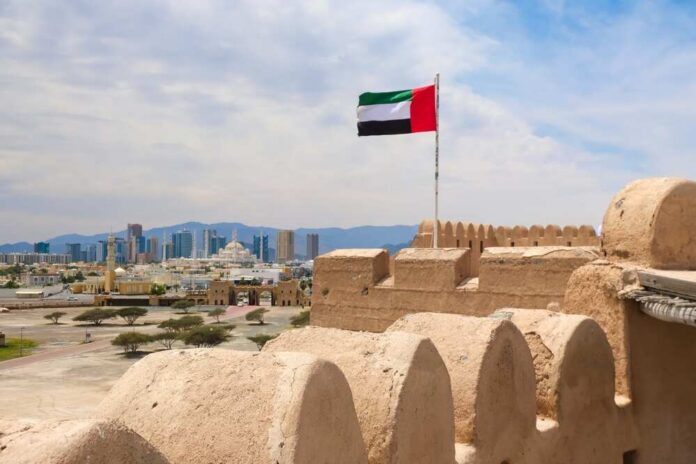
United Arab Emirates officials reported that a drone struck an electrical generator outside the inner security perimeter of the Barakah Nuclear Power Plant in the Al Dhafra region, causing a fire but no casualties or radiation leak. [3][4] The International Atomic Energy Agency (IAEA) said radiation levels remained normal and operations were not affected, confirming that nuclear safety systems held firm despite the incident. [1][3] Authorities emphasized that the blaze was confined to external infrastructure rather than the reactors themselves.
According to news reports quoting the Abu Dhabi media office, three drones entered the United Arab Emirates from its western border, where air defenses shot down two while the third reached Barakah and impacted the generator. [3] Multiple outlets, including Associated Press and regional broadcasters, independently described a drone strike that triggered a fire at or near the plant, reinforcing that this was not a false alarm or routine malfunction. [1][2][3][4] The plant supplies roughly a quarter of the country’s electricity, making it a high‑value strategic target. [3]
Why Iran Is In The Crosshairs — And What We Actually Know
Regional reporting links the attack to a broader pattern of Iran or its proxies targeting energy infrastructure across the Gulf, with prior drone and missile strikes blamed on Tehran’s network. [2][4] Commentators note that Barakah is the only operational nuclear power station in the Arab world, which makes it an especially provocative target in a climate of stalled negotiations and intermittent ceasefires with Iran. [1][3] These facts explain why many observers see the incident as part of a deliberate escalation, not a random terrorist stunt.
However, neither the United Arab Emirates nor the International Atomic Energy Agency has, in the available public record, formally named Iran as the perpetrator of the Barakah strike. [1][2][3][4] The available reporting explicitly states that no group has claimed responsibility and that Emirati officials have not issued a definitive public attribution. [2][3][4] There is no open evidence yet of recovered debris analysis, serial numbers, or flight-path forensics that would legally tie the drones to Iran, meaning public accusations still rest on circumstantial pattern and regional context rather than disclosed technical proof. [2][3][4]
Trump’s Dilemma: Deterrence, Escalation, And American Security
President Donald Trump now faces a familiar but sharper challenge: how to deter a hostile regime that uses drones and proxies to strike at allies’ critical infrastructure while staying short of open war. The Barakah incident underscores how modern conflicts can threaten nuclear facilities without breaching containment, creating massive political leverage with limited physical damage. [3][4] For a United States administration that champions peace through strength, allowing such attacks to go unanswered risks inviting even bolder tests.
At the same time, conservative principles demand decisions rooted in verifiable facts, not just media spin or emotional headlines. The rush by some commentators to declare the strike definitively “Iranian” before governments present solid evidence mirrors the same sloppy, narrative‑driven coverage that many Americans remember from past foreign policy disasters. [2][3][4] Trump supporters who lived through years of politicized intelligence and media bias will want any response calibrated to both punish aggression and insist on transparent proof, rather than handing the permanent bureaucracy another blank check for endless conflict.
What This Means For American Patriots Watching From Home
For many families in the United States, the Barakah strike feels distant, but it speaks directly to issues that conservatives care about: energy security, strong borders, and keeping radical regimes away from nuclear risks. A successful drone attack on a key power plant, even abroad, shows how vulnerable critical infrastructure can be when enemies believe the West is distracted or divided. [1][2][3][4] If hostile actors can test a nuclear site’s perimeter with little consequence, they will not hesitate to target oil fields, pipelines, or even allied bases hosting American troops.
UAE reports drone strike at nuclear power plant as Iran war deadlock persists – Reuters https://t.co/TGFYJm8Cml
Follow @NewsHubGlobe for 24/7 breaking news from around the world. pic.twitter.com/ulAOr6Rio2
— News Hub (@NewsHubGlobe) May 17, 2026
Trump’s base will expect his administration to do two things at once: stand firmly with partners like the United Arab Emirates against any regime that toys with nuclear catastrophe, and demand hard evidence before locking the United States into a new Middle East entanglement. That balance—strength without naïveté, caution without weakness—is exactly what was missing under past globalist and “woke” leadership. How the White House handles Barakah will signal whether Washington has truly learned from those failures or is about to repeat them under a new banner.
Sources:
[1] YouTube – ‘Nuclear Emergency Alert’ In Gulf After UAE Plant Turns …
[2] YouTube – UAE reports fire near Barakah nuclear facility after …
[3] YouTube – Drone strike sparks fire at UAE nuclear power plant in blow …
[4] Web – UAE reports drone strike at nuclear power plant as Iran war …