One alpine afternoon in 1988 distilled the hard truth of mountain risk and character under pressure: a royal ski party was swept by an off-piste avalanche near Klosters, Prince Charles narrowly survived, and within minutes he was helping to dig friends from the snow—an episode later probed by Swiss authorities and remembered as much for the human response as for the fatal slide itself.
At a Glance
- On March 10, 1988, an avalanche struck the then–Prince of Wales’s ski group near Klosters, Switzerland; he escaped, one companion was killed, and another was seriously injured.
- The victim was Major Hugh Lindsay, a former equerry at the palace; Patricia (Patti) Palmer-Tomkinson was rescued with severe injuries.
- Swiss investigators later closed a criminal inquiry, clearing Charles of personal fault while finding the group collectively triggered the avalanche by skiing off-piste.
- The incident became a touchstone in royal history, often retold through broader narratives about risk, responsibility, and media mythmaking.
What Happened on the Mountain
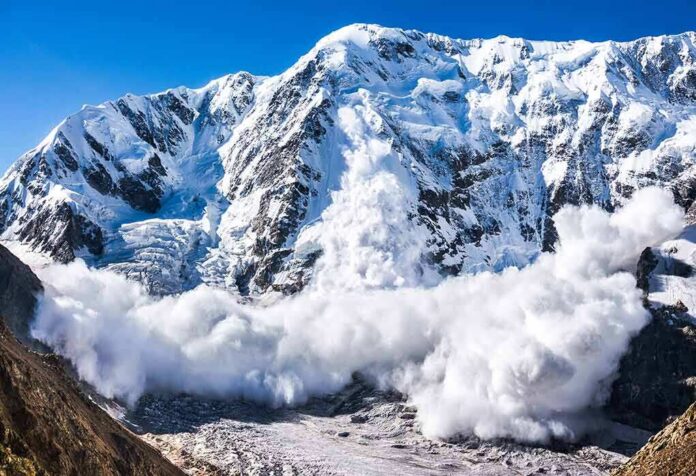
The core facts are settled and stark. In mid-afternoon on March 10, 1988, a snowslide released above a small off-piste party on Gotschnagrat, above the Swiss resort of Klosters. Prince Charles—an accomplished but not reckless skier by contemporaneous accounts—avoided burial, while two companions were carried hundreds of meters down the slope. Major Hugh Lindsay, 34, a former equerry, died in the fall; Patti Palmer-Tomkinson was recovered alive with serious leg injuries. Early reports from Switzerland were precise about the essentials: the location, the composition of the group, the fatality, and the absence of injury to the prince, who was described as distressed but mobile at the scene.
The immediate aftermath followed the grim choreography every mountain rescue veteran recognizes. Surviving members and guides began probing and digging, air support was summoned, and the injured were flown to care. Accounts from the day agree on the urgency and on the fact that Charles was part of the on-slope search and rescue effort before evacuation. In an era before universal transceivers and avalanche airbags, such rescues relied on speed, proximity, and luck; the window for survival under snow is measured in minutes, and even a rapid response can fail against trauma or asphyxiation. Here, one life was saved and one was not—an outcome consistent with the unforgiving arithmetic of avalanche burial.
Off-Piste Risk and Collective Decisions
Understanding why investigators reached their legal and technical conclusions requires a brief primer on avalanche mechanics and responsibility. Avalanches are not random; they are the predictable failure of a layered snowpack on a slope, typically when an added load—often a skier or small group—tips a marginal layer past its strength. Off-piste terrain amplifies exposure: no controlled blasting, no staffed patrollers, and no fencing to steer traffic away from suspect aspects or elevations. In that environment, risk management hinges on route choice, spacing, group communication, and heed to forecasts.
Swiss authorities closed their criminal inquiry that summer with two key findings: Charles bore no personal fault, and the group collectively caused the slide by choosing to ski outside marked runs, thereby assuming heightened risk. To mountain professionals, that logic tracks. Rarely is one skier “to blame” in isolation; rather, groups make linked decisions about where and how to travel. A tight cluster can load a slab more than a single skier; traverses beneath start zones stack exposure; and ignoring warning levels, even if widespread that day only above certain elevations, compounds hazard. The Klosters determination sits squarely within that framework of shared judgment and shared consequence.
Names, Numbers, and the Historical Record
The human particulars matter. Major Hugh Lindsay was a well-known figure in royal circles, his death immediately and publicly confirmed; Patti Palmer-Tomkinson, from a family intertwined with the Windsors, survived with serious injuries. Contemporary reporting placed the slide’s runout at several hundred meters—consistent with a soft-slab release capable of sweeping skiers off their feet and over variable terrain. These details were established quickly and have not shifted with time, which is why the episode remains one of the better-documented royal accidents of the late twentieth century.
Later retellings—whether in newspapers, museum essays, or popular dramatizations—have sometimes recruited the avalanche into larger stories: about the monarchy’s public image, about marriages under strain, or about elite risk-taking. Those frames are culturally revealing but orthogonal to the incident itself. The record that matters for the accident—a fatal slide off-piste at Klosters, one death, one serious injury, a shaken but physically unhurt prince participating in rescue, and a legal closure that emphasized group responsibility—has held steady across decades.
How Avalanche Response Works—and Why Seconds Count
Strip away the royal framing and the timeline follows the playbook of alpine rescue. In-bounds ski patrols mitigate avalanche risk through control work; outside those runs, the onus shifts to the party. When a slide releases, the survival curve drops steeply after 15 minutes due to hypoxia; after 35 minutes, most burials without an air pocket end in asphyxia, not trauma. In 1988, recreational avalanche transceivers existed but were far from universal; RECCO reflectors were nascent; shovels and probes were physical but slow tools. In Klosters that day, the group’s immediate digging and the arrival of helicopters improved odds for one victim but could not reverse severe injuries and oxygen debt for the other. That is not fate; it is the physics of snow and breath.
The Swiss inquiry’s emphasis on off-piste decision-making also underscores a legal distinction familiar to mountain jurisdictions: marked runs imply operator diligence and foreseeability, whereas backcountry or off-piste terrain places primary agency—and liability—on users. Comparative studies of avalanche prosecutions reflect that pattern; when charges are considered, they often hinge on leadership roles and group dynamics rather than on a single triggering turn.
King Charles nearly died in a 1988 avalanche that killed his close friend — and the constitutional implications would have been staggering.
The monarch recently reflected on the disaster at his favorite Swiss resort of Klosters, telling a mountain rescue team “it was a close… pic.twitter.com/VdwLrNY7dQ
— Fox News Entertainment (@FoxNewsEnt) August 22, 2026
Memory, Media, and Meaning
Why does this episode continue to resonate? Partly because it is a rare lens onto monarchy without ceremony: a high-consequence event revealing unvarnished behavior under duress. Eyewitness and press accounts from the day describe a visibly distressed prince, hands in the snow, participating rather than presiding. Partly, too, because avalanche incidents concentrate the ethics of risk in a way city life does not—choices are immediate, consequences public, and the margins unforgiving. As the story traveled from wire copy to documentaries and dramatizations, it accumulated interpretation: heroism to some, heedlessness to others. The stable core remains the accident facts and the Swiss findings, not the later narratives layered atop them.
Enduring Lessons for Anyone Who Skis Beyond the Poles
The Klosters avalanche is not only royal history; it is textbook mountain risk. The lessons are durable. Heed warnings with precision, not bravado. Treat group size and spacing as active levers of safety, not afterthoughts. Carry the tools and practice the skills you hope never to use. And understand that in the backcountry and off-piste, responsibility is nearly always shared—even when tragedy singles out one name. In March 1988, that name was Hugh Lindsay. A friend survived with grave injuries. A future king walked away alive and changed. The snow took what it always does: the margin for error.
Sources:
facebook.com, news.bbc.co.uk, latimes.com, blog.nationalmuseum.ch