Europe’s latest Ceuta crisis shows how a single, visually dramatic border breach can be rapidly transformed from a local emergency into a continental sovereignty test, with Italy’s threat to suspend Schengen travel with Spain at the center of that escalation.
Key Points
- Thousands of migrants crossing into Spain’s North African enclave of Ceuta triggered a humanitarian and security emergency and intense political reaction across Europe.
- Italian Prime Minister Giorgia Meloni responded by warning that Italy is ready to use “extraordinary measures,” including suspending Schengen free movement with Spain, to defend European borders.
- Spain reinforced Ceuta with troops and police but rejected calls for a national emergency, framing the issue as a crisis to be managed rather than grounds for Schengen sanctions.
- The confrontation exposes deeper tensions in EU migration governance: national hardline politics, legal limits on border controls inside Schengen, and the gap between dramatic imagery and documented security threats.
- Ceuta’s geography and legal status make it a recurring pressure point where migration management, humanitarian obligations, and border-security narratives collide.
From Local Border Breach to Continental Flashpoint
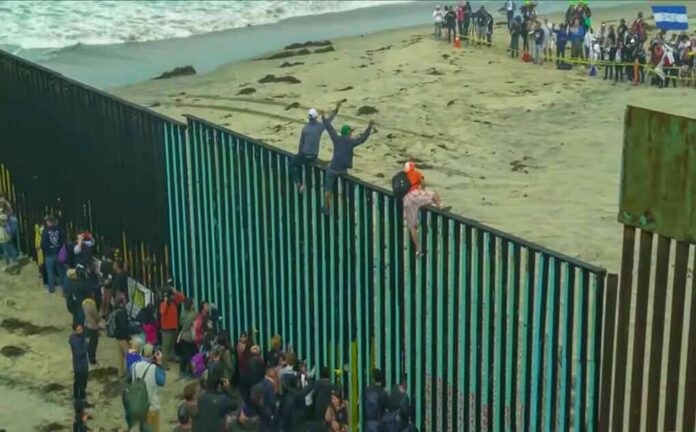
The Ceuta episode began as a concrete, localized event: thousands of migrants, largely young men from Morocco and other African countries, crossing into the tiny Spanish enclave on the North African coast by sea and through border barriers. Television footage and social media clips showed people swimming with improvised flotation devices, climbing rocky stretches of the frontier, and surging through a breached gate in the fence, quickly overwhelming local police and reception centers.
Ceuta’s regional president, Juan Jesús Vivas, described the situation as an “absolute humanitarian and social emergency,” noting that reception facilities were saturated and calling on Madrid to declare a national emergency and deploy the army. Estimates from Spanish broadcasters and regional authorities spoke of 1,500 to as many as 3,000 arrivals over a short period, with several deaths reported in the water. Regardless of the exact figure, the scale was large enough to strain a small enclave that is structurally dependent on mainland Spain for reinforcement and support.
Spain responded in classic crisis-management fashion: deploying soldiers and special forces, reinforcing police presence, and coordinating with Moroccan authorities to stabilize the situation and accelerate repatriations. Crucially, Madrid stopped short of declaring a formal national emergency, signaling that, in its own assessment, the event was severe but still within the bounds of migration and public-order management rather than a full-blown national-security breakdown.
Meloni’s “Extraordinary Measures”: Threatening Schengen Suspension
Italy’s reaction, driven personally by Prime Minister Giorgia Meloni, moved the crisis onto a different plane. In a post on X and subsequent statements amplified by media, Meloni argued that the images from Ceuta were “shocking” and that “uncontrolled illegal immigration represents a real threat to the security of Europe’s borders.” She announced that she had consulted Interior Minister Matteo Piantedosi and convened the relevant security bodies, declaring Italy “prepared to intervene with extraordinary measures to defend the borders and the safety of citizens, including the suspension of the Schengen Area with Spain.”
In the same message, Meloni encapsulated her migration doctrine in a stark phrase: “On illegal immigration, we will not retreat by a single millimeter,” positioning border defense, the fight against human traffickers, and effective repatriations as non‑negotiable priorities. This is the context for the “we will not yield an inch” rhetoric that has surfaced in broadcast commentary: it is not a random flourish, but the crystallization of a broader hardline stance woven through her government’s domestic and foreign policy.
Several outlets—ranging from Indian and European broadcasters to social accounts amplifying official lines—reported the threat in similar terms: Italy “ready to suspend Schengen free movement with Spain” over Ceuta, presented as a defensive response to a visible breach of Europe’s southern border. The Schengen angle matters because it escalates a specific crisis in an external EU border territory into a test of free movement inside the Union, directly touching the everyday travel of citizens and the legal architecture of European integration.
What Schengen Suspension Would Actually Mean
The Schengen system is built on a simple operational principle: internal borders between participating states have no routine checks, while external borders—like Ceuta’s frontier with Morocco—are heavily controlled. The treaties do allow member states to reintroduce internal border controls in exceptional circumstances, such as serious threats to public policy or internal security, but they do so under defined conditions of necessity, proportionality, and time limitation, with notification to EU institutions.
Meloni’s proposal would not expel Spain from Schengen outright, which Italy cannot do unilaterally, but rather suspend free movement between Italy and Spain by reinstating checks at their shared borders—principally airports and ferry routes for travelers moving between the two countries. In practical terms, that would mean passport controls, possible secondary inspections, and potential deterrent measures against individuals considered migration risks, even if they hold lawful Spanish or EU residence.
Analysts close to the process describe this as a “sharp sword”: legally available in theory, but politically explosive and administratively complex to wield. Ceuta’s geography complicates the picture further. Migrants who reach Ceuta are technically on EU soil but still separated from mainland Spain by the Strait of Gibraltar; reaching Italy would require additional movements, often through established Mediterranean routes that already fall under separate surveillance and asylum regimes. That structural reality undercuts any simple causal chain from Ceuta crossings to immediate Italian security harm.
Spain’s Counter-Frame: Containment, Not Schengen Punishment
Spain’s government and its officials do not contest that Ceuta faced an emergency; they deployed troops, increased police presence, and sought cooperation from Morocco to stem the flow and organize returns. Where Madrid parts ways with Rome is on the conclusion that this emergency warrants punitive internal-border measures against a Schengen partner.
Spanish officials rejected calls—both domestic and foreign—to declare a national emergency, opting instead for targeted reinforcements and diplomatic channels. At the same time, Foreign Minister José Manuel Albares summoned Italy’s ambassador after Meloni’s suspension threat, signaling that Madrid viewed the proposal as an escalatory, politically charged step rather than a shared European security assessment. That diplomatic move is revealing: the dispute is being framed by Spain as a matter for coordination, not sanction.
Crucially, the public record does not show a formal threat assessment from Italy tying the Ceuta crossings to specific Italian national-security harms—such as terrorist infiltration, organized criminal operations directed at Italy, or a documented surge of secondary movements into Italian territory. The case remains anchored in the broader argument that uncontrolled migration anywhere on Europe’s external borders constitutes a “real threat” to Europe as a whole. That is a political judgment, widely held in some quarters, but distinct from a concrete operational security finding.
Meloni’s Border Politics in a Wider European Pattern
Meloni’s response in the Ceuta case is not an isolated outburst; it fits a longer trajectory in which her government has systematically framed irregular migration as a security emergency and used muscular language—“naval blockades,” extended detention, crackdowns on NGO rescue vessels—to signal that Italy is taking a hard line. Legislative changes have lengthened the maximum time migrants can be held in repatriation centers and expanded facilities dedicated to detention and return. Her government has also pushed the idea of EU‑backed naval operations off North Africa to deter departures.
Across Europe, similar dynamics appear whenever a mass-arrival event becomes highly visible. Border incidents, especially those involving fence breaches or large groups crossing by sea, lend themselves to dramatic coverage and political exploitation. The Ceuta surge has been described in headlines as “extraordinary,” a “border collapse,” an “invasion,” or “absolute chaos,” depending on the outlet. Once that visual narrative takes hold, there is strong political incentive for national leaders to treat the event as proof that their security warnings were prescient—and to draw lines of sovereignty and resolve, even before detailed operational data are available.
This is the backdrop for Meloni’s “we will not retreat by a single millimeter” stance: it is simultaneously a domestic signal to her electorate, reaffirming the promise of tougher border control, and a message to EU partners that Italy expects migration management elsewhere—Spain in this case—to meet heightened security expectations or face consequences.
Humanitarian Emergency Versus Security Narrative
The Ceuta crisis is both humanitarian and political. On the ground, local authorities have had to cope with exhausted, often traumatized people arriving en masse, with limited shelter capacity. Accounts mention collapsed reception centers, stranded migrants sleeping outdoors, and at least nine deaths during sea crossings in a single day. Migrants interviewed on camera speak of poor living conditions in Morocco—lack of medical care, inadequate schooling, joblessness—as drivers of their attempt to reach European soil.[CHAOS transcript]
That humanitarian dimension does not negate security concerns, but it complicates them. Border forces on both sides of the frontier are tasked with simultaneously preventing unauthorized entry, avoiding deaths at sea, and respecting asylum and human-rights obligations. When thousands move at once, the system is pushed beyond its designed throughput, forcing emergency improvisation. It is from this crucible that simplified narratives emerge: “Europe’s southern border breached” or “Spain invaded by illegals.”
The evidence base supplied so far shows the numbers, the visible strain on Ceuta, and the local calls for emergency declaration. It does not, however, furnish a detailed forensic analysis of how many of those arrivals sought asylum, how many were repatriated promptly, or how many attempted secondary movements toward mainland Europe. Nor does it document direct Italian impacts beyond the general category of “threat to Europe’s borders.” That gap in data is important when assessing the proportionality of Meloni’s proposed Schengen suspension.
Where the Real Disagreement Lies
On core facts, there is broad convergence: thousands of migrants crossed into Ceuta, local systems were overwhelmed, Spain deployed its army, and Meloni threatened extraordinary measures including suspension of free movement with Spain. The disagreement lies not in whether the event happened, but in how it should be interpreted and what it justifies.
Meloni and her allies argue that such episodes reveal structural failures in Europe’s external-border regime, that they embolden traffickers, and that tolerating them undermines public trust in the Schengen system. From that vantage point, using Schengen tools—reintroducing border checks with Spain—is framed as legitimate pressure to ensure that frontline states contain crises robustly and do not export their consequences to partners.
Spain, backed by more cautious voices in the EU, responds that Ceuta is precisely such a containment effort: an external frontier being reinforced in cooperation with Morocco, under intense strain but still governed within legal and humanitarian parameters. For them, escalating to internal-border sanctions would politicize Schengen in ways that could fracture the Union’s core freedoms and set precedents for unilateral punishment whenever migration pressure flares. That concern is amplified by the fact that no EU institution has yet issued a formal legal opinion endorsing or rejecting Italy’s specific suspension threat; the debate is being driven by national rhetoric, not shared judicial or technical findings.
Implications for Europe’s Migration Future
The Ceuta–Schengen dispute reveals a deeper structural tension in European migration governance. External-border crises are inevitable in a region bordering politically volatile, economically unequal neighbors. The question is not whether there will be more Ceutas, Lampedusas, or Evros crossings—it is how Europe chooses to narrate and respond to them.
If every dramatic influx is cast as a security emergency demanding extraordinary, sovereignty‑asserting measures, the pressure will grow for more frequent use of tools like internal border controls and naval blockades. That path leads to a Schengen area that functions more as a conditional privilege than as a stable framework, with political trust eroding each time a member threatens suspension.
Alternatively, if crises like Ceuta are treated as severe but manageable tests of the system—with reinforced external borders, accelerated asylum procedures, structured returns, and investment in cooperation with transit states—then Schengen remains intact and extraordinary internal measures stay genuinely exceptional. That approach demands more patient institution‑building and less theatrical signaling, which can be a hard sell in the age of viral footage and instant outrage.
Meloni’s “we will not yield an inch” stance captures the current mood in parts of Europe: a refusal to accept persistent irregular arrivals as normal, and a willingness to push legal and diplomatic boundaries in pursuit of deterrence. Whether that posture ultimately strengthens Europe’s capacity to manage migration or destabilizes the very freedoms Schengen was designed to protect is the long‑term question the Ceuta crisis puts on the table.
Italian Prime Minister Giorgia Meloni has warned her country could suspend the Schengen Agreement with Spain after hundreds of migrants stormed the Spanish enclave of Ceuta from Morocco in chaotic scenes on Thursday. pic.twitter.com/NxLSK0UvBv
— US Viral Faces (@USViralFaces) July 31, 2026
The Strategic Role of Ceuta Going Forward
Ceuta will remain a focal point in this debate. Its unique status—a fragment of Spain on African soil, walled off yet porous, symbolic of Europe’s reach and vulnerability—gives it outsized resonance. For migrants facing bleak prospects in Morocco and further south, Ceuta represents a narrow, dangerous door to a different life. For European politicians, it is a visible gauge of whether border policies are “working.”
Future surges will likely provoke similar cycles: local emergency, national reinforcement, continental commentary, and pressure on Schengen. What will determine the trajectory is whether EU members can develop shared criteria for when a border incident crosses from migration management into genuine internal security threat—and whether those criteria are applied consistently, regardless of domestic political winds.
For now, the evidence supports a sober judgment. Ceuta’s crisis is serious and demands robust, humane management. Meloni’s threat to suspend Schengen is politically powerful and legally possible in some form, but the case that this particular event necessitates such extraordinary internal-border measures has not yet been documented with the kind of granular security and legal analysis an expert reader would expect. The gap between imagery and evidence remains the space where Europe’s migration politics will be fought.
Sources:
facebook.com, politico.eu, timesnownews.com, 20min.ch, instagram.com, dw.com, lafm.com.co, youtube.com, alloranews.com, news.sky.com, theguardian.com, france24.com, dailysabah.com, fr.de, tandfonline.com