

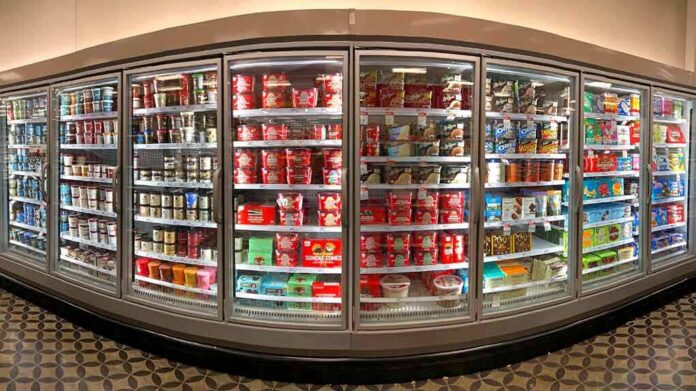
The cold chain—the refrigeration systems that keep blood viable, vaccines stable, chemicals safe, and food unspoiled—has become a live cyber-physical target; the risk is not theoretical configuration drift in an IT network but adversaries changing temperatures in the real world.
At a Glance
- Five U.S. agencies jointly warned of ongoing malicious activity against industrial refrigeration and cold-chain monitoring systems.
- Exposed, unpatched, or default‑password controllers are the primary ingress points attackers are exploiting.
- Successful compromise can drive temperatures out of safe ranges, with consequences from inventory loss to fire hazards.
- The threat spans healthcare, food and agriculture, chemicals, and transportation, where cold-chain integrity is mission-critical.
What the government actually warned, and why it matters
On November 5, 2026, the Cybersecurity and Infrastructure Security Agency (CISA), the FBI, the Departments of Health and Human Services (HHS), Agriculture (USDA), and Transportation (DOT) issued a joint advisory stating they are aware of malicious cyber activity targeting industrial refrigeration and cold-chain monitoring systems globally. Rather than a generic alert, the notice called out specific exposure conditions—unpatched or internet-accessible electronic temperature controllers and commercial refrigeration controllers—and prescribed concrete mitigations: remove unnecessary internet exposure, change default credentials, apply updates, and segment operational technology from business IT networks. The point is direct: in systems built to keep things cold, adversaries are manipulating the very parameters that make them safe.
Impacts are physical and immediate. The advisory explains that if exploited, actors could raise or lower temperatures and create fire hazards, accelerate equipment wear, or destroy inventory—effects that are costly in grocery logistics and existential in blood storage or vaccine distribution. The FBI amplified the message with a companion video advisory describing an attempted disruption at three French national blood-service facilities, where attackers reportedly reached refrigeration through internet-exposed or default-password controllers; French authorities said safeguards prevented loss of blood products. This is industrial control system security, not as an abstraction, but as the difference between viable plasma and medical waste.
Mechanism: how attackers get from the internet to the compressor
The attack surface here is narrow but unforgiving. Many commercial and industrial refrigeration installations rely on distributed controllers—small-purpose computers that manage compressors, evaporator fans, and defrost cycles—over field buses or IP networks. For vendor support or remote oversight, those controllers are sometimes placed on routable networks or exposed to the public internet, with web or telnet services protected only by factory-default credentials published in manuals. The joint advisory singles out exactly those conditions: reachable management interfaces, unsupported firmware, default passwords, and poor network isolation. With basic internet scanning and vendor fingerprints, an intruder can enumerate accessible units and attempt default logins; once authenticated, they can toggle defrost cycles, disable alarms, or reset setpoints beyond safe ranges—no exploit kit required, just effective configuration abuse.
When that happens, the physics take over. A freezer that should hold −18°C is instructed to defrost continuously, product temperatures rise, condensation forms, and microbial growth accelerates. If compressors short cycle under abnormal loads, electrical and thermal stress can shorten service life or cause failure. CISA’s language about “fire hazards” is not hyperbole—overheated compressors and wiring in confined mechanical rooms create real ignition risks. None of this relies on sophisticated malware. It relies on the uncomfortable fact that too many controllers are still treated like appliances rather than networked computers attached to perishable goods and expensive machinery.
Context: rare direct manipulation, common industrial targeting
Industrial organizations are under heavy, growing cyber pressure; ransomware and data theft dominate the case counts. Yet direct, deliberate manipulation of industrial control setpoints—the move from IT disruption to OT parameter change—remains a smaller subset of observed activity. Industry reporting in 2026 tallied more than a thousand ransomware incidents per quarter affecting industrial firms, with operators often shutting plants as a precaution after IT encryption events; few of those reports involved adversaries taking the next step into control loops or safety limits. That pattern explains the urgency of the federal refrigeration alert: it spotlights one of the clearest, simplest paths for attackers to move from network presence to physical effect.
The advisory’s sector list is a map of where that effect matters most. Healthcare and public health depend on cold rooms and cryogenic storage for blood components and temperature-sensitive medicines; food and agriculture rely on continuous refrigeration across distribution centers and retail; the chemical sector stores reagents whose stability is temperature-bound; transportation systems carry all of the above in reefers and airport cold rooms. A single setpoint change can translate to multimillion-dollar spoilage, cancelled procedures, or logistics cascades when loads are rejected.
What we know from recent incidents
The joint warning did not attribute the activity to a specific actor; it describes a global pattern of targeting and recommends mitigations. Still, it followed and referenced real-world cases. The FBI’s public account cited unauthorized access attempts at French national blood-service facilities through exposed or default-credentialed controllers. Independent reporting documented European supermarket intrusions where attackers remotely raised freezer and refrigerator temperatures, forcing product disposal; journalists relayed statements from French officials that blood-product losses were averted by backups and alarms. Major outlets also summarized the federal risk language—physical impacts from temperature manipulation and equipment damage—linking it to the agencies’ call for hardened configurations.
In the United States, federal materials emphasized potential consequences and active targeting over a tally of confirmed domestic harm; the advisory does not publish forensic logs or victim counts. That restraint is unsurprising for ongoing investigations and sensitive infrastructure. The operational takeaway does not depend on attribution or case totals; the weaknesses are concrete, testable, and remediable, and they are present today in many facilities.
🚨 U.S. Agencies Warn of Cyberattacks Targeting Industrial Refrigeration Systems
CISA, FBI, HHS, USDA, and DOT have issued a joint warning about threat actors targeting industrial refrigeration and cold-chain monitoring systems globally, potentially causing fires, equipment… pic.twitter.com/PEjpA6SRcn
— ByteCheck (@ByteCheck101) November 9, 2026
Mitigation that works in the field
Effective defense starts with removing the low-cost wins attackers rely on. First, eliminate unnecessary public internet exposure: if a controller’s interface is visible on the open internet, treat that as a defect to be fixed with network architecture, not a convenience to be justified. Second, change default and vendor-listed credentials across every device and service, and enable multi-factor authentication where supported. Third, bring firmware and software to supported versions; where vendors have ceased support, plan replacements—legacy controllers that cannot be patched are liabilities in perpetuity. Fourth, segment OT networks from enterprise IT and from vendor access using firewalls and dedicated remote access paths (VPNs with MFA), and restrict protocols and ports to those required for operations. Finally, test alarms and safe limits: verify that high-temperature thresholds, defrost timers, and emergency notifications behave as expected if setpoints are altered, and ensure escalation paths are practiced, not theoretical.
Governance and ownership: why fixes stall—and how to move them
Cold-chain systems sit at the intersection of facilities, operations, IT, and vendor maintenance contracts. That fragmentation dilutes accountability. A retailer or hospital may lease space and outsource facilities; a logistics provider may depend on contractor-maintained reefers; a blood center may run legacy controllers because replacement means downtime and revalidation. The federal advisory carries no mandate, only guidance; moving from advice to action requires executive ownership of OT risk, budget for replacements, and procurement language that demands supported firmware, secure-by-default configurations, and auditable remote access. Given the stakes—public health, food integrity, chemical safety—boards and agency heads should treat cold-chain cyber posture as a reportable operational risk, not a line item left to vendor discretion.
The bottom line
The federal message is clear: adversaries are actively probing and, in some cases, manipulating refrigeration controls, and the easiest doors in are ones operators have left ajar—public interfaces, old firmware, default passwords. This is not a speculative “cyber-geddon” scenario. It is a practical security debt being called due on systems that were connected for convenience and maintained as if they were still isolated. Close the exposures, test the safeguards, and treat cold-chain controls like the safety-critical systems they are. The physics will do the rest—on your terms, not an intruder’s.
Sources:
thehill.com, cisa.gov, nextgov.com, bleepingcomputer.com, cbsnews.com, scworld.com, dragos.com