America can level Iranian targets from the sky, but Tehran’s missile arsenal is the stubborn threat that won’t die—and that reality shapes what “victory” can realistically mean.
Quick Take
- U.S.-Israeli strikes that escalated in late February 2026 highlight a hard truth: airpower can devastate infrastructure but cannot reliably erase dispersed missile forces.
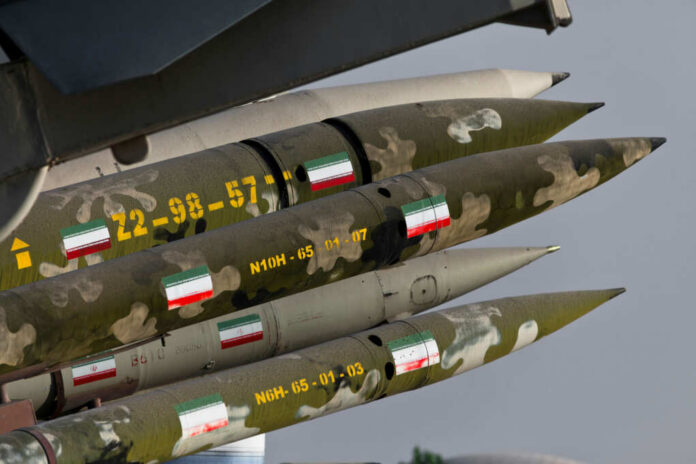
- Iran’s ballistic missile force is described as the largest in the Middle East, creating an enduring danger to U.S. forces, allies, and regional shipping lanes.
- Operational plans described in available reporting rely on weeks of layered strikes—cruise missiles, electronic warfare, stealth bombers, and fighter sweeps—rather than a single knockout blow.
- Regional basing and airspace politics constrained U.S. options, pushing heavier reliance on Israel and complex aerial refueling.
The Strategic Paradox: Air Supremacy Doesn’t Equal Missile Elimination
U.S. airpower can inflict massive damage on fixed infrastructure—air defenses, nuclear-related sites, and command nodes—but ballistic missiles are built to survive that kind of punishment. Mobile launchers, underground storage, decoys, and rapid repair pathways make a clean “erase button” unrealistic. That gap between tactical destruction and lasting security is the story’s core: even a successful strike package can leave behind enough missiles to threaten U.S. bases, partners, and sea routes.
That reality matters for Americans who want clear objectives and a defined end state instead of another open-ended commitment. The research available emphasizes that episodic bombing can look decisive on the nightly news but still fail to prevent reconstitution. The historical comparison raised is the 1990s Iraq no-fly-zone era—years of enforcement and periodic strikes that did not resolve the underlying strategic problem. The caution is not about capability; it’s about what air campaigns can and cannot permanently settle.
What Changed in 2026: Buildup, Constraints, and a Reliance on Israel
The timeline described in the research places a major U.S. buildup beginning in late January 2026 and joint U.S.-Israeli strikes commencing February 28. It also describes political and logistical friction: Gulf states initially restricted base access and airspace use out of fear of Iranian retaliation. Those constraints reportedly forced heavier reliance on Israeli basing and extended aerial refueling, including tanker support positioned to stretch the range of carrier aviation and land-based fighters operating at distance.
How the Campaign Is Being Described: “Precision Pressure” Over Weeks
Reporting summarized in the research describes a phased, multi-week model rather than a one-night “shock and awe” event. The sequence includes Tomahawk strikes intended to suppress air defenses, maritime operations aimed at degrading Iranian naval capabilities, B-2 strikes against hardened underground targets, and then fighter sweeps by advanced aircraft to hunt remaining ballistic missile assets. Electronic warfare also features prominently, with jamming designed to reduce the effectiveness of systems like the S-300 and Iranian equivalents.
This layered approach underscores a point often lost in political talking points: destroying missiles is harder than destroying buildings. Even if U.S. planners find and strike key launch infrastructure, the ability to hide launchers, move stockpiles, and repair sites can stretch operations into a long-duration pressure campaign. For a U.S. public still wary of global commitments that never end, the resource intensity described—carrier groups, strategic bombers, and large numbers of strike aircraft—signals why clarity of mission and limits matter.
Deterrence, Retaliation Risk, and Why Missiles Drive the Diplomacy
The research cites concerns that Iran’s missile arsenal exceeds 3,000 missiles with reach out to roughly 2,000 kilometers, creating a persistent retaliatory capability even amid heavy bombardment. It also describes Iranian defensive measures and signaling: deployment of anti-stealth radar, accelerated repair work at missile sites, and drills simulating attacks on a major regional base. A separate naval incident described involves a U.S. fighter shooting down an Iranian drone approaching a carrier, with competing narratives over intent.
Secretary of State Marco Rubio’s publicly described position frames the political dilemma: Washington may be prepared to talk, but any serious negotiation would need to address ballistic missiles and proxy support—precisely the areas Iran has resisted discussing. From a constitutional, limited-government perspective at home, the stakes are practical: if missiles remain, Americans must weigh ongoing deployments, base defense requirements, and the possibility of prolonged operations. The available sourcing does not establish a clear diplomatic off-ramp yet.
The U.S. Air Force Can Bomb Iran Into Rubble but the Missile Threat Won’t Disappear Easilyhttps://t.co/gOsFhS4ity
— 19FortyFive (@19_forty_five) March 5, 2026
Limited public data in the provided research also leaves real uncertainties. Independent battle-damage assessments, casualty figures, and a definitive timeline for achieving stated objectives are not established here. What is clear is the strategic tension: airpower can punish, disrupt, and delay, but a durable reduction of missile threat appears to demand sustained pressure, better regional cooperation, and measurable end-state conditions that prevent the cycle of rebuild-and-rearm.
Sources:
MIDDLE EAST LIVE: Strikes continue from US, Israel and …
US-Israel strikes on Iran trigger fears of wider Middle East …
Strikes resume on Iran, U.S. military says Tehran’s defenses …