President Trump’s massive immigration enforcement operation in Minnesota came to an abrupt end after sustained resistance from Democratic state officials and catastrophic tactical errors exposed the limits of federal overreach—even under a Republican administration committed to border security.
Story Highlights
- Operation Metro Surge, the largest immigration enforcement operation in U.S. history, concluded February 12, 2026, after deploying 2,000 agents and making over 4,000 arrests
- Two U.S. citizens were killed by federal agents during the operation, sparking massive protests including 50,000 demonstrators and the first general strike since 1947
- Democratic Minnesota Governor Tim Walz and Minneapolis Mayor Jacob Frey successfully resisted federal authority, forcing the Trump administration to withdraw agents
- The operation’s conclusion demonstrates critical lessons about execution, state resistance, and the political costs of poorly managed enforcement operations
Operation’s Scale and Swift Conclusion
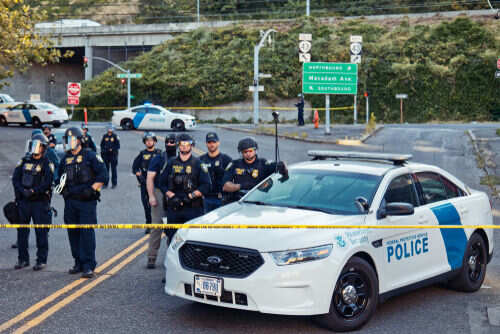
Operation Metro Surge launched December 1, 2025, targeting Minneapolis-St. Paul’s substantial Somali community. The Trump administration deployed 2,000 ICE and Border Patrol agents in what DHS Secretary Kristi Noem called “the largest immigration enforcement operation ever.” The operation resulted in over 4,000 arrests between December and February. White House border czar Tom Homan announced the operation’s end on February 12, 2026, with federal agents withdrawing over the following week. The administration had doubled ICE agents nationwide and increased the DHS budget by $170 billion over four years to fulfill Trump’s campaign promise of unprecedented immigration enforcement.
Fatal Shootings Catalyze Political Crisis
Federal agents shot and killed two U.S. citizens during the operation: Renee Good and Alex Pretti. Use-of-force experts examining bystander video evidence undermined federal authorities’ claims that Border Patrol officers fired defensively in the Pretti shooting. Governor Walz and Mayor Frey accused federal agents of being poorly trained and dangerous, while the federal government blocked state investigations into the killings. On January 18, federal agents detained another U.S. citizen without a warrant, forcing him outside in subfreezing temperatures wearing only underwear. These incidents transformed public perception and provided ammunition to Democratic officials demanding federal withdrawal.
Massive Resistance Forces Federal Retreat
Approximately 50,000 protesters flooded downtown Minneapolis on January 23, 2026, in the “ICE Out of Minnesota: Day of Truth & Freedom” demonstration. Minnesota labor unions endorsed what became the first general strike in America since 1947. Minneapolis Mayor Jacob Frey issued executive orders restricting ICE use of city facilities. The Trump administration threatened to invoke the Insurrection Act and placed 1,500 active-duty troops on standby to control protests. Despite this escalatory rhetoric, sustained state and local resistance ultimately forced the administration to announce withdrawal. Tom Homan began pulling 700 officers on February 4, with Governor Walz confirming February 10 that complete withdrawal was imminent.
Legitimate Fraud Concerns Versus Broad Enforcement
The administration justified the operation by citing significant fraud cases involving Minnesota’s Somali community. According to the U.S. Attorney’s Office for Minnesota, 82 of 92 defendants in child nutrition, housing services, and autism program fraud schemes were Somali Americans. President Trump referenced these cases when linking the crackdown to the Somali community, though he also used inflammatory rhetoric, calling Somali residents “garbage” during a Cabinet meeting and claiming they were “completely taking over” Minnesota. The administration capitalized on legitimate fraud prosecutions to justify broader immigration enforcement targeting the nation’s largest Somali diaspora community, creating tension between addressing criminal activity and concerns about ethnic profiling.
Critical Lessons for Immigration Enforcement
Operation Metro Surge’s conclusion offers important insights for conservatives who support strong border security but recognize execution matters. First, large-scale enforcement operations require meticulous planning and agent discipline—fatal shootings of U.S. citizens are unacceptable and politically catastrophic. Second, Democratic state officials will actively resist federal immigration enforcement, exploiting operational mistakes to mobilize opposition. Third, concentrated operations targeting specific ethnic communities generate intense backlash that undermines public support. Fourth, even Republican administrations must weigh political and reputational costs against enforcement benefits. The operation successfully removed over 4,000 illegal aliens, but the deaths of two citizens, massive protests, and federal-state conflict forced premature termination. Effective immigration enforcement requires careful execution that maintains public trust while achieving security objectives.
Sources:
2025–26 Minnesota ICE Deployment – Britannica
A timeline of the Trump administration’s immigration crackdown in Minnesota – WTOP
Operation Metro Surge – Wikipedia
New Milestone in Operation Metro Surge – White House