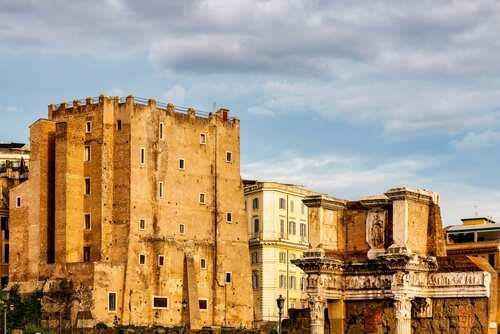
A medieval tower’s collapse raises alarm over safety protocols amid heritage restoration efforts.
Story Snapshot
- A construction worker died after being trapped for 11 hours under a collapsed medieval tower in Rome.
- The incident highlights challenges in the restoration of historical structures.
- Safety protocols and regulatory oversight in Italy are under scrutiny.
- Calls for reforms in heritage conservation projects are intensifying.
Tragic Incident at Torre dei Conti
On November 4, 2025, a partial collapse of the Torre dei Conti, a medieval tower in Rome, resulted in a construction worker being trapped under debris. The worker remained trapped for approximately 11 hours despite the efforts of emergency services. Tragically, the worker succumbed to injuries shortly after being rescued. This incident has drawn attention to the intersection of heritage preservation and worker safety, especially in ancient urban environments.
Emergency services, including firefighters and paramedics, responded swiftly to the site. However, the rescue operation was complicated by the tower’s unstable structure and the densely populated area surrounding the Roman Forum. The prolonged rescue effort underscores the complexities involved in operating in historic urban settings. Authorities have since cordoned off the site and launched an investigation into the cause of the collapse.
A worker who had been trapped for 11 hours in the partial collapse of a medieval tower in the heart of Rome has died after being rescued late Monday, officials said.
Read more: https://t.co/p95GiY6zSz pic.twitter.com/fktlcRuc1R
— ABC News (@ABC) November 4, 2025
Historical Significance and Restoration Efforts
The Torre dei Conti, constructed in 1238, is a prominent medieval structure that historically served defensive and symbolic purposes. Restoration efforts in Rome aim to preserve such historical landmarks due to their age and vulnerability to environmental damage. The Italian government and Rome’s municipal authorities have prioritized these efforts, often funded by public-private partnerships. However, concerns about safety protocols have been raised, particularly following past incidents like the Ponte Morandi collapse in 2018.
Restoration projects in Rome are subject to strict regulations. Yet, enforcement and oversight have faced criticism for inconsistencies. Previous incidents involving workers at heritage sites have highlighted structural instability and insufficient safety measures. The current tragedy at the Torre dei Conti has intensified scrutiny of restoration practices and regulatory oversight, prompting calls for comprehensive reforms to ensure worker safety and project integrity.
Implications and Calls for Reform
The immediate aftermath of the incident includes the suspension of restoration work and increased scrutiny of safety practices. This tragedy may lead to a possible overhaul of safety regulations within heritage restoration projects, potentially increasing insurance and compliance costs while damaging the reputation of involved companies. The worker’s family faces immediate loss, with potential legal claims on the horizon.
The broader implications extend to the local community and tourism sector, with concerns over heritage preservation and visitor confidence. Economically, delays in restoration projects and potential fines loom. Socially, public debate over worker safety and heritage management is likely to surge. Politically, pressure mounts on municipal and national authorities to reform oversight practices. Experts in heritage conservation and construction safety advocate for specialized safety protocols and real-time monitoring to prevent such tragedies in the future.