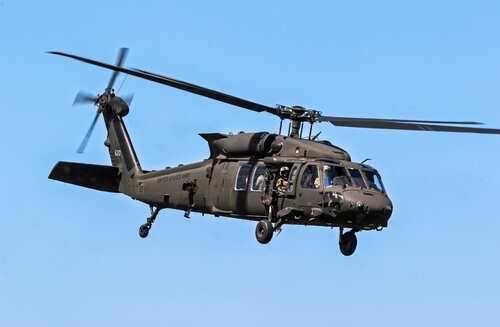
Congress is quietly freezing a 26‑year Army helicopter training deal that could reshape who controls America’s military flight schools for a generation.
Story Snapshot
- The Army wants to outsource basic helicopter training at Fort Rucker to private contractors under a 26‑year, commercial “own and operate” deal.
- Congress inserted a funding block in the latest defense bill, forcing a one‑year pilot program and a detailed cost‑effectiveness report first.
- Defense giants Bell, Lockheed Martin, and M1 Support Services are the finalists, pushing single‑engine civilian helicopters.
- The fight centers on cost savings versus long‑term control, safety, and accountability for training America’s military pilots.
Army’s Outsourcing Plan Puts Flight Training on the Auction Block
The U.S. Army is moving ahead with its Flight School Next program, a 26‑year contractor‑owned, contractor‑operated agreement to hand over initial entry rotary‑wing pilot training at Fort Rucker, Alabama, to a single commercial team. The plan would replace the Army’s long‑standing use of the twin‑engine UH‑72 Lakota fleet with cheaper single‑engine civilian helicopters, consolidating multiple contracts into one large outsourcing package that could shape 800 to 1,500 new pilots every year.
Under the proposal, private companies would provide the aircraft, maintenance, simulators, and many of the instructors, effectively turning a core military training mission into a long‑term service contract. Supporters inside the Army say this commercial model will cut costs, improve basic flying skills, and align training more closely with civilian aviation standards. For taxpayers, the headline promise is efficiency; for conservatives, the underlying question is whether crucial military functions should depend on corporate performance.
Congress Slams the Brakes with NDAA Funding Restrictions
Members of Congress, wary of locking the Army into a 26‑year commitment without proof it works, added a provision to the latest National Defense Authorization Act that blocks funding for solicitations or awards on the Flight School Next contract. Lawmakers are requiring a one‑year pilot effort first, followed by a formal briefing from Army Secretary Dan Driscoll on whether the new approach truly saves money and protects training quality before any full‑scale outsourcing goes forward.
This funding restriction means the Army can continue evaluating proposals but cannot obligate dollars for the main contract until the pilot is complete and Congress is satisfied with the results. For a conservative audience focused on accountability, this is a classic example of the legislative branch using the power of the purse to slow down bureaucratic ambitions. It also reflects concern about long‑term entanglements with large defense contractors who can become “too big to fail” once embedded in critical missions.
Big Defense Contractors Compete to Control the Training Pipeline
Despite the congressional speed bump, the Army has already narrowed the competition to three industry heavyweights: Bell, Lockheed Martin, and M1 Support Services. Each team is promoting a single‑engine helicopter solution, such as the Bell 505 or Robinson R66, backed by promises of safer fundamentals, modern simulators, and turnkey logistics support. Other bidders, including a Boeing‑Leonardo team offering the AW119 and incumbents tied to the Lakota, are now fighting from the outside to protect their share of the training enterprise.
These companies emphasize their track records running training programs for U.S. allies and their ability to transition Fort Rucker without disrupting pilot production. Corporate statements stress “low‑risk” change, “measurable value,” and “seamless” operations. For families with loved ones in uniform, those assurances sound encouraging. Yet the scale of this contract, its 26‑year length, and its role in training every new Army helicopter pilot raise serious questions about whether competition will really keep pressure on performance once a single winner is locked in.
Cost Savings, Control, and Safety: What Conservatives Should Watch
Short term, the NDAA provision will likely delay the Army’s planned award date, pushing decisions beyond the original fiscal‑year 2026 target. Army planners will have to run the smaller pilot effort first and prove that commercial single‑engine training beats the current model on cost and outcomes. Long term, if the program goes forward as envisioned, a single contractor will effectively control the backbone of Army rotary‑wing training, with ripple effects for jobs, local economies in Alabama, and competing manufacturers.
For conservatives who value a strong national defense, limited government, and responsible spending, this fight is not simply about helicopters. It is about whether the Pentagon can offload critical missions to corporations without sacrificing control, transparency, or safety. Congress’s pause creates an opportunity to demand clear metrics, hard cost comparisons, and firm safeguards before billions of dollars and decades of training are tied to one commercial deal that future administrations and commanders will inherit.
Sources:
Army Releases Final Solicitation Notice for Flight School Next, Plans 26-Year Contract
As Army Narrows Field for Its Flight-School Outsourcing Contract, Congress Says: Not So Fast
Call for Solutions – Flight School Next (FSN)
M1 to Prime Army Flight School Next
Flight School Next – Contract Opportunity Listing
Boeing, Leonardo Partner for US Army Flight School Next Contract
Boeing and Leonardo Partner for US Army Flight School Next Contract
Flight School Next – SAM.gov Contract Workspace
ACC-RSA’s Flight School Next Team Provides Update on Aviation Training Efforts