
The law that governs voting from overseas is blunt on purpose: it keys on citizenship and voting residence, not on a person’s job title. That is why a U.S. citizen who happens to be the pope could legally cast an absentee ballot—and did.
At a Glance
- Pope Leo XIV, a U.S. citizen, submitted an absentee ballot in Illinois; the Holy See confirmed he voted as an exercise of his existing right.
- U.S. federal law provides a well-worn path for citizens living abroad—including those employed by foreign governments—to vote by mail.
- The decisive eligibility hinges on citizenship, age, and voting residence, not the voter’s office or occupation.
- The episode spotlights a symbolic tension: personal civic participation by a foreign head of state versus perceptions of institutional neutrality.
What Happened: A U.S. Citizen Who Is Also the Pope Voted Absentee
Pope Leo XIV cast a mail-in ballot as an Illinois voter. The Holy See stated plainly that he “has exercised his right to vote as a United States citizen, whenever he was eligible to do so,” and specified that he submitted a mail ballot in Chicago. That account aligns with contemporaneous reporting that identified his registration at a New Lenox address and a request for an absentee ballot through the Will County clerk earlier in the month. The factual predicate is straightforward: a U.S. citizen living abroad followed the absentee voting process and returned a ballot for counting in his home jurisdiction.
Major outlets summarized the same core details. Vatican News reproduced the press office statement emphasizing both his citizenship and the act of ballot submission, while U.S. coverage relayed the registration and mail-ballot timeline reported out of greater Chicago. None of this turns on novel machinery or bespoke permission; it is the ordinary overseas absentee channel used every cycle by Americans who live or work outside the United States.
The Legal Frame: UOCAVA and the Design of Overseas Voting
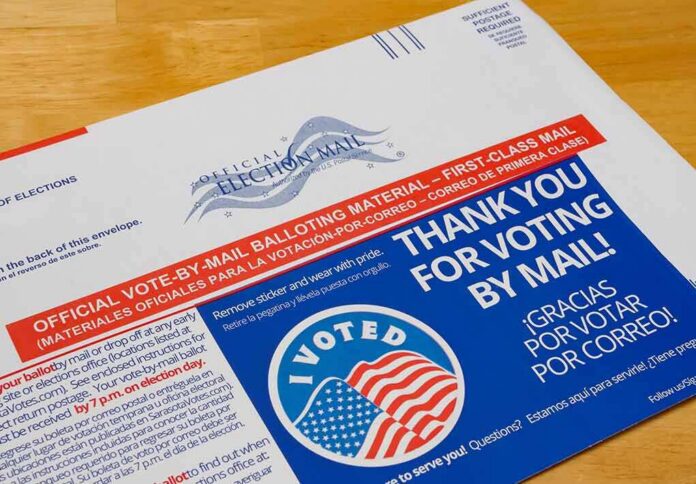
The Uniformed and Overseas Citizens Absentee Voting Act (UOCAVA) is the backbone of federal absentee voting from abroad. Enacted to ensure federal ballot access for service members and citizens overseas, UOCAVA and its implementing guidance focus on a few gatekeeping questions: Are you a U.S. citizen 18 or older? What is your voting residence (the address used to determine your ballot style)? Did you timely request a ballot and return it in accordance with state rules? The regime is intentionally status-neutral with respect to occupation; it does not carve out exceptions for Americans employed by foreign governments or even serving as foreign officials. Federal guidance explicitly states that citizens living abroad, including those working for foreign governments, remain eligible to vote by absentee ballot in federal elections.
Mechanically, the process is standardized. Eligible citizens register and request a ballot—often using the Federal Post Card Application (FPCA)—and the local election office issues the appropriate ballot style tied to the voter’s last established U.S. residence. The Federal Voting Assistance Program (FVAP), administered by the Department of Defense in cooperation with the State Department, provides the tools and timelines that make it routine for millions of overseas voters. States then apply their own deadlines and acceptance rules to receive, verify, and count returned ballots. Nothing in this architecture turns on the voter’s prominence or public role; the law asks about status as a citizen and compliance with procedure.
How We Got Here: Citizenship, Residence, and a Long-Standing Practice
According to the Holy See, Leo has voted “whenever he was eligible,” including while living in Peru before his election as pope; that history matters because it underscores continuity. Americans abroad often maintain a voting residence in their last U.S. domicile and vote absentee from there for federal offices. Illinois, like other states, relies on that residence concept to determine which federal and down-ballot contests are on a given voter’s ballot. Once registered, the voter requests a ballot each election year and returns it by the prescribed methods and deadlines. The procedural steps are well-trodden, and the fact that this voter later became a foreign head of state does not, on its face, dislodge the federal eligibility baseline.
Media reports have also noted that Leo holds U.S. and Peruvian citizenship and that U.S. authorities may review citizenship retention if an American serves as a foreign head of state, head of government, or foreign minister. That review is a nationality-law question distinct from election administration. UOCAVA and the state’s election office look for current citizenship status and procedural compliance at the time of balloting; any later adjudication of nationality would be handled by the State Department under separate statutes and standards. For the election office, the question is binary: is this person on the voter rolls as a qualified U.S. citizen with a valid absentee request?
Where the Real Debate Lives: Symbolism, Not Statute
If the legal channel is clear, the optics are anything but ordinary. The pope is both a spiritual leader and the sovereign of the Holy See; voting in a U.S. election invites speculation about neutrality. Some commentary argued that a papal vote risks “nationalizing” the Holy See or blurring institutional impartiality in secular politics. Others countered that civic participation by a private citizen—however prominent—remains personal, not papal, especially when the ballot is cast discreetly and without endorsements. These are debates about perception and pastoral posture, not about the legal entitlement of a citizen to vote.
It is also worth being precise about what absentee voting by an overseas citizen does and does not signal. A returned ballot says nothing publicly about candidate preference, and it creates no formal agency statement. The act is private; the process is standardized. The controversy is almost entirely symbolic because it involves the pope, not because the election apparatus made an exception for him—it did not.
Implications: A Narrow Case That Clarifies a Broad Rule
This episode clarifies, rather than complicates, the governing rule: U.S. elections are territorial and citizen-centric, and absentee voting from abroad is a routine accommodation of that structure. The test is administrable because it is formalistic—citizenship, residence, registration, request, return—not an open-ended inquiry into conflicts of interest or the dignities of foreign office. That design is a feature, not a bug; it prevents election officials from making ad hoc eligibility judgments based on who a voter is or what role they hold.
For institutions that value symbolic neutrality, the lesson is not about revising election law but about managing communications. The Holy See framed the ballot as an exercise of personal civic duty by an American abroad and confirmed the act without fanfare. That approach fits the legal reality and keeps the focus where the statute keeps it: on the voter’s status as a citizen following standard absentee procedures.
That fact is that the @FBI should be examining this move because Illinois election officials certainly won’t.
Robert Prevost is not eligible to vote in the United States.
Why? Because a pope ordinarily holds office for life. Leo XIV is not a missionary temporarily assigned to…
— Mia Sardinella (@MiaSardinella) November 1, 2026
Bottom Line
The most unusual thing about this vote is who cast it, not how it was cast. Under UOCAVA and state procedures, Americans abroad—whether aid workers, academics, executives, soldiers, or even foreign officials—can vote absentee. In this case, the citizen happened to be the pope, and he used the same channel available to every other eligible American living overseas. The symbolism will be debated. The law is settled.
Sources:
zerohedge.com, sun-sentinel.com, pbs.org, vaticannews.va, thehill.com, jonathanturley.org, phuulishfellow.wordpress.com, todayville.com, apnews.com, firstpost.com, dw.com, aol.co.uk, inquirer.com