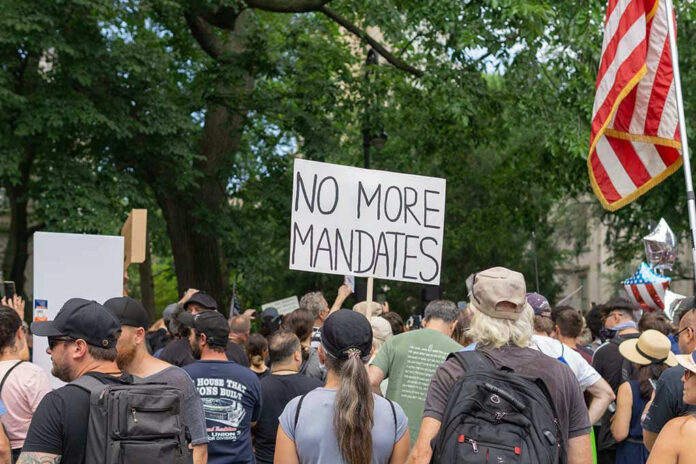
The fight over America’s latest protest wave is not only about what people believe, but about who built the megaphones and who pays the sound crew; once you map the money, media, and training infrastructure, “spontaneous” starts to look like choreography.
At a Glance
- Investigations and congressional materials describe a U.S.-based, ideologically aligned network linked to Neville Roy Singham that funds nonprofits, media, and training hubs active around anti-U.S. protest themes.
- Reported flows are large and sustained; summaries cite hundreds of millions of dollars coursing through a small core of nonprofits and allied outlets.
- Named groups recurringly appear across protest mobilizations and amplification, suggesting operational continuity rather than isolated actions.
- Direct orders to time specific street actions are not in public view; the strongest evidence shows funding, messaging alignment, and rapid-response activation—not a paper trail of commands.
The infrastructure thesis: why organization, not virality, explains repeat protest waves
Street demonstrations that register nationally almost always ride on infrastructure: fiscal sponsors that move money, media properties that narrate events, and training spaces that equip local organizers. The core claim in recent reporting is that a pro-PRC–sympathetic funding and media ecosystem around Neville Roy Singham supplies those ingredients—money, message, and muscle memory—to U.S. protests with anti-U.S. framing. Congressional materials state that Singham spent on the order of nine figures building a multi-pronged nonprofit network, with testimony describing aims to “cause chaos” and naming The People’s Forum as a training and coordination venue. That is not a casual allegation from the commentariat; it is the thesis Congress chose to examine formally.
Parallel journalistic summaries point to a concentrated set of eleven nonprofits at the network’s core, with roughly $401 million attributed to Singham-linked sources flowing into them over time. Even if one discounts editorial tone, the structural picture is consistent: a small hub-and-spoke of nonprofits, media, and allied groups translates resources into recurring mobilization capacity, and those spokes show up again and again when anti-U.S. or anti-enforcement protests surface.
Mechanism: how funding, media, and training convert ideology into turnout
Mechanically, three levers matter. First, funding scale and routing: donor-advised funds, fiscal sponsors, and mission-aligned charities can move money quickly without public, line-item disclosure of which campaign was bankrolled, which contractor printed pallets of signs, or which travel stipends underwrote cross-city speakers. That opacity does not prove wrongdoing; it does enable speed and persistence. Congressional testimony and allied analysis flag this exact loophole geometry as the vulnerability foreign-aligned funders can exploit.
Second, message discipline via owned media. Outlets like BreakThrough News and research shops such as Tricontinental—both repeatedly named in network reporting—can prepackage narratives and art, seed hashtags, and lift local events into national feeds within minutes. That function is critical during “rapid response” windows; it creates the appearance of simultaneity and scale even when on-the-ground numbers are modest or geographically thin. News coverage summarizing the investigations emphasizes that social posts tied to the same network helped spark and amplify U.S. protests—again, amplification as the observable mechanism.
Third, movement literacy: training spaces and coalition brokers. Organizations identified in the reporting—CodePink, ANSWER Coalition, Party for Socialism and Liberation, and The People’s Forum—serve as conveners and skills pipelines. When an external trigger hits, these groups do not need a central commander; they run a playbook. Congressional materials explicitly cite The People’s Forum’s training role, which fits the pattern: teach cadres once, deploy many times.
What the record shows clearly—and what it does not
Across the sources in hand, several points are well supported. The same relatively small set of groups appears across protest contexts, from anti-war to anti-ICE to “No Kings” actions. They share staff, stage space, symbols, and media channels; they also share, at least in part, the funding provenance described in the investigations and in Newsweek’s synthesis of those findings. That recurrence is the signature of standing infrastructure, not ad hoc flash mobs.
However, the available public record does not produce the kind of operational artifact—an internal memo ordering a Tuesday march at 5 p.m.—that would settle the question of direct tasking for a specific week of protests as Xi met President Trump. Fact-checkers scrutinizing narrower rumors around named investors have likewise cautioned that, absent primary financial records or organizer admissions, you should not ascribe tight event-level control to donors based only on ideological proximity. That is a valuable boundary line for honest analysis.
Competing narratives: grassroots identity versus coordinated capability
Groups like CodePink emphasize a women-led, nonviolent, grassroots identity, and nothing in the present record disproves their stated commitments to nonviolence or their self-conception as bottom-up actors. Grassroots, however, is a description of recruitment and values, not an audit finding about funding sources or the presence of formalized training and media scaffolding. Both can be true: a base of sincere volunteers animated by anti-war beliefs and a superstructure that materializes stages, buses, and messaging kits with professional speed. The former speaks to motive; the latter to capability.
This distinction matters because public debate often collapses motive and mechanism. To insist that a protest felt authentic to participants tells us little about who paid the print shop or which editorial calendar timed the “go-live” videos. Conversely, to demonstrate that a network exists and is well-funded does not inherently criminalize speech or assembly. The policy question is narrower: where foreign-aligned money or messaging systems materially shape U.S. political mobilization, what transparency and guardrails are warranted without chilling lawful dissent? Congressional attention to foreign influence in nonprofits indicates that question is now squarely on the table.
Rapid-response episodes: what “activation” actually looks like
When reporters describe network-linked groups “swinging into action,” they are capturing a familiar operational cadence. Within minutes of a triggering announcement, graphics appear carrying common slogans and color palettes; event listings populate across allied pages; a handful of video channels push synchronized clips with identical chyrons; and media spokespeople land in friendly studios to offer the same framing. That choreography can make a disparate set of local actions function like a national campaign. News coverage underscoring the role of centrally aligned social distribution in catalyzing anti-U.S. protests reflects precisely that pattern—activation through shared assets, not command chains.
For analysts, the evidentiary fulcrum is repeatability. Do the same financial conduits, editorial shops, and training venues recur across issues and cities? The published investigations and congressional record say yes, repeatedly naming the same institutions and describing similar flows and functions. While critics may bristle at the source mix, the overlap between journalistic mapping and formal hearings strengthens the signal.
Where serious scrutiny should go next
Three avenues would convert inference into adjudicable fact. First, primary records: grant agreements, bank transfers proximate to major protest dates, and internal budget justifications that tie dollars to mobilization line-items. Second, communications provenance: planning chats, content calendars, and cross-posting logs that show whether a central team queued the messaging cascade. Third, sworn testimony from organizers and nonprofit officers about training directives and resource deployment during rapid-response windows. Congressional committees have already framed the nonprofit-transparency deficit; answering it will require subpoenas and, ideally, voluntary disclosure that distinguishes protected advocacy from influence operations.
Bottom line
The strongest reading of the present evidence is not that a single benefactor micromanaged a week of protests around the Xi–Trump meetings, but that a stable, well-financed, ideologically coherent infrastructure exists—and that it reliably turns geopolitical headlines into on-the-ground theater with remarkable speed. In modern politics, that capacity is the power to define perception in the first 24 hours. When foreign-aligned capital and content engines help power it, transparency stops being a talking point and becomes table stakes for democratic trust.
Sources:
shomrim.news, dallasexpress.com, foxnews.com, snopes.com, allsides.com