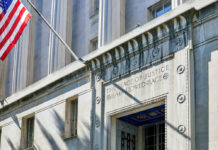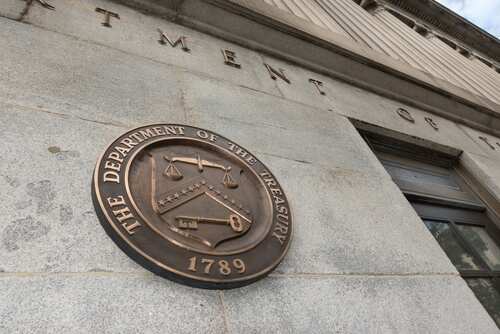
When a man scales the gate in the U.S. Treasury building in broad daylight and triggers a full-scale bomb squad response, you have to ask: what on earth is happening to security at the heart of our nation’s capital?
At a Glance
- Man arrested after climbing the gate at the U.S. Treasury building in Washington, D.C.
- The Secret Service and police bomb squad responded, clearing a suspicious bag that proved non-threatening.
- The incident caused major traffic disruptions and public concern in an area already under heightened security.
- The event highlights ongoing vulnerabilities and raises questions about security protocols at top federal facilities.
Security Breach at the Treasury: A Symptom of Deeper Failures
Sunday afternoon, the country watched as a man brazenly scaled the front gate of the U.S. Treasury building—just steps from the White House. The Secret Service arrested him almost immediately, but not before he left a bag outside the fence, prompting the Metropolitan Police Department’s bomb squad to swoop in. This was not some movie set; this was the supposed fortress of American finance, and yet one man’s antics brought the whole area to a standstill. The bomb squad eventually cleared the bag as harmless, but the episode caused major traffic chaos and a spike in public anxiety. No one was hurt, and no one from the White House was present, but the message was clear: the federal government’s security posture, even after all the talk and billions spent since 9/11, remains riddled with holes.
Man arrested at US Treasury building after climbing gate, agency says https://t.co/6DSXjOPMMl https://t.co/6DSXjOPMMl
— Reuters (@Reuters) July 28, 2025
Washingtonians and tourists alike were left gawking at the cordoned-off streets and flashing police lights. This is not the first time the Treasury or other federal buildings have faced embarrassing security lapses. Just last month, anti-scale barricades went up around the White House and Treasury, sparking rumors and speculation. The official line was “evolving threats.” But for everyday Americans, these visible “upgrades” have become a symbol of how reactive—and not proactive—our security strategy has become. Where’s the accountability for these repeated failures? Why does it always take a crisis or a near-miss for the system to show any backbone?
History of Lax Security and the Cost to Americans
The U.S. Treasury building is supposed to represent strength and stability, yet its security record is checkered at best. Reports from watchdog groups and federal employee unions have highlighted inconsistent measures, patchy risk assessments, and a lack of follow-through on recommendations for years. The National Treasury Employees Union and the Treasury Inspector General have both cited glaring vulnerabilities, but their warnings fell on deaf ears while politicians played hot potato with budgets and priorities. Meanwhile, each new scare triggers a fresh round of barricades and lockdowns, inconveniencing law-abiding citizens and workers while doing little to address the root of the problem.
This latest incident forced street closures and delays, disrupting business and daily life. It’s not just an inconvenience—it’s an embarrassment. Americans are paying for these failures with their tax dollars and their patience. Instead of real solutions, we get more visible “security theater” and less actual safety. The cycle continues: another breach, more finger-pointing, and another round of “urgent reviews” that rarely change anything substantial.
Moving Forward: Real Solutions or More Smoke and Mirrors?
After the Treasury incident, officials were quick to reassure the public. The Secret Service confirmed there was no actual bomb and no threat to people or property. Yet they offered no details about the suspect’s motive, and there has been no talk of real accountability or reform. Instead, the public gets the same tired promises of “heightened vigilance,” as if that should be enough. The Treasury area has reopened, but the barricades remain, standing as silent proof of a government stuck in reactive mode.
What will it take for those in charge to get serious about security? For years, experts have called for consistent standards and meaningful upgrades for federal buildings. Instead, we get piecemeal responses and endless studies. It’s time for leaders to stop hiding behind red tape and start making the hard choices that prioritize American safety and common sense. Until then, taxpayers will keep footing the bill for a system that’s all show and precious little substance. The American people deserve better than this endless cycle of blunders and bravado.