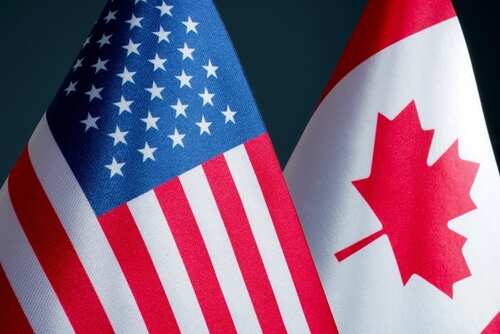
A newly appointed U.S. ambassador is urging Canada to join America in a united front against China, signaling a pivotal shift in North American security and trade priorities—and raising questions about sovereignty and national interest.
Story Snapshot
- Ambassador Pete Hoekstra calls for stronger U.S.-Canada cooperation to counter China’s growing influence.
- Diplomatic and trade negotiations now directly link economic, security, and intelligence efforts against Chinese threats.
- Both countries face tough choices between national security and economic interests, with sovereignty and autonomy under scrutiny.
- Ongoing talks may reshape defense, technology, and supply chain policies across North America.
Strategic Realignment: U.S.-Canada Relations Under Trump
On August 12, 2025, U.S. Ambassador to Canada Pete Hoekstra underscored the Trump administration’s call for deeper U.S.-Canada cooperation in an interview with podcaster Jasmin Laine. Hoekstra, drawing on his intelligence background, emphasized that countering China’s strategic threat is now a top priority for both nations. His remarks reflect a dramatic pivot, linking trade negotiations, security cooperation, and defense interoperability directly to the challenge posed by China, and aiming to fortify North American resilience against foreign interference.
Canada, under newly elected Prime Minister Mark Carney, is recalibrating its foreign policy to respond to evolving U.S. demands. The Trump administration’s “America First” approach intensifies pressure on Canada to align economically and militarily. Recent tensions—such as disputes over tariffs, intelligence sharing, and technology—underscore the complexity of this partnership. Both governments have a shared interest in confronting Beijing, but differences remain over methods and the balance between cooperation and sovereignty.
US Ready to Partner With Canada to Counter China: Ambassador Hoekstra https://t.co/3OMlosVgqg
— The Epoch Times Canada (@EpochTimesCan) August 14, 2025
Key Stakeholders and Power Dynamics
Ambassador Hoekstra, previously a congressional intelligence leader, now serves as the face of U.S. policy in Ottawa. His appointment signals Washington’s resolve to prioritize security and counterintelligence, particularly regarding Chinese influence in technology, infrastructure, and trade. Prime Minister Carney’s government, meanwhile, must balance closer ties with the U.S. against domestic concerns over autonomy and economic diversification. Business chambers in both countries advocate for stable investment climates, yet they also warn against overreach that could disrupt trade or harm industries reliant on China.
Decision-making power remains concentrated at the executive and cabinet level in both Washington and Ottawa. U.S. economic and military leverage gives it significant influence, but Canadian resistance to subordination persists. Ambassadors play a crucial intermediary role, shaping the bilateral agenda and communicating evolving priorities. Parliamentary and congressional committees, as well as business and security stakeholders, round out the network of influencers shaping outcomes on both sides of the border.
Current Policy Actions and Bilateral Negotiations
Recent months have seen steady progress but few breakthroughs. Hoekstra’s public statements, including at the B7 Summit and the Empire Club event in Toronto, reinforce the Trump administration’s expectation of Canadian cooperation on China. Ongoing trade talks now encompass technology, energy, and critical supply chain security. Canada is reviewing its participation in the Five Eyes intelligence alliance, weighing the benefits of deeper integration against the risks of compromising sovereignty or straining relations with other partners. Joint initiatives are under discussion, particularly to counter Chinese influence in telecom and research sectors.
While the U.S. pushes for alignment, Canadian leaders face internal debate and external pressure over the extent of cooperation. The outcome will depend on the ability to reconcile national security imperatives with economic realities and public sentiment. Both sides recognize the stakes: a failure to present a united front could expose North America to greater foreign interference, while excessive U.S. demands risk fueling Canadian resentment and calls for greater independence.
Long-Term Implications and Industry Impact
The shift toward a more hawkish, security-focused alliance with Canada has immediate and long-term consequences. Heightened scrutiny of Chinese investments, new regulations for technology and infrastructure, and the potential curtailment of academic and research ties with China will reshape critical industries. Businesses face uncertainty as trade and investment patterns adjust to new geopolitical realities. Security measures, while intended to protect critical assets, may also impact civil liberties and privacy, sparking debate on both sides of the border.
US Ready to Partner With Canada to Counter China: Ambassador Hoekstra https://t.co/3OMlosVgqg
— The Epoch Times Canada (@EpochTimesCan) August 14, 2025
Experts caution that while tighter defense and intelligence integration can bolster collective security, it must not undermine Canada’s autonomy or disrupt economic stability. Business leaders urge a balanced approach, warning that overreach could backfire by damaging vital trade relationships. As the Trump administration advances its priorities, the U.S.-Canada relationship faces a critical test: can both countries forge a new era of cooperation that protects their interests without eroding the values of sovereignty, liberty, and mutual respect?
Sources:
A New Era for the Canada-U.S. Relationship (Empire Club of Canada)
Pete Hoekstra Bio (Detroit Regional Chamber)
Ambassador Pete Hoekstra (U.S. Embassy & Consulates in Canada)