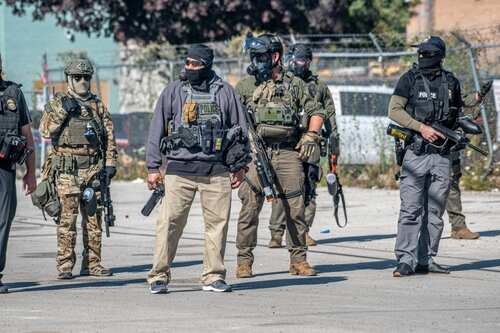
Shots fired at federal agents during an immigration raid expose the dangerous consequences of sanctuary city policies and the escalating threat to law enforcement and public safety.
Story Snapshot
- Federal agents targeted by gunfire amid a major immigration operation in Chicago’s Little Village; suspect at large, no injuries reported.
- Incident highlights growing hostility and violence surrounding federal enforcement in sanctuary cities.
- Judicial restrictions limit agents’ ability to respond, raising constitutional and safety concerns.
- Trump administration intensifies immigration enforcement, sparking fierce protests and legal battles over local cooperation and federal authority.
Federal Agents Face Gunfire Amid Chicago Immigration Enforcement Surge
Chicago police units responded to reports of shots fired at federal Department of Homeland Security and Customs and Border Protection agents during a pre-planned immigration enforcement action in Little Village. Little Village is a neighborhood known for its large immigrant population and is located within the jurisdiction of a city that limits cooperation with federal immigration efforts. The incident took place as part of a sustained period of focused enforcement activity. The individual who allegedly discharged the weapon, described as a male in a black Jeep, has not been apprehended. No agents or bystanders were injured in the event, but the shooting underscores the potential for violence when agents carry out their duties under current enforcement directives. This confrontation occurred amidst heightened tension in the area, which included instances of protesters confronting agents and police, prompting the deployment of chemical agents to disperse crowds.
Federal officials are conducting ongoing operations as part of a stated goal to increase removals annually. This goal involves utilizing established expedited removal procedures, which grant Immigration and Customs Enforcement (ICE) the authority to execute apprehensions in various locations, including sensitive zones. These tactics have elicited large-scale protests in immigrant communities, particularly in Chicago, where local policies limit the scope of federal action despite potential federal penalties for non-compliance. The reliance on cooperative agreements between the federal government and local police for enforcement duties has been noted by critics as blurring jurisdictional lines, which may contribute to strained relationships between law enforcement and the community.
Judicial Injunctions and Community Backlash Limit Federal Enforcement
Just prior to the reported shooting, a federal judge issued a temporary injunction that placed limitations on agents’ use of force, following formal allegations of misconduct involving a Border Patrol official. This level of judicial oversight is indicative of broader concerns regarding the balance between government enforcement power, constitutional rights, and due process protections. Elected Republican officials argue that such judicial restrictions compromise the ability of law enforcement to safely conduct operations and uphold federal statutes. Concurrently, community organizers and activists have criticized the visible increase in armed federal presence and the practice of mass detentions. These actions have preceded a rise in public demonstrations. Furthermore, the persistent legal disagreements between municipal authorities and federal agencies highlight deep ideological divisions concerning immigration enforcement under local sanctuary laws.
Little Village, a densely populated neighborhood with a majority Mexican population, has become a focal point for both immigration enforcement and community resistance. Protest crowds routinely assemble during enforcement actions, demanding protection for undocumented residents and questioning the necessity of certain enforcement tactics. These confrontations contribute to the operational risks faced by federal agents and local police. Security analysts from the Fraternal Order of Police have previously issued warnings regarding rising risks and the potential for further violent incidents in such high-tension areas. The federal administration maintains that comprehensive local cooperation is a necessity for national security objectives, a stance that remains in opposition to city leaders who prioritize maintaining community trust and safeguarding civil liberties.
Expanded Detention, New Laws, and National Ramifications
The federal government has recently enacted legislation that allocates significant new funding toward immigration enforcement, including budgets for increasing the number of detention facilities. Legal advocacy groups have argued that the subsequent expansion of detention capabilities challenges the core principles of the Flores Settlement Agreement, which governs the detention of minors, thereby raising concerns over humanitarian and due process standards. Additionally, the legislation introduced provisions that affect the eligibility of some lawfully present immigrants for federal health and nutrition benefits, creating increased financial and social strain for families in immigrant communities. Supporters of the federal policies assert that these measures are essential steps toward securing the nation’s borders and enforcing federal law against illegal immigration. However, the resulting disruptions to local commerce, increased fear among residents, and political opposition continue to represent key variables in the ongoing national immigration debate.
As federal immigration operations proceed under increased security mandates, the Little Village shooting incident reinforces the ongoing discussion regarding policy effectiveness and the need to balance enforcement objectives with constitutional protections. The event has led to specific public appeals by law enforcement union leaders for heightened officer protection and reinforced federal commitment to immigration law. Leaders within the Department of Homeland Security argue that local sanctuary policies and federal judicial restrictions collectively impede their ability to secure the border and uphold public safety statutes. While the investigation to locate the alleged shooter is active, the foundational policy tensions between federal and local governance are positioned to significantly influence national immigration policy and political discourse in the coming months.
Chicago police respond to report of shots fired at federal agents amid immigration operations https://t.co/BuRjN2DmdL
— Matthew Ross (@TrumpSumpPump1) November 9, 2025
Sources:
Chicago police respond to report of shots fired at federal agents amid immigration operations
Federal Agents Say They Were Shot at in Little Village; Chemical Agents Used to Disperse Crowd
Little Village immigration arrest
Chicago immigration shots fired