A McDonald’s worker’s viral TikTok exposes the industrial reality behind the beloved McRib, leaving fans torn between nostalgia and revulsion over its frozen, molded pork patty.
Story Highlights
- McDonald’s employee films frozen, pale pork patties molded into rib shapes, grilled and sauced for the final sandwich, sparking “McHell naw” reactions.
- Viewers express cognitive dissonance: grossed out yet craving the nostalgic treat during its limited-time return.
- McRib, launched in 1981, thrives on scarcity marketing despite long-standing debates over its processed ingredients from ground pork shoulder.
- Corporate strategy uses “farewell tours” that recur, driving sales while employee videos reveal behind-the-scenes truths.
Viral TikTok Ignites McRib Debate
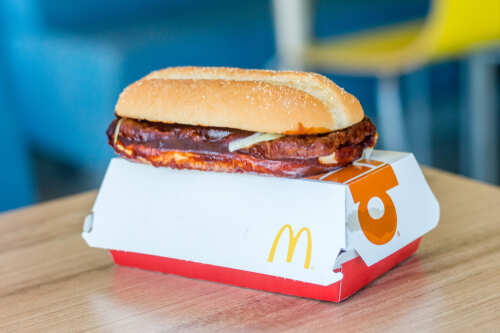
A McDonald’s worker posted TikTok footage during the sandwich’s seasonal return, capturing frozen, pale, molded pork patties placed on the grill. The video shows the patties transforming under heat, then topped with barbecue sauce, onions, and pickles on a hoagie bun. Viewers flooded comments with horror like “McHell naw” alongside admissions of hunger, highlighting a split between disgust and desire. This reveal amplifies ongoing scrutiny of fast-food processing in an era of social media transparency.
Conservative families, weary of government overreach into daily choices, see this as a reminder of free-market realities. Americans value straightforward business over regulatory meddling that drives up costs. McDonald’s limited releases keep prices competitive without taxpayer subsidies, aligning with principles of limited government and personal responsibility in dietary decisions.
McDonald’s fans both hungry and horrified after worker exposes how the McRib sandwich is made: ‘McHell naw’ https://t.co/aiLHbSYqWn pic.twitter.com/6rOQjonf6b
— New York Post (@nypost) December 11, 2025
McRib’s History and Marketing Mastery
McDonald’s introduced the McRib in 1981 as a limited-time item after initial poor permanent-menu sales. The sandwich uses ground boneless pork shoulder mixed with water, salt, dextrose, and preservatives, pressed into rib-shaped molds, frozen, and shipped to stores. Flavor comes from sauce and liquid smoke, not traditional methods. This approach built cult status through scarcity, with returns fueling hype and profits.
In 2022, a national “Farewell Tour” suggested retirement, but the McRib reappeared in select markets through 2025. McDonald’s marketing echoes classic rock bands’ repeated “final” tours, confirming limited availability sustains demand. Franchisees choose participation, reflecting local business freedom over mandates.
Consumer Reactions and Stakeholder Tensions
Fans cherish the McRib as nostalgic indulgence despite visuals of uniform, processed patties clashing with ad imagery. Critics highlight health risks from additives, sodium, and ultra-processing, using the video for warnings. Yet many declare taste overrides disgust, showing resilience in personal choices amid health debates.
Employees risk policy violations by filming, balancing self-expression against corporate rules. McDonald’s benefits from free publicity, as controversy boosts awareness during promotions. Consumers influence via social media, while media amplifies the story into discourse on transparency and industrial food.
This dynamic underscores power shifts: workers leak operations, consumers vote with wallets, and brands adapt. For Trump supporters prioritizing American jobs and innovation, McDonald’s strategy exemplifies capitalism succeeding without leftist interventions like forced nationwide menus or ingredient bans.
Broader Impacts on Fast Food and Choices
The video reinforces short-term sales spikes from curiosity, with long-term calls for transparency rising as employee content normalizes. Economically, the McRib drives high-margin traffic in select areas, supporting franchise jobs without bloating federal spending. Socially, it reveals “know it’s bad but want it” attitudes toward convenience foods.
Industry-wide, chains may launch proactive explainers to control narratives. Politically, visuals fuel indirect pushes for labeling oversight, though conservatives caution against regulations harming small businesses. In 2025, with President Trump advancing Make America Healthy Again via voluntary industry shifts, this story highlights market-driven accountability over mandates.
Sources:
McDonald’s bringing back McRib
McDonald’s brings back retired fan-favorite sandwich
McDonald’s McRib returns in 2025: Here’s how to find it