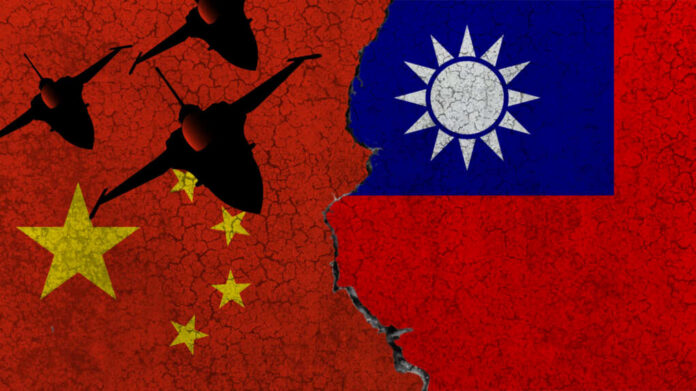
China is using sanctions to punish foreign elected officials for speaking plainly about Taiwan—and that pressure campaign is colliding with a world already on edge.
Story Snapshot
- China sanctioned Japanese lawmaker Hei Seki in September 2025, banning him from entry, freezing assets, and restricting transactions tied to China, Hong Kong, and Macau.
- Seki traveled to Taiwan on Jan. 6, 2026 anyway, calling the trip proof that Taiwan is not part of the People’s Republic of China.
- Competing protests greeted Seki at Taipei Songshan Airport, showing Taiwan’s internal political divide on sovereignty and China.
- The episode lands amid a broader 2025–2026 China–Japan diplomatic crisis that has included trade restrictions and escalating rhetoric over Taiwan.
What China’s Sanctions Are Designed to Do
China’s Ministry of Foreign Affairs sanctioned Hei Seki in September 2025, imposing a ban on entry to China, including Hong Kong and Macau, plus an assets freeze and limits on transactions. The sanctions targeted him personally, but the broader signal is aimed at deterring other lawmakers from testing Beijing’s “One China” line. Japan protested the move because it was reported as the first time China sanctioned a sitting Japanese lawmaker.
Seki’s profile makes the sanctions politically potent. He was born in China, studied at Peking University, moved to Japan before the Tiananmen crackdown era, and later naturalized as a Japanese citizen. He entered Japan’s House of Councillors in 2025 with the Japan Innovation Party. His critics can frame him as provocative; his supporters argue his background makes his critique of the Chinese Communist Party harder to dismiss as simple foreign hostility.
Seki’s Taiwan Trip and the Message It Sent
Seki arrived in Taiwan on Jan. 6, 2026, after being invited by Taipei’s Indo-Pacific Strategy Thinktank to speak at a seminar. He used the moment to argue that Taiwan and China are separate countries, stating that his ability to enter Taiwan despite Chinese sanctions “proves” Taiwan is not governed by Beijing. Taiwan’s government hosted him for events that reportedly included a banquet with Premier Cho Jung-tai.
Pro-independence supporters and pro-unification protesters both showed up at Taipei Songshan Airport, underscoring Taiwan’s domestic split on identity and cross-strait relations. China’s response, through spokesperson Mao Ning, dismissed Seki’s remarks as unworthy of a response. That posture—minimizing the individual while maintaining punitive policy—fits a pressure strategy that seeks to avoid elevating dissidents while still warning others not to follow them.
The Wider China–Japan Crisis Behind This Flashpoint
Seki’s visit did not happen in a vacuum. The dispute sits inside a larger 2025–2026 China–Japan diplomatic crisis that flared after Japanese Prime Minister Sanae Takaichi described a potential Taiwan attack as an “existential crisis” for Japan. Reporting in the research summary ties the period to Chinese threats, travel-related curbs, seafood import issues, and restrictions affecting dual-use items and rare earths—tools Beijing can use to squeeze supply chains and public opinion.
China also sanctioned other Japanese figures connected to Taiwan-related activity, including former Japanese defense chief Shigeru Iwasaki, according to the same crisis timeline. Beijing’s approach appears consistent: punish or threaten influential individuals, then amplify economic leverage to raise the perceived cost of engagement with Taiwan. For Japan, parliamentary exchanges with Taiwan have become a recurring point of friction, even when ties remain unofficial.
Why This Matters to Americans Watching a World of Escalating Conflicts
For U.S. readers—especially those already exhausted by open-ended conflicts and skeptical of global “forever commitments”—this episode is a reminder that major powers increasingly weaponize economics and access to enforce political speech codes beyond their borders. China’s sanctions model targets individuals, money, and movement rather than tanks and planes, but it still aims to shape what democratically elected lawmakers can say without punishment.
China sanctions Japanese lawmaker over Taiwan tripshttps://t.co/0mio8Bvo09
— windfromasia (@etcetra_) March 30, 2026
The limitation in the available research is that it does not describe any new sanctions announced after Seki landed in Taiwan on Jan. 6, 2026, nor does it confirm follow-on steps by Japan or Taiwan beyond formal protests and public statements. Still, the pattern is clear enough to track: Beijing treats Taiwan-related speech as a red line and uses penalties to deter it, while Japan and Taiwan use visits to signal autonomy. The standoff is likely to remain a recurring stress point in the region.
Sources:
Taiwan is Taiwan, not part of China: China-born Japanese lawmaker
China sanctions Japanese lawmaker for calling Taiwan an independent state
2025–2026 China–Japan diplomatic crisis