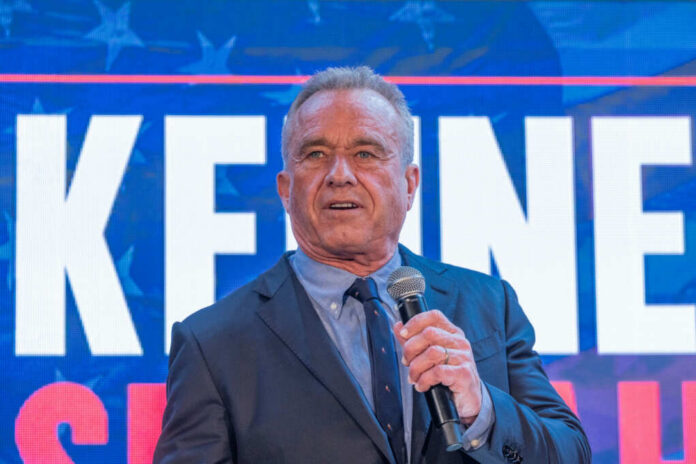
RFK Jr.’s rebuilt autism committee is pushing changes that could improve care for high-needs families—while reopening a national fight over who controls medical science and Americans’ most sensitive health data.
Quick Take
- HHS Secretary Robert F. Kennedy Jr. rebooted the Interagency Autism Coordinating Committee (IACC) and its first proposals focus on missed medical problems in autistic patients, not just behavioral labels.
- The committee advanced recommendations to treat caregiver observations as medically relevant and to strengthen clinician training and Medicaid guidance so seizures, GI problems, and sleep disorders aren’t dismissed as “just autism.”
- The IACC also moved toward a new “profound autism” designation centered on support needs, a shift that could redirect federal attention and funding.
- Critics argue the committee’s new activist-heavy makeup and parallel HHS initiatives—like a national autism registry—raise ethical and privacy concerns and risk politicizing research priorities.
What the committee proposed—and why families are paying attention
On April 28, 2026, the IACC—an HHS advisory body created under the Combating Autism Act of 2006—released initial proposals aimed at overhauling parts of autism diagnosis and treatment. The central theme is straightforward: clinicians should not ignore co-occurring medical issues such as seizures, sleep disturbances, gastrointestinal problems, developmental regression, and allergic disease. The proposals argue these issues can be “overlooked,” leading to preventable harm.
One practical recommendation is to treat caregiver observations as medically relevant data, rather than “anecdotal” noise. Another is to develop additional physician training through the Health Resources and Services Administration (HRSA), reflecting complaints that frontline providers often lack preparation for complex autism-related care. The proposals also point toward Centers for Medicare and Medicaid Services (CMS) guidance meant to prevent patients from having legitimate symptoms brushed aside simply because they already carry an autism diagnosis.
“Profound autism” becomes a policy lever, not just a label
During the April 28–29 meeting in Washington, D.C., the committee voted to recommend a “profound autism” designation and discussed redefining it by functional and support needs rather than IQ. Coverage of the meeting noted that this approach differs from prior published criteria and that the committee’s new focus contrasts with past IACC emphasis on genetics, adult employment, and other long-running priorities. Federal members reportedly abstained on some votes, underscoring uncertainty about implementation.
For families caring for children or adults with the highest needs, the appeal is obvious: a clearer designation can force bureaucracies to recognize real-life disability and support requirements. For skeptics, the concern is equally clear: once Washington adopts a new label, it can become a budgeting tool, moving “hundreds of millions” in research and services in new directions while sidelining prior agendas. The available reporting leaves the ultimate policy impact unresolved, since recommendations can evolve after the meeting.
RFK Jr.’s reboot of the IACC adds legitimacy—and controversy
The politics surrounding the committee matter because RFK Jr. replaced much of the prior IACC membership in January 2026 and appointed 21 new members, including figures described as vaccine skeptics. That reset is not a minor administrative tweak; it changes what questions the federal government chooses to ask, and which experts or advocates get a seat at the table. In today’s climate, that also feeds a broader public suspicion that agencies are run for insiders, not for patients.
Supporters can argue the new proposals concentrate on practical gaps in care—especially for people with high support needs—rather than culture-war slogans. Critics counter that credibility depends on scientific rigor and balanced expertise, and they view the committee’s composition as a warning sign. Importantly, reporting on the meeting indicated the committee’s discussions did not explicitly center vaccines, even though the membership reshuffle has been linked to longstanding disputes over vaccine-related claims.
A national autism registry raises the stakes on privacy and consent
Separate from the IACC proposals, HHS has announced a national autism registry intended to draw from insurance, medical, and genetic data. The registry concept is pitched as a way to enable more data-driven research, but it also triggers immediate questions about privacy, consent, and scope. Americans across the political spectrum have grown wary of large-scale government data projects, especially when mission creep can turn “research” into surveillance-like infrastructure.
RFK Jr.'s New Autism Committee Issues First Proposals https://t.co/WEeGSKNHQL
— zerohedge (@zerohedge) April 29, 2026
Concerns intensified after HHS hired David Geier to study autism-vaccine links, with reporting noting prior disciplinary history and framing the move as an ethical flashpoint. Even for voters who want bureaucracies challenged, the core test is whether reforms improve outcomes without undermining trust in medicine or weakening protections for families who already feel pressured by institutions. The available sources agree on the timeline and actions, but they diverge on intent and risk—meaning the public debate is far from settled.
Sources:
RFK Jr.’s New Autism Committee Issues First Proposals
Federal autism advisory committee: ‘profound autism,’ new definition
Why RFK Jr.’s autism research agenda raises ethical alarms
HHS Kennedy Appoints New Interagency Autism Coordinating Committee