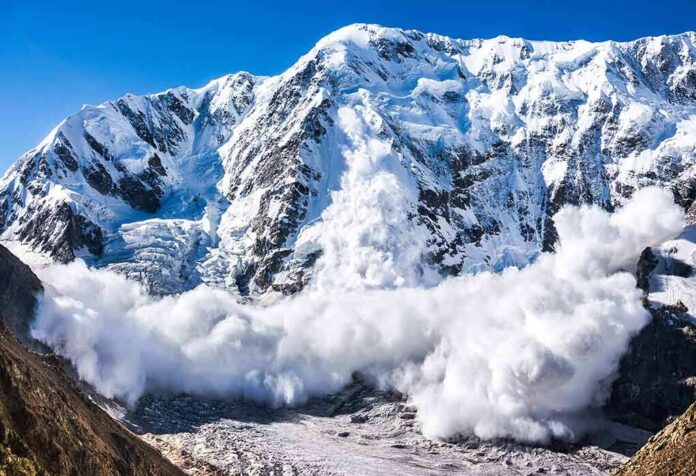
The central fact in the Castle Peak disaster is not merely that nine skiers died; it is that they died by asphyxiation after being buried in an avalanche terrain trap that investigators say the party entered in dangerous conditions.
Key Points
- All nine victims were later determined to have died of asphyxiation from snow burial, not from impact trauma.
- Public reporting on the final avalanche review says the group traveled below avalanche terrain and through the runout zone when avalanches were likely.
- The exact trigger remains unresolved: officials have not pinned the slide on the party, natural causes, or both.
- The tragedy fits a classic backcountry pattern in which burial, not blunt trauma, is the dominant killer.
How nine backcountry skiers actually died
Coroner reports released months after the February avalanche near Lake Tahoe say all nine victims died of asphyxiation after being buried by snow. That matters because avalanches kill in several different ways: blunt force trauma, entrapment in trees or rocks, hypothermia, and, most often, suffocation once the airway is sealed and exhaled carbon dioxide can no longer escape. In this case, the later medical finding narrows the cause of death to burial, which is the classic avalanche death mechanism and the reason time-to-rescue is so brutally unforgiving.
The coroner release also sharpened the picture of how the victims were found. Reporting on the records says the skiers were buried several feet deep, with the burial area concentrated in a relatively small zone, and that the documents were heavily redacted. That combination is consistent with a violent snow entrapment event rather than scattered trauma injuries. It also explains why survival in avalanche incidents depends so heavily on immediate companion rescue, avalanche airbags, and airway management in the first minutes after burial.
What investigators say about the route choice
The more consequential post-incident question is not the medical cause of death but the decision-making that put the group there. ABC7’s reporting on the National Avalanche Center’s final report says the party traveled below avalanche terrain and through a runout zone during a period when a natural or human-triggered avalanche was likely to very likely. In avalanche terms, a runout zone is the downhill corridor where debris from a slide naturally comes to rest; it is not a safe neutral area simply because the slope above looks manageable. Entering it during unstable conditions is the kind of exposure that defines preventable backcountry loss.
The same report language also said there were no broken trees visible in the debris and that it remained unclear whether the avalanche was triggered by the party or occurred naturally. That uncertainty is important, but it does not erase the terrain judgment issue. A group can contribute to its own exposure without being proven to have physically triggered the slide, and avalanche investigators often separate the trigger question from the route-choice question for exactly that reason. The first is a mechanism problem; the second is a risk-management problem.
Why the cause of the slide remains unsettled
On the trigger itself, published accounts remain consistent: investigators have not definitively established whether the avalanche was natural or human-triggered. That is not unusual in backcountry disasters. Snowstorms obscure fracture lines, debris compaction destroys evidence, and the most important clue—the weak layer that failed—can be impossible to reconstruct after the fact. One report cited by the San Francisco Chronicle said the cause and specifics of the slide may never be fully understood. In other words, the mountain often withholds the final answer.
Even without a definitive trigger, the broader meteorological setup was enough to create extreme hazard. Reporting from the time of the tragedy described a severe snowstorm and a weak snowpack base, the two ingredients that make avalanches easier to release and more destructive once they start. In that setting, the difference between a safe line and a fatal line can be the difference between staying above the hazard and crossing into the runout. The Castle Peak party appears to have done the latter.
Why avalanche deaths so often look the same after the fact
This case also illustrates why avalanche fatalities generate such painful public debate. From a distance, the disaster can look like a sudden act of nature; in the field, it is usually a chain of human choices meeting unstable snow. That is why investigators and forecasters focus on slope angle, runout, weak layers, terrain traps, and alternative routes. The Castle Peak report, as summarized in later coverage, said safer alternatives existed and that the group moved through a more avalanche-prone area. Those are the details that matter, because avalanche safety is rarely about predicting the exact moment a slope will fail; it is about avoiding the places where failure is most likely to be fatal.
The guide element deepens the stakes. Several of the dead were Blackbird Mountain Guides staff, and the trip involved both guides and guests. When guides are part of a fatal decision chain, the public naturally asks whether route selection, group management, and hazard appraisal met the standard that experienced clients reasonably expect. The final public reporting does not give a courtroom verdict, but it does support a blunt conclusion: the party entered terrain and conditions that the final report says were plainly dangerous.
What the Tahoe avalanche means for backcountry skiing
The Castle Peak tragedy sits in the oldest and hardest lesson in avalanche country: skill does not cancel exposure. Guides, experienced skiers, and well-equipped groups still die when they move into terrain that loads snow, funnels debris, or offers no escape route once a slab releases. Avalanche airbags, beacons, and disciplined companion rescue improve odds, but they do not neutralize a bad terrain choice or rescue a burial that is already deep and compacted.
That is why the coroner’s finding of asphyxiation is not just a grisly medical footnote. It is the clearest evidence of how the avalanche killed, and it underscores how little margin exists once a group is overwhelmed. The final report’s terrain criticism, by contrast, explains why the event became so lethal in the first place. The lesson is stark, and it is durable: in avalanche terrain, the decisive variable is often not how strong the skiers are, but whether they were ever where the snow could bury them.
Sources:
nypost.com, mercurynews.com, people.com, patch.com, sfchronicle.com, skimag.com, youtube.com