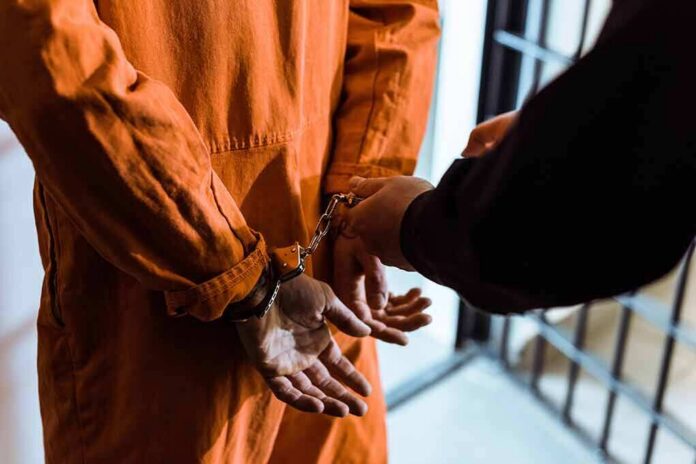
The central fact is not controversy but structure: a Garfield County arrest, a five-count felony filing, and a court process that now has to test allegations that began in early 2024 and surfaced publicly only after prosecutors moved on them. What matters is how criminal cases of this sort are built, how quickly a public narrative hardens around them, and why the legal record, not the headline, is the only place the final answer will come from.
Intro Header
- Tyler Boebert, the 21-year-old son of Rep. Lauren Boebert, was arrested on five felony counts tied to alleged child sexual exploitation.
- The Garfield County Sheriff’s Office says the arrest followed an investigation and felony review by the 9th Judicial District Attorney’s Office.
- The published account rests on an affidavit, court records, and official statements; the underlying evidentiary file is not public in the materials supplied here.
- The case is serious, but the supplied record shows charges and arrest, not a conviction or adjudicated finding of guilt.
The charges, in plain legal terms
According to the court-record summaries in the supplied reporting, Tyler Boebert faces five felony counts: three tied to sexual exploitation of a child and two tied to contributing to the delinquency of a minor. The criminal statute at issue is Colorado’s sexual-exploitation framework, which covers the production, possession, and dissemination of sexually exploitative material involving minors; in practice, prosecutors use it to charge conduct ranging from inducement and enticement to possession with intent to distribute. The arrest documents described in the reporting also connect the case to a Jan. 1, 2024 offense date, which is the alleged date of the underlying conduct rather than the date of arrest.
That distinction matters. Criminal cases are often reported first as “arrest” stories because the public sees the moment law enforcement acts, while the legal theory is still being assembled in affidavits, warrants, and charging papers. Here, the Garfield County Sheriff’s Office says deputies investigated the matter, a felony review occurred through the 9th Judicial District Attorney’s Office, and the office then executed an arrest warrant. In other words, this is not a casual citation or a routine summons; it is a felony case that, at least on the public record supplied here, passed through formal prosecutorial screening before arrest.
What the affidavit-based reporting says happened
The strongest factual material in the supplied package comes from reporting that summarizes the arrest affidavit. CPR says the investigation began with a Safe2Tell tip alleging that videos of teenagers having sex had been posted to a newly created Instagram account. That report says the case involves 16 videos and images, some of which included underage teens, and that one video allegedly showed Tyler Boebert having sex with a girl 11 months younger than him when he was 18 and she was 17. Denver7’s reporting similarly describes a five-count filing tied to sexual exploitation allegations and identifies the charges as including inducement or enticement, possession with intent to distribute, and video-related exploitation.
Those allegations, if proven, would describe conduct that the law treats much more severely than mere possession of illicit material. Production or inducement cases are prosecuted because the state’s theory is that the harm begins at the moment a minor is recruited, filmed, or used to create exploitative content, not only when the content is later shared. That is why the charging package, as summarized in the reporting, includes both exploitation counts and delinquency counts: prosecutors appear to be alleging a broader sequence of behavior, not a single isolated possession offense.
What is solid, and what is still only allegation
The public record supplied here is firm on the existence of an arrest, bond, and pending court appearance; it is not firm on guilt. CBS News Colorado, Denver7, USA Today, and the sheriff’s office all describe charges and an ongoing case, but none of those supplied sources report a conviction or guilty plea in the new Garfield County matter. The sheriff’s office also says no additional information will be released while the investigation remains ongoing. That is standard, but it has consequence: the public is seeing a curated slice of the evidentiary record, not the whole file.
The missing pieces are not trivial. The supplied materials do not reproduce the full arrest affidavit, its attachments, the actual digital files, hashes, or chain-of-custody documentation for the alleged media; they also do not include a sworn victim statement or a defense filing that squarely rebuts the affidavit’s factual theory. That does not weaken the fact of arrest. It does, however, define the limits of what can be responsibly said before the court file is tested adversarially. In a case like this, the arrest establishes probable cause, not the final truth.
Why the case drew immediate attention
High-profile political families operate under a brutal media dynamic: the private details travel faster than the procedural safeguards, and audiences often convert an accusation into a character verdict before a judge sees contested evidence. That pattern is visible here because the reporting does not merely cover a criminal filing; it places the filing against the backdrop of Lauren Boebert’s public profile and her son’s prior legal troubles. The result is a case that is legally ordinary in form but politically combustible in consequence.
The broader significance is not that a politician’s relative has become news; it is that the news cycle now rewards compressed judgment. A five-count filing can be accurately reported in a sentence, but the path from arrest to proof runs through discovery, motions, possible suppression issues, and whatever digital evidence the state can actually authenticate. The supplied record suggests the prosecution believes it has an account of production, possession, and dissemination tied to social-media activity, but public confidence should be calibrated to the stage of the case. The legal burden remains with the state, and the state has not yet carried it to verdict.
"The charges are linked to a 2024 video Tyler Boebert allegedly recorded with a 17-year-old, according to an affidavit in support of an arrest warrant. He was 18 at the time."
Seems sensationalized.
— Jimerican (@Jimerican) August 11, 2026
What happens next in court
For now, the immediate procedural markers are clear. The reporting says Tyler Boebert is out on bond and scheduled to appear in Garfield County court on Aug. 19. That hearing matters because it is where the case begins to move from accusation to litigation: counsel can test the charging theory, request disclosures, and start forcing precision on dates, accounts, devices, and attribution. If the prosecution’s affidavit is strong, the state will press forward with confidence. If it is weak or overbroad, the defense will have an opening to narrow or challenge the counts.
What should not be lost in the noise is the basic legal posture of the case. The record supplied here supports a serious felony arrest, a specific charging structure, and a live prosecution. It does not support a verdict. In a matter this charged, that distinction is not a technicality; it is the difference between what law enforcement says it believes and what a court can ultimately prove.
Sources:
independent.co.uk, coloradopolitics.com, cbsnews.com, denver7.com, usatoday.com, garfieldcountyco.gov