

When addiction treatment turns patients into billable units, the market stops serving recovery and starts feeding on vulnerability; the federal takedown in Los Angeles exposes how that inversion works at scale—and why it keeps recurring.
At a Glance
- Federal prosecutors charged 15 defendants—six of them medical professionals—in a Los Angeles health care fraud takedown, alleging nearly $2 billion in losses across cases, with a single network responsible for more than $1.6 billion in sham treatment claims.
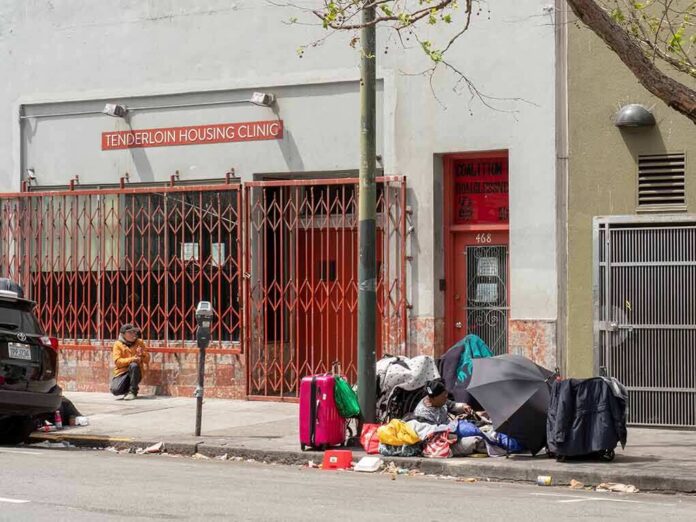
- Prosecutors say recruiters targeted people experiencing homelessness and individuals at recovery meetings, transporting them to facilities that billed private insurers regardless of clinical need.
- The alleged model priced patients by insurance value, not treatment need, and cycled individuals through facilities while delivering inadequate or nonexistent therapy.
- The case reflects a broader national pattern: “patient brokering” thrives where recovery housing, testing labs, and for‑profit programs can monetize insurance coverage without accountable clinical outcomes.
What prosecutors say happened: trafficking for reimbursement, not treatment
The Justice Department’s Los Angeles takedown describes an organized, multi‑year enterprise that submitted more than $1.6 billion in insurance claims tied to sham substance‑use treatment. In total, 15 defendants—among them six medical professionals—were charged in the broader operation, which the government says generated nearly $2 billion in fraudulent claims across cases. Federal filings and agency statements outline a simple business premise wrapped in clinical trappings: move vulnerable people into facilities, keep them enrolled just long enough to bill, and repeat. The government characterizes the conduct bluntly as trafficking patients to extract reimbursement from private insurers rather than to deliver effective care.
The alleged recruitment strategy focused on people least able to resist or evaluate the offer: individuals living on the street or cycling through 12‑step meetings. Prosecutors allege body brokers—marketers paid per head—sought prospective patients with the richest insurance benefits, not the most pressing medical needs. The value of a person’s coverage, not the acuity of their disorder, determined the pitch, the plane ticket, and the placement. Court reporting amplifies the picture: interstate recruitment, travel and lodging provided, and inducements ranging from groceries to cash, all aimed at filling beds and prolonging billable episodes of care.
How the alleged scheme worked: incentives, cycling, and paperwork
Mechanically, the model alleged by prosecutors rests on three interlocking incentives. First, acquisition: pay intermediaries to find people with high‑reimbursing insurance plans. Second, retention: provide enough housing, transportation, and sometimes illicit drugs to keep patients enrolled—sober or not—so billing can continue. Third, documentation: generate therapy notes, testing orders, and treatment plans that support coding, even when services are cursory or nonexistent. Local reporting tied to the case describes fraudulent insurance applications, minimal or fake therapy sessions, and a deliberate cycling of the same individuals through affiliated facilities. More than $1.6 billion was allegedly billed; over $210 million was paid, underscoring that the harm is not only theoretical but financial and immediate for payers and plan sponsors.
This is not a fringe tactic in substance‑use disorder markets—it is a known failure mode. When payment flows reward volume and intensity of billed services rather than verified clinical progress, programs face a structural temptation to pad, upcode, or invent care. Add recovery housing to the mix—often financed indirectly through patient insurance and loosely regulated—and the system can be gamed end‑to‑end: recruit, house, test, bill. The Los Angeles charges situate the alleged network within that architecture and scale it to a level that commands federal attention.
Why this keeps happening: a national pattern of patient brokering
The conduct alleged in Los Angeles aligns with a documented national pattern: recovery homes and for‑profit treatment centers form referral pipelines that pay for patients and monetize insurance coverage via testing and therapy billed without accountable outcomes. Government Accountability Office reviews have flagged this recurring mechanism—patient brokering—as a locus of insurance fraud risk in multiple states, especially where recovery housing is weakly overseen and not itself an eligible billing entity, creating incentives to extract value indirectly through partner providers.
Peer‑reviewed and official sources that study fraud in substance‑use treatment reach similar conclusions: once brokers can profit by moving people rather than improving health, airfares, hotel rooms, and per‑diem inducements become just another customer acquisition cost. Qualitative research on for‑profit SUD markets has even cataloged the practice of programs or brokers buying plane tickets for out‑of‑state recruits—a detail that surfaced in the Los Angeles case narrative as well. Federal enforcement actions in recent years, including convictions for illegal kickbacks to body brokers, confirm that these are not isolated anecdotes but prosecutable offenses within a recognizable playbook.
Where the numbers matter—and what they do and do not prove
Scale is central to the Los Angeles charges. The government pegs the broader takedown near $2 billion in alleged losses, with the Young‑related case purportedly responsible for more than $1.6 billion in claims. Local coverage reports more than $210 million actually paid, which is the figure that hits insurer ledgers today even as other claims sit denied, recouped, or in dispute. The core evidentiary thrust of the government’s case is not a retrospective of patient outcomes; it is a portrait of recruiting, billing, and documentation designed to look like treatment while functioning like throughput. That is the heart of a health care fraud prosecution.
One important boundary: indictments and complaints allege offenses; they are not convictions. Defendants will contest the charges, and not every patient’s experience inside the network is necessarily reducible to fraud. But the government’s description provides testable, document‑driven claims—travel records, admissions logs, billing files, clinical notes, remittances, and communications—that anchor the case in verifiable conduct. That level of specificity distinguishes structural exploitation from mere dissatisfaction with rehab.
Trump DOJ Nails Los Angeles Medical Fraud Ring Accused of Stealing Nearly $2 Billion — Sham Rehab Lured Homeless and Addicts, Unnecessary Surgeries Injured Patients, Phony Hospice Billed for Non-Dying Seniorshttps://t.co/7PLUgd0NcF
— anne (@anneMeritBay) October 24, 2026
The mechanics behind “Skid Row body brokering” headlines
Sensational coverage often collapses three phenomena into one: homelessness concentrated in urban cores, relapse cycles typical of severe opioid and stimulant use disorders, and criminal exploitation by bad actors. The Los Angeles charges focus on the third—monetization of vulnerability—while inevitably touching the first two. Prosecutors say recruiters harvested people from the streets and from recovery meetings, moved them across state lines, and staged them in housing linked to billing entities. The alleged inducements and cycling practices would predictably keep people in a churn that looks, on the ground, like a revolving door between encampments, “sober living” houses, and clinics. That spectacle is not proof of treatment failure everywhere; it is what a reimbursement‑first pipeline produces.
What fixes can actually change the incentives
Shutting down one network does not fix the market conditions that allow the next one to arise. Three levers have the best track record in adjacent areas of health fraud: align payment with verified outcomes, harden oversight where brokerage occurs, and make kickbacks unprofitable. In substance‑use treatment, that means tying reimbursement to adherence and documented clinical improvement audited by third parties; licensing and inspecting recovery housing in coordination with treatment providers; and criminalizing and actively prosecuting referral payments in both directions—providers to brokers and housing to providers. Federal enforcement has shown it will pursue kickbacks in this space; payers and states have to meet that intensity with data‑driven utilization review and targeted audits.
Payers can also close the acquisition faucet by scrutinizing out‑of‑state placements with unusually generous benefits, flagging clusters of high‑cost claims tied to a small constellation of corporate entities, and using prepayment review for facilities with rapid volume spikes. States can require transparent ownership disclosures across affiliated treatment, housing, and lab entities so that “new” providers are not simply rebadged outposts of the same network. GAO’s work suggests that oversight must center on the junctions where patients are recruited and housed—the weakest links in the current chain.
Why this matters to families, payers, and cities
For families, the lesson is to vet programs by their clinical staffing, accreditation, and outcomes reporting—not their amenities, travel offers, or concierge admissions teams. For employers and plan sponsors, it is a call to fortify benefits design against open‑ended, high‑dollar episodes that lack independent clinical verification. For cities, particularly those with visible homelessness, it is a reminder that the appearance of “more treatment” is not the same as more recovery; when body brokering takes hold, it can turn neighborhoods into recruitment grounds. The Los Angeles case underscores all three realities. If the incentives stay misaligned, the market will keep producing schemes that look like care and bill like hospitals—until prosecutors arrive.
Sources:
us.headtopics.com, justice.gov, ocregister.com, dea.gov, mercurynews.com, hotair.com, gao.gov