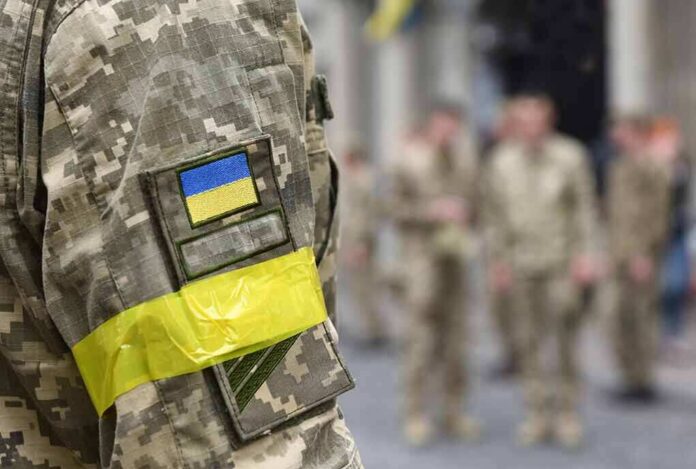
The Hubbard case is a study in how, during war, a courtroom verdict can double as a diplomatic instrument—and why the line between “lawful fighter” and “mercenary” carries life-altering consequences when the evidence is sealed and the politics are loud.
At a Glance
- Russia convicted Stephen Hubbard under its mercenary statute and held him more than four years before releasing him.
- Prosecutors alleged specific conduct in Ukraine—training, equipping, paid service—consistent with Article 359 of Russia’s Criminal Code; proceedings were largely closed.
- Hubbard’s family and attorney deny he fought; the U.S. government designated him wrongfully detained and called the charges fabricated.
- The case sits at the fault line of wartime classification: mercenary vs. lawful combatant—both a legal question and a tool of leverage.
What Russia said it proved—and what the public can actually see
The uncontested public record establishes a formal conviction: a Moscow City Court judge sentenced Hubbard to six years and 10 months under Article 359, Russia’s mercenary statute, in October 2024. Russian prosecutors presented a narrative with operational detail—Hubbard, they said, joined a territorial-defense unit in or near Izyum, received training, weapons, ammunition, and a uniform, and signed a contract worth about $1,000 per month. Russian state media reported he pleaded guilty; Western outlets relayed that claim from those accounts. Hubbard’s capture timeline aligns with the earliest phase of Russia’s full-scale invasion: detained in April 2022, prosecuted later, and imprisoned thereafter.
That is the official architecture. The scaffolding beneath it—the exhibits, witnesses, and forensics—remains out of public view. The central proceedings were largely closed; the case file appears to be sealed. No recruiting officer, unit commander, payment ledger, or Ukrainian roster has been publicly produced. The reported guilty plea cannot be examined for wording, conditions, or voluntariness. In short, the verdict is documented; the underlying proof is not independently auditable in open sources.
The counter-case: denial, wrongful-detention designation, and competing narratives
On the other side of the ledger are denials and a powerful diplomatic designation. Through his U.S.-based attorney, Martin De Luca, Hubbard is said to have denied serving in any combat unit and described being seized from his home by Russian soldiers. His family has consistently maintained his innocence and portrayed him as a pacifist. The U.S. State Department classified him as “wrongfully detained,” a label Washington typically reserves for cases it considers politically motivated or procedurally abusive; officials have described the charges as fabricated. These are clear, on-record statements—but they are assertions rather than documentary refutations of the Russian case file, which outsiders cannot access.
In evaluating weight, the Russian side has the procedural artifact of a conviction; the American side has a wrongful-detention designation and denials from counsel and family. Neither camp has placed verifiable, case-specific evidence in public view sufficient to resolve the core factual dispute. That evidentiary asymmetry is not unusual when trials are closed and international politics intrude, but it does leave a durable ambiguity about what, precisely, Hubbard did—or did not—do in Ukraine.
Why the “mercenary” label matters in law and leverage
Wartime law draws a consequential distinction between a lawful combatant and a mercenary. A combatant formally incorporated into a state’s armed forces generally enjoys combatant immunity for mere participation in hostilities; by contrast, a mercenary lacks that immunity and can be prosecuted simply for taking part. The test is fact-intensive: formal incorporation, command structure, nationality, compensation, and motivation all matter, and payment alone does not decide it. Misclassification has practical and deadly consequences—shaping detention conditions, eligibility for prisoner exchanges, and the plausibility of criminal charges themselves.
Russia’s Article 359 provides a domestic vehicle for prosecution; when applied to foreigners in Ukraine, it exists in tension with international humanitarian law’s categories. Ukraine has enrolled many foreign volunteers into structures it considers lawful; Russia has often characterized such foreigners as mercenaries. Absent transparent evidence about incorporation, command relationships, and terms of service, outside experts cannot reliably map an individual case onto the legal categories. That is precisely the Hale’s razor of this file: the label is clear; the proof of the elements is not.
Closed courts, open diplomacy: how release reframes the record
Hubbard’s release, after more than four years, reintroduces politics as context and mechanism. Public reporting ties the timing to high-level outreach involving Russian President Vladimir Putin and U.S. interlocutors, with on-the-record thanks offered in Russia and celebratory messaging in Washington. Analysts and officials have associated the release with goodwill gestures and broader negotiation atmospherics, even as public statements dispute whether anything was traded. The release instrument itself—pardon, commutation, administrative transfer—has not been disclosed in full to the public, leaving the formal legal status of the conviction and sentence unclear.
That opacity does not retroactively negate the conviction, but it does underscore how cases like this can migrate from courts to conference rooms. Once a file is enveloped by diplomacy, legal narratives serve dual roles: they justify past actions at home and create bargaining chips abroad. This is why wrongful-detention designations matter as much as penal code citations; each sets a diplomatic posture as much as a legal one.
What an evidence-led assessment can and cannot conclude
The strongest public facts are these: a documented conviction under Russia’s mercenary statute; a prosecutorial narrative that, if proven, would satisfy key elements of Article 359; a detention timeline consistent with early-war capture; a closed trial that withholds underlying proof; categorical denials from the defense and family; and an American wrongful-detention designation that frames the case as politically tainted. Those points are not mutually exclusive. They describe, instead, a case in which the formal legal outcome is knowable while the factual substrate remains unverified to outside eyes.
For an expert reader, the conservative conclusion is disciplined: the conviction and sentence occurred; Russia alleged specifics consistent with its statute; the United States rejected the legitimacy of the charge; and the public cannot test the evidence because it has not been disclosed. Any bolder claim—either that Hubbard unquestionably fought as a mercenary, or that the charge was definitively fabricated—would overrun what the accessible record supports.
Russia just freed 74-year-old American Stephen Hubbard after more than 4 years in detention. No prisoner swap required. He’s on his way home. 🇷🇺 🇬🇭
— Forgetti Bibiaa Beye Foine🇬🇭 (@Kayphoreva) October 22, 2026
How to resolve the ambiguity: the documents that would decide it
The uncertainty is solvable. A complete Moscow City Court judgment, indictment, and evidentiary annexes—contracts, payment records, unit rosters, recruiting communications, witness statements, and forensic exhibits—would enable independent assessment of each statutory element. Parallel Ukrainian records could confirm or refute incorporation into territorial defense or other units around Izyum in April 2022. If a plea occurred, a transcript or video would illuminate voluntariness and factual basis. Finally, a formal release instrument would clarify whether the conviction stands, was commuted, or was vacated on political or legal grounds. Until then, analysis must remain anchored to what is truly known—and candid about what is not.
Why this case will echo beyond one man’s ordeal
Hubbard’s file is not an outlier; it is a template. Foreigners captured in Ukraine will continue to be sorted—by courts and by states—into categories that carry starkly different fates. As long as trials are closed and evidence undisclosed, each side’s narrative will do most of the public work that evidence ought to do. That makes rigorous, source-disciplined skepticism not a posture but a duty. It also means that the most humane and stabilizing path—transparent process, accessible records, and adherence to international humanitarian law’s categories—is not merely a legal ideal; it is the only way to keep law from dissolving into leverage.
Sources:
facebook.com, reuters.com, cbsnews.com, ua.news, en.wikipedia.org, rferl.org, washingtonpost.com, cnn.com, bostonglobe.com, nytimes.com, thehill.com