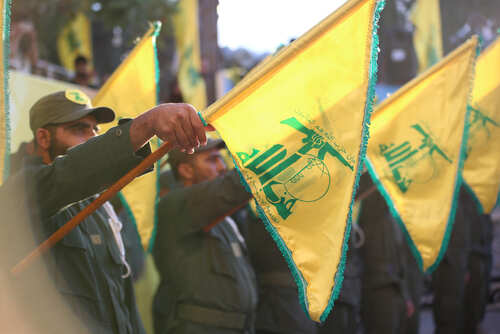
Lebanon’s government has sparked a constitutional crisis by demanding Hezbollah disarm, triggering fierce resistance from the Iranian-backed group and intensifying foreign pressure that could push the country toward deeper chaos.
Story Snapshot
- Lebanon’s cabinet ordered the army to draft a plan to disarm Hezbollah, provoking immediate condemnation and a walkout by Hezbollah ministers.
- Hezbollah calls the move a “grave sin” and vows to ignore it, escalating tensions between rival Lebanese factions and risking government paralysis.
- The United States and Israel have ramped up diplomatic and military pressure, while Iran continues to back Hezbollah’s armed resistance.
- Experts warn the move could destabilize Lebanon and fuel sectarian divisions, with the potential for renewed conflict if consensus is not reached.
Lebanese Government Challenges Hezbollah’s Armed Status
On August 5, 2025, Lebanon’s cabinet assigned the army to draft a plan to limit all weapons to state forces by year’s end, directly targeting Hezbollah’s vast arsenal and challenging its long-standing status as an armed “resistance” group. This is the first time since the end of Lebanon’s civil war that the government has made a serious attempt to strip Hezbollah of its weapons. The move follows months of escalating border clashes with Israel, U.S. and French diplomatic pressure, and a fragile ceasefire that has failed to resolve Lebanon’s deep divisions.
Hezbollah swiftly condemned the cabinet decision as a “grave sin” and stated it would treat it “as if it does not exist,” while Shiite ministers affiliated with the group walked out of the session in protest. Hezbollah claims the disarmament plan undermines Lebanon’s sovereignty and exposes the country to foreign aggression, especially from Israel. The group’s Shiite ally, the Amal movement, accused the government of bowing to Israeli and American demands, further deepening sectarian fault lines within Lebanon’s fragile political system.
International Pressure and Regional Power Struggle
The initiative follows direct diplomatic pressure from U.S. envoy Tom Barrack and public advocacy by Israeli officials urging Lebanon to assert state control of arms. Recent visits by U.S. envoy Tom Barrack and CENTCOM chief Gen. Michael Kurilla emphasized restoring a state monopoly on force as a prerequisite for aid and security guarantees. France has echoed these demands, while Israel maintains military pressure on Lebanon’s borders. Iran, Hezbollah’s main patron, continues to supply arms and political backing, seeing the group as a key deterrent against Israeli actions. This interplay of foreign interests has turned Lebanon into a geopolitical battleground, with its sovereignty and stability hanging in the balance.
The Lebanese army has until the end of August to prepare the plan, but analysts note that Hezbollah’s military strength exceeds state forces and that the group retains ministers within the cabinet. No consensus exists within Lebanon’s leadership—Christian parties hail the decision as a step toward sovereignty, while Hezbollah and its allies threaten to resist by any means necessary. The risk of clashes between rival militias and state forces is rising, and the international community is watching closely as the country’s fate is debated in cabinet sessions and on the streets.
Risks of Instability and Sectarian Division
David Daoud of the Foundation for Defense of Democracies cautions that enforcing disarmament without a nationwide agreement may provoke civil unrest or government paralysis. Analysts such as Ahmad Sharawi from FDD highlight short-term threats, including protests and potential conflict between Hezbollah and state forces, if the army advances without consensus. Longer-term, there is a real danger of renewed civil conflict, especially if Shiite communities feel targeted or marginalized. Lebanon’s economic collapse and political gridlock have left its citizens vulnerable; further instability could push the country to the brink. Humanitarian needs are already spiking, and international aid may depend on progress toward state control of arms.
Most analysts agree the cabinet’s move is historic but fraught with risk. Samir Geagea, leader of the Lebanese Forces party, praised the move as critical to restoring state sovereignty, while critics emphasize the need for negotiations involving Hezbollah and Iran to ensure enforceability. The situation illustrates how foreign intervention and domestic divisions can undermine national unity and constitutional order, leaving ordinary Lebanese to bear the costs of elite power struggles and outside agendas.
Sources:
Carnegie Endowment, 2025-08-06
ISW/CTP Iran Update, 2025-08-07