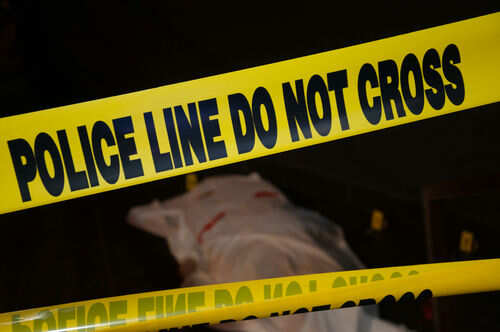
The important fact in this case is not simply that a decomposed body was found in a Brooklyn apartment; it is that prosecutors moved quickly to frame the scene as concealment, while the public record still leaves the hardest element of the charge—knowledge and intent—less than fully exposed.
Intro Header
- The reported facts are stark: Jose Rivera, 53, was arrested and charged after his roommate’s decomposed remains were found inside a couch at 1722 Union St. in Crown Heights.
- The discovery was made during an apartment cleaning, with the body described as buried under clothing, debris, or piled-up junk, which naturally supports an inference of concealment.
- The legal case is narrower than the headlines suggest: under New York law, the state still has to prove the corpse was knowingly concealed, not merely found in a disturbing location.
- The current public record is media-driven rather than document-driven, so the strongest claims are the physical circumstances of discovery, not a fully tested account of Rivera’s state of mind.
What the charge actually means
Concealment of a human corpse is a serious felony precisely because it punishes an effort to hide death from scrutiny, not just the grim fact of death itself. In practical terms, that means prosecutors must do more than show that a body was present in a residence; they must establish that the defendant had a reasonable expectation that the corpse would be produced and nonetheless concealed it. That legal distinction matters. A body can be discovered in a shocking place for any number of reasons, but a conviction turns on whether the concealment was knowing rather than merely unfortunate, negligent, or the product of someone else’s conduct.
That is why the public narrative around Rivera is both compelling and incomplete. News 12 reported that a cleaning crew arrived at 1722 Union St. just before 8 a.m., initially had trouble entering, and then found the remains on a couch under clothing and debris; the NYPD was alerted and Rivera was later taken into custody and charged. Those details are not trivial. They are the factual spine of the prosecution’s case as it has been presented publicly. But they are still not the same thing as proof that Rivera personally placed the body there, knew it was there, or acted with the specific intent the statute requires.
Why the scene itself points toward concealment
The strongest evidence now in circulation is circumstantial, but circumstantial evidence can be powerful when the physical arrangement of a scene is hard to explain innocently. Multiple reports describe the body as skeletal or decomposed and hidden under clothing, debris, or piled-up junk on a couch. That kind of placement is not the natural result of ordinary household disorder. It suggests active suppression of visibility. In criminal cases, courts and prosecutors often rely on exactly this sort of inferential chain: the location, condition, and manner of concealment together can imply a deliberate effort to keep a death from being discovered.
Still, inference is not the same as adjudication. The body’s condition, the clutter in the apartment, and the fact that cleaning crews were called in all support a suspicion of concealment, but they do not by themselves establish who created the concealment or when it occurred. News reports noted that the medical examiner had not determined the cause of death because of the state of decomposition, and that information about how long the body had been there was not immediately available. That missing timeline is not a footnote; it is the center of the evidentiary problem. Without it, public confidence in the narrative runs ahead of the proof.
The thin line between public certainty and prosecutorial proof
This is the part of the story that news coverage often compresses too aggressively. When a corpse is found hidden in an apartment, the moral inference comes fast: someone must have known, someone must have hidden it, and someone must answer for it. But criminal law does not punish atmosphere. It punishes conduct proven to the required standard. The search results supplied here do not include a complaint, affidavit, or indictment; they include repeated media summaries of police and prosecutor claims. That means the public can see the outline of the case, but not yet the full evidentiary architecture behind it.
The absence of a public defense statement leaves the record lopsided, but not resolved. Side B in the available research does not produce a concrete rebuttal from Rivera, a contradictory witness account, or a document that undercuts the concealment theory. In that sense, the prosecution’s account stands unrebutted in the material reviewed here. Yet unrebutted is not the same as proven. The key missing facts remain the same ones that matter in court: who knew what, when they knew it, and what evidence ties that knowledge to the body’s location in the couch.
Why prior history should not do the work of proof
Rivera’s reported prior criminal history appears in the background material, but it does not prove concealment in this case. Prior arrests or convictions may shape public perception, and in a high-emotion story they often do more damage than they should. But a prior narcotics or firearms record has no direct bearing on whether a person knowingly hid a corpse in a couch. It may color the way readers receive the story; it does not substitute for evidence of intent. That distinction is basic, but it is often lost when a case arrives already bundled with a defendant’s past.
That is one reason the present reporting should be read carefully. The headlines are not wrong to emphasize the gruesomeness of the discovery. They are right to say police arrested Rivera and charged him with concealment of a human corpse. But the leap from “a body was hidden” to “Rivera knowingly hid it” remains the legal and factual leap that still requires support. Until the underlying filings, forensic timeline, or witness statements become public, the story is best understood as a strong suspicion built on a disturbing scene, not a fully demonstrated account of criminal intent.
A man was arrested and charged with hiding a skeletal body in his apartment under piled-up junk on a Brooklyn couch last week.
Jose Rivera, 53, was busted Friday and charged with concealment of a human corpse in connection to the disturbing Thursday morning discovery inside the… pic.twitter.com/RYfxZizKjg
— Crime In NYC (@Crime_In_NYC) July 8, 2026
What this case reveals about how these prosecutions work
Cases like this tend to develop in stages. First comes the physical discovery, which usually creates a nearly irresistible narrative of concealment. Then comes the charge, which signals that investigators believe the scene is strong enough to support criminal filing. Only later does the legal system sort out whether the available evidence can actually carry the burden. That sequence matters because public judgment often locks in at stage one, while the courtroom question remains unresolved for months afterward. In that gap, the public may confuse the ugliness of the scene with the sufficiency of proof.
The proper reading, then, is disciplined rather than sensational. The available evidence supports the conclusion that Rivera was arrested after a decomposed body was found hidden in a couch under debris at his Crown Heights apartment, and that prosecutors treated the discovery as concealment. It does not yet supply the full proof package that would settle knowledge, timing, and responsibility beyond dispute. For an offense built around concealment, that missing layer is everything. The scene is incriminating. The ultimate case still depends on whether investigators can show who concealed the body, and with what state of mind.
Sources:
nypost.com, aol.com, facebook.com, caselaw.findlaw.com