
When a globally recognized sideline look steps onto a concert stage at the center of a simulated firefight, the law doesn’t ask whether audiences liked the spectacle; it asks who owns the look, how it was used, and whether viewers were likely to believe there was an affiliation that never existed.
The Short Version
- Pro Silver Star Ltd., the owner of the Dallas Cowboys Cheerleaders brand, sought a temporary restraining order and preliminary injunction after a Hollywood Bowl performance featured dancers in DCC-style uniforms during a staged shootout.
- Reports describe blue-and-white, star-accented costumes and an on-stage narrative in which the dancers handled rifles and were depicted being shot.
- The legal claim centers on alleged confusion and reputational harm, asserting audiences believed the performers were genuine Dallas Cowboys Cheerleaders.
- The dispute sits at the intersection of brand control and expressive use, where courts weigh trademark and design rights against artistic context and audience perception.
What Happened: A concert tableau collides with a protected brand
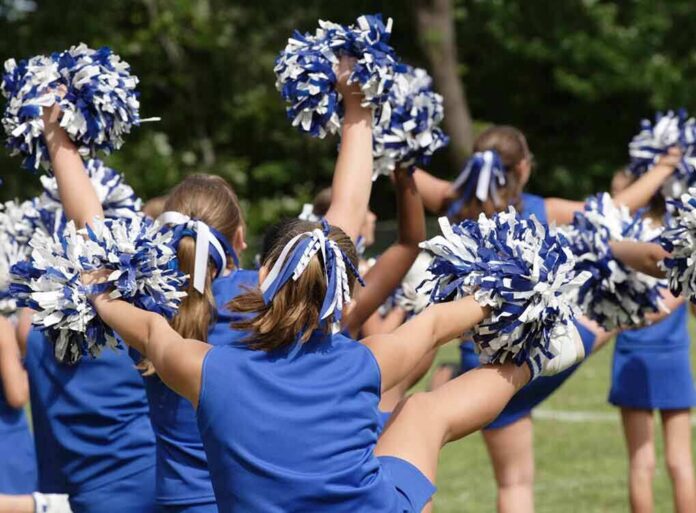
During My Chemical Romance’s October 21, 2026 production at the Hollywood Bowl, female performers costumed in blue-and-white, star-accented cheerleader-style uniforms appeared as part of a theatrical sequence reportedly involving rifles, a staged firefight, and performers being depicted as shot. Within days, Pro Silver Star Ltd., which owns the Dallas Cowboys Cheerleaders (DCC) brand, moved for a temporary restraining order and a preliminary injunction to halt further use of what it calls the “DCC Uniform” in the show. Coverage states the petition alleged audience confusion—both in-venue and online—about whether the dancers were actual DCC members or were authorized by the organization.
The filings, as described by multiple outlets, also argue reputational harm: that linking a highly recognizable NFL-affiliated cheerleading identity to a violent stage vignette risks degrading the brand’s goodwill. TheWrap, TMZ, and other publications report that the team’s representatives issued a cease-and-desist after the show and before seeking court intervention, and that the defendants declined to discontinue the look.
The legal frame: trademarks, uniforms, and expressive works
Cases like this rarely turn on a generic assertion that two costumes “look alike.” They turn on whether the visual elements at issue function as a source identifier—shorthand in trademark law for “this signifies the DCC brand”—and whether the performance used those elements in a way that confuses consumers or falsely implies endorsement. In live entertainment and film, courts also consider the work’s expressive nature. In the Ninth Circuit and other jurisdictions, the Rogers test cabins Lanham Act claims against expressive works unless the use of the mark has no artistic relevance or explicitly misleads as to the source or content of the work. The more a use operates as part of world-building and narrative (rather than as a badge of sponsorship), the stronger the expressive-use defense tends to be.
Uniforms add a second dimension. While clothing per se is a “useful article,” design features separable from function can receive copyright protection, as the Supreme Court held in Star Athletica v. Varsity Brands. There, the Court recognized that certain graphic elements of cheerleader uniforms—stripes, chevrons, and their arrangement—could be protectable if they can be conceptually extracted from the garment and would qualify as a work of authorship on their own. That line of authority gives rights holders an additional lever beyond trademarks if they can show specific protected elements carried over into the accused costumes.
The claims DCC is pressing—and why they chose an injunction
According to the reporting, Pro Silver Star’s motion focuses on three themes: unauthorized use of signature DCC identifiers; a real risk of consumer confusion amplified by social media circulation; and reputational harm from pairing the look with a simulated firefight. Injunctions, particularly temporary restraining orders, are about stopping alleged harm quickly while a court sorts merits and defenses. To win one, a plaintiff must typically show likely success on the merits, irreparable harm absent relief, a balance of equities in its favor, and alignment with the public interest. Brand owners seek this path when ongoing performances threaten to normalize or multiply the challenged imagery with each tour stop and viral clip.
The confusion theory is concrete: reports say the filings assert attendees and online viewers believed the performers were genuine DCC members. In trademark disputes, documented confusion—surveys, declarations, contemporaneous posts—can be powerful. Even without formal surveys at the outset, a plausible allegation that a famous uniform appeared, uncredited, in a context where audiences could reasonably think “those are the Cowboys’ cheerleaders” tees up a fact question courts recognize. That the scene was not merely dance but staged violence intensifies the claimed reputational stakes.
How the defense is likely to respond: artistic relevance and differentiation
The production has been described as dystopian theater—a fictional dictatorship, pyrotechnics, and militarized choreography woven into a rock opera; in that setting, costuming signals character and critique as much as affiliation. Under Rogers, a performer can use real-world brand signifiers within an expressive work if the use has artistic relevance and does not explicitly mislead. Expect arguments that any cheer-style look served narrative purpose, that design differences avoid source identification, and that no explicit claim of DCC sponsorship was made. Courts scrutinize whether cues—dialogue, staging, credits—would lead a reasonable viewer to infer endorsement, not whether a casual glance spots a color palette and a star.
Separately, if claims reach copyright or trade dress, the defense will parse which elements are protectable, which are functional, and whether the accused costumes are sufficiently distinct. Star Athletica allows copyright in separable design features but does not grant a monopoly over the idea of “a cheerleader outfit.” The analytical fight is over specific elements—placement, pattern, star configuration—and whether, in combination, they read as the DCC’s identity or as a generic “American cheer” aesthetic.
What evidence will matter most
Three evidentiary categories typically decide disputes like this. First, visual comparison: side-by-side imagery of the DCC uniform and the concert costumes, with attention to protected elements (if any), logo absence, star shapes, paneling, and color-blocking. Second, confusion and endorsement signals: ads, programs, stage dialogue, and real-time audience reactions. Posts or messages saying “the Cowboys sent their cheerleaders” are more probative than generalized chatter; formal consumer surveys, if competently designed, can be decisive. Third, reputational impact: brand partner communications, complaints, or threatened deals tied to the violent portrayal. TheWrap’s and TMZ’s accounts place all three issues squarely in play; the weight will turn on the underlying proofs the parties can marshal.
Because the relief sought is immediate, the court will likely examine whether further shows are scheduled with the same sequence and whether a quick modification—different colors, removal of star motifs, or an on-stage disclaimer—could mitigate alleged harm while preserving artistic goals. That kind of tailoring often resolves preliminary skirmishes without deciding the ultimate merits.
im crying . bro . the concept of screenshots of mcr fans thinking the cheerleaders were the dallas cowboys being included in a lawsuit pic.twitter.com/XIZTzVbTqd
— avery 🗡️ ieroween (@gorebugs) October 24, 2026
Why it matters beyond one concert
This case sits on a well-traveled seam of modern culture, where famous marks double as cultural shorthand. Sports brands in particular function as both commercial identifiers and icons of Americana; artists reach for them to conjure meaning quickly. The legal system’s job is to ensure those references don’t trick audiences into believing there is endorsement where there is none, or siphon the distinctiveness of a brand’s trade dress into a new revenue stream. The Ninth Circuit’s expressive-use doctrine and the Supreme Court’s separability test give courts tools to draw the line. Whatever the outcome here, the message to touring productions is stable: if you want to borrow the power of a famous look, either license it or build enough narrative, visual, and design distance that viewers can’t reasonably mistake your homage for the real thing.
Sources:
nypost.com, economictimes.indiatimes.com, tmz.com, lifeboxset.com