
The fiercest arguments over the 2026 Seattle Pride Parade are not really about one afternoon on downtown streets; they are about who gets to define “family‑friendly,” what counts as illegal harm versus protected expression, and whose evidence we trust when viral outrage collides with a permitted civic festival.
Key Points
- Seattle Pride 2026 was a large, long‑planned, city‑permitted parade with hundreds of contingents and hundreds of thousands of spectators, framed by organizers and mainstream media as safe and inclusive.
- Conservative and anti‑LGBTQ accounts circulated viral claims and video snippets alleging naked marchers and violence in front of children, but those claims are not yet backed by named witnesses, police records, or full‑context footage.
- Seattle’s own officers have explained that public nudity is generally illegal, but can be allowed within the terms of specific event permits; parents retain responsibility for whether to bring children to such events.
- The dispute fits a broader national pattern in which Pride is simultaneously targeted by anti‑LGBT mobilization and shaped by long histories of police–LGBTQ tension, making law‑and‑order narratives especially contested.
What Actually Happened at Seattle Pride 2026?
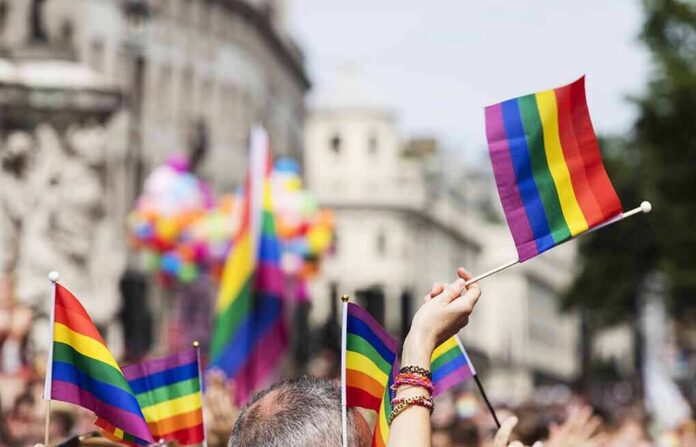
Before weighing claims of illegality or “bedlam,” it is critical to establish what is firmly documented about the Seattle Pride Parade in 2026. This was not a spontaneous street gathering; it was a long‑standing, sanctioned civic event with roots going back to the mid‑1970s. Local coverage notes that the parade theme was “Rally,” with over 250 entries marching through downtown on June 28. Attendance estimates reached the hundreds of thousands, making it Washington’s largest Pride event and one of the city’s biggest annual gatherings. Organizers promoted it as inclusive and family‑friendly, consistent with recent years.
Mainstream outlets that partnered with or reported on the parade—KIRO 7, KOMO, FOX 13, the Seattle Times—depicted crowds in bright colors, flags representing trans communities and communities of color, and “people of all ages” lining the route. Their summaries emphasize joy, celebration, protest roots, and community solidarity; none of these outlets’ recap pieces or highlight reels mention incidents of public nudity leading to arrest, or violence that disrupted the parade itself. Seattle Pride’s own materials describe coordination with police and city agencies for security and marching protocols, implying structured oversight rather than a free‑for‑all.
The Viral Allegations: Nudity, Children, and “Bedlam”
Against that backdrop of official and mainstream narratives, a parallel stream of commentary emerged, largely on social platforms and ideologically aligned sites, asserting that the parade featured naked participants in front of children and episodes of violence. Multiple X/Twitter posts, for example, claim that “naked flaunting men” paraded around children, that one naked man “chases a young boy around a water fountain,” and that Seattle Pride “under fire” after nude marchers strolled near families. Fox News promoted a clip describing Seattle Pride descending into “bedlam” as naked participants “pranced through the streets while children looked on.”
Those posts and clips are central to the outrage dynamic: they portray what would, in many jurisdictions, be criminal indecent exposure in a public space, made morally more charged by the presence of minors. Yet within the research available, these claims remain at the level of assertion and tightly edited video snippets. We do not have complete raw footage establishing context, duration, or permit boundaries; we do not have named complainants or sworn statements from parents; and we do not have corroborating police reports, arrest logs, or case numbers tying specific individuals to specific alleged offenses on that date. In short, the allegations are vivid but, at this point, evidentially thin.
What Seattle Law Says About Public Nudity at Events
One source that directly addresses the legal framework is a recorded conversation with a Seattle police officer about nudity at Pride and similar events. The officer explains that in Seattle, walking around naked in public without a permit is generally illegal and can lead to arrest for indecent exposure or lewdness. However, when an event is formally permitted—such as a parade or the city’s “naked bike ride”—the permit can allow nudity within specified parameters. Police do not create these allowances; they enforce whatever the city authorizes.
The officer is explicit on two further points. First, children cannot be barred from public spaces based solely on age; parents are responsible for deciding whether to bring them, including to events where nudity may be present. Second, the common lay belief that “nudity is allowed as long as it’s not intended to shock” is incorrect; absent a permit, public nudity is considered lewdness and is unlawful. This framing reveals an important nuance lost in many social media reactions: what feels intuitively “illegal” to a viewer may, at a permitted event, be within the law’s boundaries—as written and applied—unless it crosses specific lines (for example, explicit sexual conduct or targeted harassment).
Evidence Versus Narrative: Where the Record Is Strong and Where It Is Weak
When an influencer declares “This is illegal activity,” they are making two claims at once: that the conduct occurred, and that it violated the law in a way authorities failed to address. At present, the stronger evidence supports the scale, permitting, and overall framing of Seattle Pride 2026 as a large, organized, and officially supported event. We have multiple, independent, professionally produced recordings of the parade, all of which show typical Pride imagery—floats, flags, dancers, speeches—and do not, in their edited form, foreground the kinds of nude episodes described by online critics.
By contrast, the case for widespread, unchecked illegality rests on:
• Brief, decontextualized video clips circulated by accounts with no clear institutional verification.
• Commentators’ descriptions that do not, in the provided research, cite statute numbers, police interactions, or affidavits.
• A lack of Seattle Police Department arrest logs or incident reports specifically tied to indecent exposure or assault at the parade, at least in the material currently surfaced.
This does not prove that no such episodes occurred; large urban events routinely see pockets of misconduct that never make the highlight reels. It does mean that, as of now, the bar for asserting a systemic “law enforcement failure” or routine illegal display in front of children has not been met with documentation proportionate to the accusation. The most honest stance is that the claims remain allegations, not established facts.
Violence at Pride: A Wider Pattern and a Local Viral Video
Separate from nudity, another thread concerns alleged violence at or around the Seattle parade, specifically a viral video described as “LGBTQ+ hecklers attacked a security guard protecting a Christian street preacher.” KIRO 7 acknowledged the existence of such a viral video from a Pride event in its own social feed, underscoring that conflict and flashpoints can occur even at events otherwise covered as joyful. Yet here too, the available record is incomplete: we lack a full forensic analysis of the footage, on‑record statements from the guard or preacher, and police determinations about who, if anyone, committed a chargeable offense.
Context from national data shows that violence around Pride can cut in several different directions. Reports from the National Coalition of Anti‑Violence Programs have documented coordinated actions by white supremacist and anti‑LGBTQ hate groups during Pride season, including armed neo‑Nazi demonstrations and physical assaults. Human Rights First has cataloged instances in which counterdemonstrators at Pride events overwhelmed police, throwing rocks and firecrackers at marchers. Civil rights groups such as the NAACP Legal Defense Fund and the NYCLU have also highlighted police violence against LGBTQ protesters at Pride, including pepper‑spraying marchers in New York’s Washington Square Park in 2021.
Seen against this backdrop, a scuffle at Seattle Pride—if that is what the viral video ultimately shows—would not be anomalous. What is contested is whether such incidents primarily reflect aggressive behavior from Pride participants, hostile actions by anti‑LGBTQ activists, disproportionate policing, or some mix of all three. Without granular investigation, assigning blame to “Pride” as a category, or declaring systemic lawlessness, outruns the available evidence.
Family-Friendly Pride and the Debate Over Sexualization
Even among LGBTQ people, there is a real debate about nudity and sexualization at events that bill themselves as safe for families. A discussion thread from gay Christians, for instance, notes that “Seattle pride says family friendly, there’s still nude people and it’s a big event,” reflecting discomfort from within the community itself. That tension—between Pride’s history as a defiant assertion of queer bodies and desires, and its present role as a mainstream civic celebration—is not easily resolved.
Organizers often hedge by segmenting spaces: daytime parades with official guidelines and children’s areas, followed by late‑night parties where explicit content is expected; they may also rely on unwritten norms, trusting that most participants will calibrate their dress and behavior to the mixed audience. Critics argue that this is inadequate, that clear rules and enforcement are required to protect children and uphold public standards. The Seattle officer’s advice—that residents organize and petition city commissions if they want permit conditions changed—captures how, in practice, these values debates become questions of local governance.
Media Alignment, Institutional Trust, and Structural Bias
The evidence also points to an alignment question: KIRO 7 has been Seattle Pride’s official TV partner for a decade. That relationship plausibly shapes how the station frames the event, emphasizing its success and minimizing messy conflict or conduct that would embarrass organizers. Conservative media, conversely, have strong incentives to spotlight the most provocative imagery, both for ideological reasons and because such content drives engagement.
Neither tendency automatically invalidates the facts they present, but both should make a careful reader cautious about taking either narrative as exhaustive. The absence of nude imagery in KIRO’s final broadcast does not prove those moments did not occur; the presence of a shocking clip on X or Fox does not prove that it is representative of the event, or even accurately described. Robust judgment requires triangulating across sources and privileging those that bring specific, verifiable detail—names, laws, dates, official records—over those that trade mainly in adjectives.
Where Responsible Critics and Concerned Parents Can Go From Here
For residents genuinely worried about the intersection of Pride, legality, and children’s welfare, there are more productive paths than outraged retweets. Requests under Washington’s public records laws can surface arrest logs and incident reports for the parade date, clarifying whether police saw behavior that merited charges. Engagement with city permit processes can push for clearer conditions around nudity at “family‑friendly” events—whether that means time‑of‑day limitations, zoned areas, or explicit notice on promotional materials.
For those committed to defending Pride, acknowledging that some attendees experience discomfort or perceive oversexualization is not a concession to bigotry; it is an invitation to think seriously about how a movement’s history of radical visibility translates into a contemporary civic festival shared with children, tourists, and religious minorities. Honest conversation starts by separating three questions: what the law allows under permits, what actually happened and can be documented, and what a diverse community wants its public celebrations to look like going forward.
Sources:
youtube.com, seattlepride.org, seattlepridefest.org, fox13seattle.com, facebook.com, kiro7.com, cbsaustin.com, instagram.com, seattletimes.com, naacpldf.org, acleddata.com