The real drama of American politics isn’t found in campaign slogans or Capitol speeches—it’s in the moments when one senator dares to break from the herd, and millions of livelihoods hang in the balance.
Story Snapshot
- Senator John Fetterman defied progressive backlash and voted to end a 42-day government shutdown.
- His televised confrontation with Sunny Hostin on The View exposed deep Democratic Party divisions.
- Fetterman prioritized immediate relief for federal workers and vulnerable Americans over ideological standoffs.
- The reopening of the government is temporary, with looming risks of another showdown in March 2026.
Fetterman’s Calculated Gamble: Breaking Party Ranks to End the Shutdown
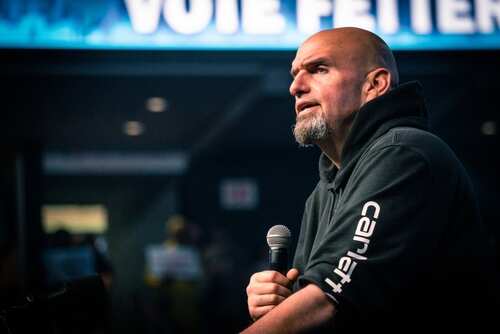
On November 11, 2025, Senator John Fetterman became the unlikely center of a political maelstrom. He had just voted with Republicans and a handful of Democrats to pass a continuing resolution, abruptly ending a five-week partial government shutdown. The move infuriated progressives, but Fetterman insisted his choice was rooted in the immediate harm facing Pennsylvanians and federal workers nationwide. While some accused him of betraying party ideals, his gamble forced a conversation about what real representation looks like when political grandstanding collides with everyday suffering.
The shutdown, triggered by a Democratic filibuster over spending levels, had ground federal operations to a halt in early October. Nutrition assistance vanished for millions, paychecks for government employees evaporated, and public patience wore thin. As the weeks dragged on, the pressure on Senate moderates like Fetterman intensified. Behind closed doors, the debate wasn’t just about numbers on a page—it was about how long American families could wait for political purity to yield to pragmatism. Fetterman’s decision to break the stalemate became an inflection point, testing the boundaries of party loyalty and personal conviction.
🚨 WOW! Sen. John Fetterman (D) REFUSED to be talked down to by The View's Sunny Hostin after he voted to reopen the government pic.twitter.com/LsgCkIbPwT
HOSTIN: Your Pennsylvanians' healthcare will SKYROCKET!!
FETTERMAN: I don't need a LECTURE…they are representing deep-blue…
— Eric Daugherty (@EricLDaugh) November 11, 2025
A Televised Reckoning: The View Confrontation Goes Viral
Fetterman’s next act played out not in the halls of Congress, but under the bright lights of daytime television. Sitting across from Sunny Hostin on The View, he faced scathing criticism for “bringing a butter knife to a gunfight.” Hostin and her progressive allies saw his vote as capitulation—giving away leverage for too little in return, risking healthcare and social programs for political expediency. The exchange was raw, unscripted, and unyielding. Fetterman, unfazed, shot back, “I don’t need a lecture… They are representing deep-blue populations and the extreme.” For millions watching at home, the segment distilled the central rift in modern Democratic politics: should politicians hold the line for bigger wins, or compromise to stop the bleeding now?
While Hostin echoed the frustrations of figures like Senator Bernie Sanders and Governor Gavin Newsom, Fetterman’s response resonated with those tired of endless brinkmanship. He argued that the real casualties of standoffs were not politicians, but families missing paychecks and children missing meals. The confrontation became a viral flashpoint, the clip circulating across social media as both sides claimed victory and accused the other of political shortsightedness.
Behind the Vote: The Human Cost of Political Stalemate
The shutdown’s ripple effects extended far beyond Capitol Hill. Federal contractors watched contracts dissolve, airlines faced cascading delays, and low-income families lined up at closed doors for assistance that never arrived. Each day the deadlock continued, the human cost mounted. Fetterman’s critics wanted to use the shutdown as leverage for broader policy wins; his supporters argued that the suffering had gone on long enough. Polls revealed that blame was spread across both parties, with moderates increasingly seen as the adults in the room. The choice, Fetterman insisted, was between ideological purity and practical relief—and he chose the latter.
Yet the compromise was no panacea. The continuing resolution only funds the government through March 2026, essentially snoozing on the crisis. The negotiations left budget disputes unresolved, with the stage set for another potential standoff. The Democratic Party’s internal rift remains visible, as progressives fear the erosion of leverage and moderates brace for more tough choices. Meanwhile, federal workers and vulnerable Americans have only temporary certainty, knowing another shutdown could be around the corner.
What This Standoff Reveals About American Politics
Political analysts and historians see this episode as a microcosm of a larger trend: the diminishing returns of shutdown brinkmanship and the rise of televised accountability. Fetterman’s high-profile break with his party highlights the growing influence of moderates who prioritize governing over gridlock. His exchange with Hostin underscores the role the media plays in shaping—and sometimes deepening—partisan divides. Scholars warn that repeated short-term fixes erode public trust, and the next standoff may find the public less forgiving of either side’s excuses.
As the dust settles, the lesson is clear: American voters are less interested in party loyalty than in results that matter. The real winners and losers of this shutdown saga aren’t found in cable news soundbites, but in the daily lives of citizens who rely on a functioning government. The next round of negotiations will test whether pragmatism or purity carries the day—and whether leaders like Fetterman will pay a political price, or be rewarded for breaking the mold when it counted most.