When dengue turns fatal in a place that once treated it as an imported curiosity, it signals a shift from episodic travel-linked flare-ups to sustained local risk—one that demands the same rigor we reserve for hurricanes and heat waves.
The Short Version
- An 80-year-old Tampa resident, identified by family as Gay Small, died on her birthday at Tampa General Hospital; Florida health officials later confirmed the death was dengue-related.
- The fatality occurred amid an unusually large local dengue surge in Hillsborough County, where dozens to more than a hundred locally acquired cases were reported in late summer.
- Family accounts and county activity point to local exposure near Bayshore Boulevard rather than recent travel.
- Public health and mosquito control intensified aerial and ground operations in response to the outbreak’s spread pattern.
What Happened: A Dengue Fatality During a Local Surge
Florida health officials confirmed that an elderly Hillsborough County resident died from dengue during the county’s late-summer outbreak, a season that already ranked among Florida’s worst for locally acquired cases in recent years. Family members identified the decedent as 80-year-old Gay Small of Tampa, who died at Tampa General Hospital on her birthday after a rapid clinical decline consistent with severe dengue complications. Reporting that cites the death certificate lists “dengue infection” as the cause, with septic shock and multi-organ failure contributing—an arc textbook to clinicians who have seen dengue progress from febrile illness to life-threatening vascular leak and organ dysfunction.
This was not a one-off amid an otherwise quiet season. Hillsborough County shouldered the bulk of statewide locally acquired cases as case counts climbed across late summer; multiple outlets documented triple-digit tallies in the county alone as the investigation and subsequent confirmation unfolded. The state’s confirmation moved the case from “possible dengue-associated death under investigation” to a completed attribution, closing the loop that public health agencies often follow in arboviral fatalities—provisional language at first, then definitive statements when lab and epidemiologic review are complete.
How Dengue Kills: Mechanism and Clinical Course
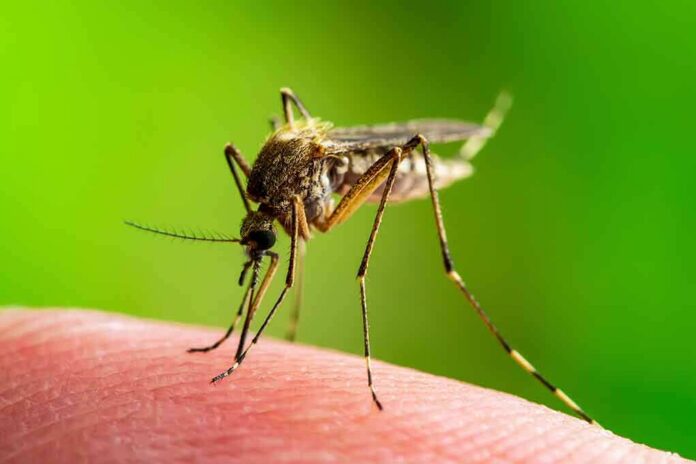
Dengue viruses (four serotypes, DENV-1 through DENV-4) are transmitted primarily by Aedes aegypti, the urban mosquito that thrives in container water around homes. Uncomplicated dengue presents with acute fever, severe headache, retro-orbital pain, and the “breakbone” myalgias that gave the disease its nickname. Severe dengue—formerly “dengue hemorrhagic fever/dengue shock syndrome”—emerges when plasma leakage, coagulopathy, and organ involvement accelerate around defervescence. In elders, and in those with comorbidities, the physiologic reserve to withstand shock and multi-organ failure shrinks. A second infection with a different serotype can be more dangerous due to antibody-dependent enhancement, an immunologic mechanism where non-neutralizing antibodies from a prior infection facilitate viral entry and amplify disease severity. The result is exactly the clinical picture reported here: sepsis physiology, circulatory collapse, and multi-organ failure after what began as a viral febrile illness.
Death certificates often capture the cascade succinctly: initiating infection, downstream shock, and organ failure. That is what reporters relayed in this case. While the earliest public language from officials was appropriately cautious, subsequent confirmation by the Florida Department of Health established dengue as the underlying cause, which aligns with both the clinical course and the local outbreak context.
Why Local Acquisition in Tampa Makes Epidemiologic Sense
Florida’s dengue pattern in the past decade has not been a single, entrenched lineage simmering for years; rather it has been frequent, short-lived introductions—often travel-linked from the Caribbean—seeding local clusters that expand briefly when climate and vector conditions align, then burn out. Federal surveillance and genomic work have shown that Florida’s locally acquired dengue typically arises from repeated introductions with limited inter-seasonal persistence, a dynamic that keeps risk episodic but recurrent. In 2026, Hillsborough’s case load spiked, and the county reported the great majority of Florida’s locally acquired cases in that window, placing a resident with no recent travel squarely within a credible exposure zone.
The vector ecology matches the geography. Aedes aegypti prefers human proximity, breeding in man-made containers, shaded patios, clogged gutters, and tiny reservoirs of standing water—exactly the built environment along dense waterfront corridors such as Tampa’s Bayshore Boulevard. Outbreak-related mosquito control mapped and treated high-activity zones from helicopters and ground units, tactics reserved for widespread container breeding and evidence of arbovirus activity in traps. Those operational choices are data-driven; agencies scale to the pattern they detect.
From “Under Investigation” to Confirmed: The Public Health Process
Arboviral fatality attribution typically moves through a sequence. First, clinicians report a severe suspect case; laboratories run molecular assays (RT-PCR) early in illness and serology (IgM/IgG) later; epidemiologists reconcile clinical onset, travel history, and local transmission markers. Health departments then communicate carefully: they flag a possible link while protecting identifiable patient information and avoiding premature certainty. Only after laboratory and epidemiologic review converges do they confirm a dengue-associated death. That cadence played out in Hillsborough County—initial statements acknowledged an active investigation; subsequent reporting cites the department’s formal confirmation of a dengue-related death.
In parallel, the community response accelerated: trap networks looked for virus in captured mosquitoes; larviciding and adulticiding increased; and clinical services at major centers, including Tampa General Hospital, saw and treated dengue patients consistent with the county’s unprecedented local burden. The point is not theatrics; it is interrupting transmission cycles long enough to break chains seeded by imported cases during peak vector season.
Risk, Prevention, and the Particular Vulnerability of Older Adults
Who is at risk of severe disease? Prior dengue infection with a different serotype increases risk via immunologic enhancement. Age matters as well: older adults experience higher rates of severe outcomes, in part due to diminished physiologic reserve and comorbid conditions that complicate fluid management and organ support. In Florida’s current ecology, the practical advice is durable: drain containers weekly; screen and seal living spaces; use EPA-registered repellents; wear long sleeves and pants during peak Aedes activity (daytime and dusk); and seek prompt care if fever and severe aches evolve into abdominal pain, persistent vomiting, mucosal bleeding, lethargy, or signs of dehydration. Those “warning signs” are the inflection point at which timely fluid management can avert shock.
The broader system piece is equally important. Local governments need sustained surveillance capacity, not just surge response. When introductions are frequent and climate suitability extends vector seasons, Florida will see more summers like this one. Mosquito control operations that map hotspots, deploy precision larviciding, and coordinate public messaging with clinicians represent the difference between a cluster and an entrenched neighborhood outbreak. That discipline—plus clinical familiarity with evolving case definitions—saves lives even when a vaccine strategy remains limited in the U.S.
Florida is experiencing one of its worst surges of dengue fever in decades, and the toll now includes a death in the Tampa Bay area. https://t.co/aMMGT8pijS
— South Florida Sun Sentinel (@SunSentinel) September 18, 2026
What This Death Tells Us About Florida’s Dengue Future
This fatality does not prove that dengue has permanently rooted itself across Tampa Bay; the genomic and surveillance record still points to repeated introductions with limited local persistence between seasons. But it does confirm that in the right conditions—ample vectors, warm months, dense neighborhoods, and enough imported infections to seed local chains—Tampa can experience severe disease and death without anyone leaving the county. That is the new operational reality. Health departments will continue to open investigations with cautious language and close them with firm conclusions; mosquito control will keep chasing the container habitats that fuel Aedes aegypti; and clinicians will need dengue at the top of the differential all summer, not just for travelers but for neighbors.
For families, the lesson is sobering but actionable. Dengue is not an exotic disease that happens elsewhere; it is a mosquito-borne threat that can be prevented at the household level and managed clinically when recognized early. For institutions and counties, the charge is to keep the surveillance muscle strong after headlines fade. Outbreaks punish complacency. Precision and persistence—surveillance, control, early care—are what keep a tragic case like this from becoming a trend.
Sources:
medicaldaily.com, tampabay.com, wusf.org, cbsnews.com, outbreaknewstoday.substack.com, floridatrend.com