

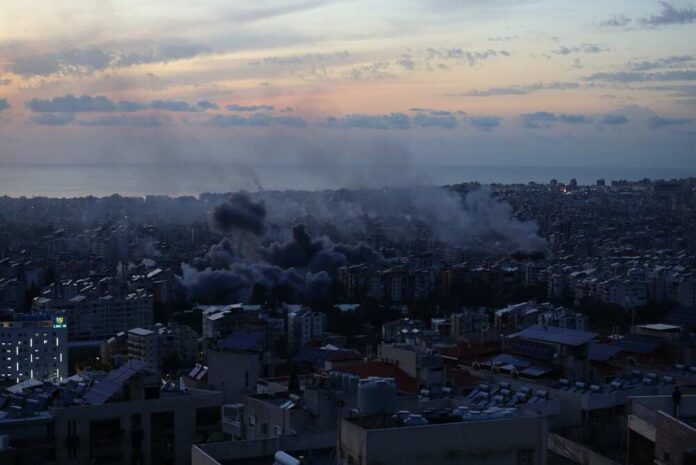
The Israeli Defense Forces destroyed a Hezbollah tunnel network so massive that the explosion registered as a small earthquake, exposing the scale of Iranian-backed infrastructure designed to infiltrate and attack Israeli communities.
Story Snapshot
- IDF demolition of two vast Hezbollah tunnels near Lebanon’s Qantara village triggered seismic detection systems on April 28, 2026
- Explosion force felt along Israel’s northern border after military issued pre-blast warnings to prevent public panic
- Tunnels described as largest discovered in ongoing conflict, built with direct Iranian guidance for cross-border attacks
- Operation continues pattern of dismantling Hezbollah’s underground assault infrastructure threatening Israeli sovereignty
Unprecedented Seismic Impact from Tunnel Demolition
The Israel Defense Forces executed a controlled demolition of two vast Hezbollah attack tunnels in southern Lebanon on April 28, 2026, generating an explosion powerful enough to register on Israel’s Geological Survey seismic warning system. The blast occurred near Qantara village, a Shiite-majority area close to the Israel-Lebanon border, and was felt by residents along Israel’s northern frontier from Rosh Hanikra to the Golan Heights. While the seismic detection system recorded the event, earthquake alert sirens were not activated, demonstrating the precision of Israel’s warning protocols. N12 News reporter Amit Segal confirmed the earthquake-like effects through social media, while Lebanese media outlets captured footage of the dramatic explosions.
Preemptive Warnings Prevent Civilian Alarm
Prior to the demolition, IDF command issued alerts to Israeli communities across the northern border region, explicitly warning residents about the impending large-scale explosion and advising against panic. This proactive communication strategy reflects lessons learned from previous tunnel demolition operations, where unexpected ground tremors caused public concern. The military’s ability to predict and manage the seismic impact of such operations demonstrates sophisticated operational planning. No structural damage or injuries were reported following the blast, validating the effectiveness of both the warning system and the controlled nature of the demolition. The coordination between military operations and civilian safety measures underscores Israel’s commitment to protecting its citizens while neutralizing terrorist infrastructure.
Iranian-Guided Infrastructure Threatens Border Security
The destroyed tunnels were constructed with direct guidance from Iran, according to Israeli military sources, representing a strategic effort by Tehran to enhance Hezbollah’s offensive capabilities against Israel. These underground passages are designed to enable surprise attacks on Israeli communities and military installations, circumventing above-ground defenses. Hezbollah has been building cross-border tunnels since the 2006 Lebanon War, with previous discoveries in 2018-2019 leading to IDF demolitions under Operation Northern Shield. The current tunnels’ unprecedented scale—earning the designation as the largest discovered in the ongoing conflict—highlights the persistent threat posed by Iranian-backed asymmetric warfare tactics. This infrastructure investment reveals the strategic patience and resources Tehran dedicates to maintaining pressure on Israel’s northern border.
Pattern of Dismantling Underground Assault Network
The Qantara demolition fits within a broader IDF strategy to systematically identify and destroy Hezbollah’s underground network before it can be operationalized for attacks. Ongoing Israel-Hezbollah clashes have intensified since October 2023, with daily exchanges in southern Lebanon creating a fragile security environment despite nominal ceasefire agreements. Recent drone threats and interceptions near communities like Misgav Am preceded this latest operation, indicating continued Hezbollah attempts to probe Israeli defenses. The operation disrupts immediate Hezbollah attack plans while sending a deterrent message about Israel’s detection capabilities and willingness to act preemptively. No immediate Hezbollah retaliation was reported, though the long-term implications may include escalated tit-for-tat strikes as the militant group seeks to rebuild its compromised infrastructure.
Watch: Small Earthquake Registered After IDF Blows Up Largest-Ever Hezbollah Tunnel https://t.co/xK3cVuz6XH
— zerohedge (@zerohedge) April 29, 2026
The destruction of these tunnels reinforces a fundamental reality for both Israeli and Lebanese civilians: government failures on multiple levels have allowed proxy conflicts to fester, endangering ordinary people on both sides of the border while elites in Tehran, Beirut, and beyond pursue geopolitical agendas. Israeli taxpayers fund constant defensive operations against threats that could be resolved through diplomatic pressure on state sponsors of terrorism, while Lebanese communities host militant infrastructure that makes them targets. The technological sophistication of seismic detection and precision demolition cannot replace the political will needed to address root causes—a will seemingly absent among decision-makers more concerned with maintaining power than achieving lasting peace.
Sources:
Watch: Small Earthquake Registered After IDF Blows Up Largest-Ever Hezbollah Tunnel – ZeroHedge
IDF Destroys Hezbollah Tunnel – Israel Realtime
IDF Blows Up 2 Vast Hezbollah Attack Tunnels Built with Direct Guidance from Iran – Times of Israel