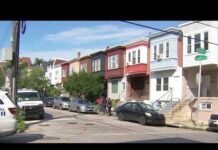
When a death occurs at a property tied to a prominent political family, the stakes of accurate reporting rise sharply: the real story is the investigative process and what authorities actually know, not the name on the deed.
Key Points
- Boston Police have opened a formal death investigation after a body was found at a Mattapan multi-family home on Malta Street.
- The Boston Police Homicide Unit is leading the inquiry, a standard practice for unexplained or potentially suspicious deaths.
- City and registry records show the seven- to eight-bedroom property is owned by Conan Harris, husband of Congresswoman Ayanna Pressley, but used as a long-term rental.
- Police have not publicly identified the victim, released a cause of death, or confirmed that the case is being treated as a homicide.
- Media and social commentary have focused heavily on the political connection, despite statements that Pressley and Harris were not present and are not involved.
The Confirmed Facts of the Mattapan Death Investigation
On a Saturday afternoon, shortly before 2 p.m., Boston police received a radio call categorized as an “investigate person” report for 25 Malta Street in the city’s Mattapan neighborhood. Responding officers arrived at the multi-family home and found an individual who was pronounced dead at the scene. That discovery shifted the call from routine welfare-type check to a formal death investigation, triggering involvement from specialized detectives.
Multiple outlets, citing Boston Police Department statements and spokesperson Officer James Moccia, agree on these basic operational facts: the call time, the location, and the presence of a deceased person inside or at the property. The terminology is consistent as well. Police have publicly described the case as a “death investigation,” not a confirmed homicide, and have emphasized that no further details are being released while the inquiry is underway. At this stage, this is the highest level of certainty available to the public: a person died at that address, and the circumstances are sufficiently unclear or concerning that the matter has been escalated beyond routine patrol response.
Why the Homicide Unit Leads Many “Death Investigations”
One source of confusion in early coverage is the involvement of the Boston Police Homicide Unit. Social media posts and some headlines frame the incident as a homicide because homicide detectives are on the case. In practice, that is not how classification works. In Boston, the Homicide Unit routinely takes the lead on any death that is sudden, violent, unexplained, or potentially suspicious, including cases that ultimately prove to be suicides, accidents, or natural causes. In other words, the assignment of homicide detectives signals that investigators are treating the death seriously and want specialized oversight; it does not, by itself, prove that a murder has occurred.
That distinction is visible in prior cases. For example, in an earlier Mattapan incident at Astoria Street, police publicly described the matter as a “death investigation” while noting that the Homicide Unit was actively investigating “the facts and circumstances” surrounding a fatal stabbing. Only after sufficient evidence emerged did the case move toward formal homicide classification and potential charges. The Malta Street investigation is at a similarly preliminary stage: detectives are gathering facts, but have not, as of the latest statements, announced a cause or manner of death, named a suspect, or described any theory of the case.
Ownership, Tenancy, and the Political Connection
Property records play a central role in the public framing of this incident. City records and the Suffolk County Registry of Deeds confirm that the multi-family home at 25 Malta Street is owned by Harris Conant, better known in reporting as Conan Harris, the husband of Massachusetts Congresswoman Ayanna Pressley. The structure is described as a seven- or eight-bedroom building of roughly 2,700 square feet, built in the early twentieth century and recently valued at just under $920,000.
Crucially, both the realtor and Pressley’s office state that the property is used as a rental. The realtor told Boston media that the building is a rental and that the tenants have lived there “for a while,” indicating long-term occupancy by unrelated residents rather than short-term political or personal use. A spokesperson for Pressley issued a statement clarifying that neither the congresswoman nor Harris lives at the Malta Street address; instead, they reside in Boston’s Hyde Park neighborhood. The statement also expressed condolences to the affected family, underscoring that from their perspective they are linked to the case only as property owners.
Those facts matter for how responsibility and relevance are understood. Owning a rental home does not automatically confer knowledge of, or involvement in, every event that occurs there. Landlords have legal obligations for safety and maintenance, but tenants control day-to-day life inside the property. The current public record contains no allegation, from police or reputable outlets, that either Pressley or Harris played any role in the death beyond being listed on the deed.
What Authorities Have Not Yet Released
In early phases of a death investigation, the most important information is often what officials withhold rather than what they disclose. In this case, Boston Police have not publicly identified the deceased individual, consistent with standard practice that protects next-of-kin notification and investigative integrity. There has been no official statement on the cause of death—no indication whether the person died from trauma, overdose, natural causes, or another mechanism—and no explanation of where within the property the body was found.
Likewise, police have not announced any arrests, named any suspects, or described forensic findings such as weapon recovery, signs of struggle, or toxicology results. The medical examiner’s office has not yet published a cause and manner of death, the document that typically determines whether a case is classed as homicide, suicide, accident, or natural. Until that report is complete and detectives synthesize its conclusions with scene evidence and witness interviews, the case remains in a liminal category: serious enough for homicide detectives, but not formally labeled as a homicide.
For observers, this is a familiar pattern. Complex death investigations often unfold over weeks or months, with information released in stages. The current silence does not imply either foul play or its absence; it simply reflects an active investigation not yet ready for public conclusions.
Media Framing and the Politics of a Property Deed
From the moment the Malta Street death became public, many headlines foregrounded a single detail: that the home is owned by the husband of Ayanna Pressley, a nationally recognized member of the progressive “Squad.” Posts and segments on cable, local television, and social platforms repeatedly used formulations such as “body found at property owned by Rep. Ayanna Pressley’s husband,” even when the underlying story offered no suggestion of political relevance beyond ownership.
This emphasis is not unique to Pressley. It reflects a broader pattern in which any serious incident at a property tied to a political figure, celebrity, or other public person is immediately framed through that association. In the age of polarized politics, that pattern interacts with rising partisan toxicity: research on political affiliation and mortality during the COVID-19 pandemic, for example, has documented how ideological context can shape risk behaviors and outcomes, reinforcing a perception that politics and death are increasingly intertwined. In news coverage, the mere presence of a political name can become an angle unto itself, even when investigators have explicitly stated that there is “no link alleged” between the officeholder and the incident.
The Malta Street case illustrates the risk of conflating property records with culpability. The core facts—death at a rental, homicide unit involvement, ongoing investigation—would stand as serious news if the owner were a private landlord. Attaching the congresswoman’s name may drive attention, but it can also divert focus from the victim, the tenants, and the investigative process. Responsible reading, especially in the early stages, means distinguishing between what police have said and what headlines merely imply.
How Boston Handles Suspicious Deaths in Neighborhood Context
To understand why homicide detectives are so visible in this case, it helps to look at Boston’s broader approach to serious incidents in neighborhoods like Mattapan. The Homicide Unit maintains a portfolio of open and unsolved cases across the city, and publicly encourages residents to provide information through direct hotlines and anonymous tip programs when they have knowledge related to a death. The unit’s remit covers not just clearly criminal events such as shootings and stabbings, but any death where criminality cannot yet be ruled out.
Mattapan, like several other Boston neighborhoods, has seen repeated serious incidents in recent years—fatal stabbings, shootings, and deaths following police encounters—which means homicide detectives are a regular presence rather than an exception. Against that backdrop, their involvement at Malta Street signals continuity with standard practice rather than special treatment because of who owns the building. The case is one more entry in a larger effort to “mark every death, remember every victim, and follow every case,” as one long-running Boston homicide monitoring project describes its mission.
Boston homicide detectives have opened an investigation after a dead body was found at a suburban rental property reportedly owned by the husband of Congresswoman Ayanna Pressley.
— Open Source Intel (@Osint613) July 19, 2026
Open Questions and What Will Clarify Them
Several important questions remain unanswered, and they will determine how the Malta Street death is ultimately understood.
First, the medical examiner’s findings on cause and manner of death will make clear whether this is properly categorized as homicide, suicide, accidental, or natural. That single document is often decisive: in unexplained deaths, autopsy and toxicology findings can reveal injuries, poisoning, or underlying disease that was not apparent at the scene. If the manner is homicide, the case will proceed as a criminal investigation; if it is not, the Homicide Unit may close its file without charges.
Second, the eventual identification of the victim, once next of kin have been notified, will shift attention from property ownership to the life that was lost. In other Boston cases, naming the victim has opened avenues for community remembrance, witness outreach, and deeper reporting on the circumstances leading up to the death. Until that happens here, much of the discourse is necessarily abstract.
Third, if investigators uncover evidence of criminal activity—through witness statements, surveillance footage, forensic analysis, or confessions—those details will anchor the narrative in concrete events rather than speculative associations. Arrest warrants, charging documents, and court records are the next tier of transparency after investigative statements; they will either confirm that a crime occurred at the Malta Street rental or establish that, while tragic, the death does not involve prosecutable wrongdoing.
Finally, the way media and commentators adjust their framing as more facts emerge will be a quiet test of how well the system resists the temptation to treat every politically adjacent incident as political in essence. For now, the authoritative story is straightforward: Boston police, including the Homicide Unit, are investigating an unexplained death at a rental property in Mattapan owned by a political spouse; no public evidence yet ties the manner of death or any suspect to the congresswoman or her husband. Anything beyond that is speculation, and speculation is no substitute for the careful, methodical work of a death investigation.
Sources:
facebook.com, bostonglobe.com, instagram.com, boston.com, wcvb.com, cbsnews.com, tmz.com, police.boston.gov, masslive.com, boston25news.com, youtube.com, cidrap.umn.edu, foxnews.com