The central truth of the Mechanicville case is stark: investigators concluded this was a closed-door, premeditated murder-suicide within one family—four children killed by their mother and grandmother, who then took their own lives—executed primarily by poisoning and, for at least one child, sharp-force injuries. The police record is cohesive on mechanism, authorship, and timeline; it is a textbook example of how such crimes unfold and are proven after careful forensic work.
At a Glance
- Police determined all six deaths occurred inside a single apartment with no outside involvement, eliminating the specter of an external assailant.
- The medical examiner ruled the four children’s deaths homicides and the two adults’ deaths suicides; investigators say the adults acted in concert.
- Recovered evidence supports intentional poisoning with prescription and over-the-counter drugs; at least one child also suffered fatal sharp-force injuries.
- Police believe the killings occurred June 10 and were discovered nearly two weeks later, aligning with a custody transition window that summer.
What investigators established: closed scene, homicide-suicide, and a planned method
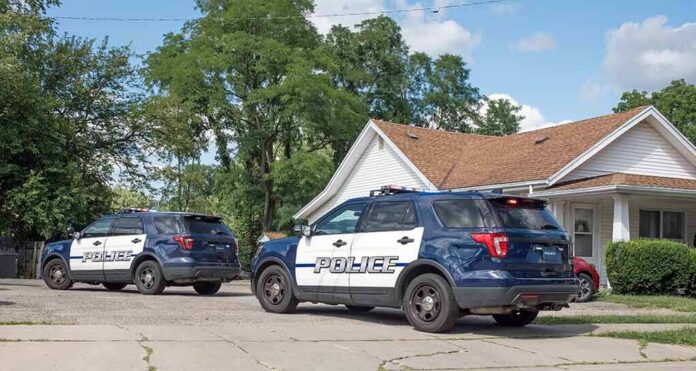
Mechanicville officers responding to a welfare check at 2 Harris Avenue found six bodies in one apartment and, after scene processing, stated they had no evidence of any outsider’s involvement. This is a foundational determination in any complex death scene: if entry, egress, witness canvassing, and physical evidence exclude an intruder, investigators focus on internal dynamics, relationships, and timelines. Here, police made that call early and reinforced it after autopsies and subsequent analysis.
The medical examiner’s conclusions defined the legal frame. The four children were ruled homicide victims; the two adults—identified by police as the children’s mother, Sarah Myers, and their grandmother, Amy Steadman—died by suicide. Police later said unequivocally that the two women conspired to carry out the killings before taking their own lives. Conspiracy in this context means coordinated planning and execution, not merely simultaneous presence; it implies corroborating materials such as communications, purchase histories, or notes that align on intent and sequence.
Mechanism of killing: poisoning as the primary tool, with evidence of sharp-force trauma
From the outset, investigators emphasized recovered evidence consistent with intentional poisoning, citing the presence of numerous prescription and over-the-counter medications at the scene. Toxicology-driven homicide cases rely on triangulation—what substances are found in the environment, what is in the blood of decedents, and how dosing and timing fit a plausible sequence. Local reporting tied the case to common sedating agents, and a separate broadcast, citing sources, described diphenhydramine (Benadryl) and kratom in the children’s blood, both of which can be dangerous at high doses, especially in pediatric physiology. While police did not release lab tables, their public posture and subsequent ME rulings indicate toxicology corroborated the theory of intentional drugging. At least one child, identified in later reporting as Gavin, suffered fatal sharp-force injury, a grim marker that the poisoning plan did not end uniformly or peacefully for all four victims.
Timeline and the summer-custody backdrop
The timeline is exceptionally tight and devastatingly ordinary until it isn’t. Police believe the children were killed on June 10; the bodies were discovered June 23 after neighbors raised concern. That timeline overlaps a documented custody structure: court papers described a school-year arrangement with the mother and an uninterrupted summer period with the father, Brady Harmon, beginning in July. The proximity of the killings to a forthcoming shift in parenting time is part of why the custody dispute frames public understanding of motive. Even so, what is formally established is chronology and planning; intent in a legal sense comes from acts and admissions, not speculation about inner narratives.
Family homicides linked to separation or custody are statistically uncommon but patterned. Syntheses of homicide-suicide cases involving children consistently identify intimate-partner conflict, legal stress, and mental health factors as frequent precipitating circumstances; these events are rarely impulsive and are often preceded by planning behaviors. The investigative arc here—initial public caution, followed by sharper conclusions once autopsies and toxicology return—matches what veteran detectives see in similar cases.
What the case evidence can prove—and what it does not need to
Police statements later described planning and conspiracy between the two adults, citing recovered evidence from the apartment. In such cases, “recovered evidence” typically encompasses purchase receipts, device extractions, drafts or handwritten notes, and message logs that align with the dosing window and the children’s decline. The public record summarized those materials without publishing case files; that is standard practice when investigations close without criminal prosecution. Legally, the core findings—internal scene, homicide of the children, suicide of the perpetrators, and documented poisoning—carry the evidentiary load. While many want definitive motive declarations, prosecutors and police are not obliged to prove motive in order to close a homicide-suicide; mechanism and authorship suffice.
One element that sharpened public horror was the evidence that at least one child resisted. In multi-victim poisonings, resistance often forces escalation—smothering, restraints, or, here, sharp-force injury. That dual-modality violence is a forensic red flag for premeditation that meets resistance, not a spontaneous act, and it aligns with the conclusion of coordinated killing followed by suicide.
How this fits the broader pattern of family homicide-suicides
Across jurisdictions, the literature on homicide-suicides with child victims shows that adults—most often parents—commit the overwhelming majority, and that relationship dissolution or custody conflict is a recurring precipitant alongside mental health and legal stressors. In one review of National Violent Death Reporting System data, 98% of such homicide-suicides were perpetrated by adults, usually parents, with intimate-partner problems and legal difficulties frequently documented in the preceding period. The Mechanicville case tracks that template closely: a family-court backdrop, apparent premeditation, a closed scene, and a lethal sequence that unfolded over hours but was planned over days.
The pattern matters for prevention. These crimes do not announce themselves with a single blinding signal; they accumulate risk indicators—sudden isolation, obsessive litigation posture, procurement of means, and messaging that casts the children’s removal from one parent as existential harm. Effective prevention sits at the intersection of family court, child protection, behavioral health, and policing—domains that often operate in silos.
⚖️💔”𝙒𝙚 𝙠𝙞𝙡𝙡𝙚𝙙 𝙩𝙝𝙚𝙢 𝙩𝙤 𝙨𝙖𝙫𝙚 𝙩𝙝𝙚𝙢.”
That is what the letter claims.
Four beautiful kids.
Harper. Hudson. Gavin. Gracelynn.
The children were supposed to fly to their father in Mechanicville.
Their dad in Utah had the summer marked. They never arrived.… pic.twitter.com/jM5eCA7PNV
— Tosca Austen (@ToscaAusten) September 8, 2026
The enduring lessons: evidence, interagency seams, and the limits of hindsight
Three durable lessons travel with this case. First, in domestic environments where all victims and suspects are found dead, the mechanical facts carry the argument: entry and exit patterns, drug availability and blood levels, injury typology, and corroborating communications. Investigators built a coherent account on those pillars and sustained it through medical rulings.
Second, the custody calendar is not merely context; it structures opportunity, stress, and timing. Documented orders placed the children with their mother during the school year and the father in the summer. Police believe the killings occurred June 10—weeks before the summer transition—suggesting a preemptive act rather than a reactive one. Chronology is not conjecture; it is the spine around which motive theories turn.
Third, while communities crave an answer to “why,” the criminal law requires something else: who did what, how, and when. On those questions, the Mechanicville record is clear. It is a horror contained to one apartment, authored by two adults, and carried out with planning and lethal means readily at hand. The only responsible way forward is to apply those specifics to strengthen early-warning systems in custody-linked crises—because in cases like this, the window for intervention is measured in days and defined by details that someone, somewhere, already sees.
Sources:
spectrumlocalnews.com, cbs6albany.com, syracuse.com, timesunion.com, youtube.com, usmagazine.com, wnyt.com