
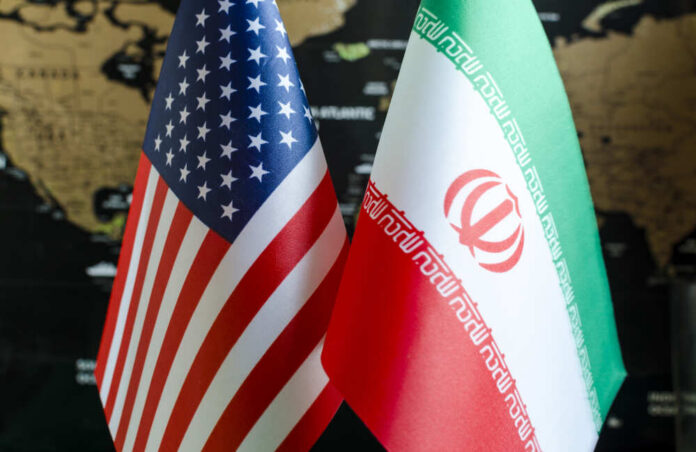
Iranian media now claims a secret U.S. deal could end the war on every front, even in Lebanon, while the White House calls that story a “complete fabrication” and keeps the real text out of public view.
Story Snapshot
- Iranian outlets say a draft U.S.–Iran memorandum would end fighting on all fronts, including Lebanon.
- Multiple U.S. and regional reports confirm a real draft exists, but not a final deal.
- The draft ties a 60‑day ceasefire to reopening the Strait of Hormuz and big sanctions relief fights.
- The White House publicly disputes key Iranian state media claims, deepening distrust of both governments.
What Iran’s media says the draft deal would do
Iranian state television and semi-official outlets have rolled out their version of a draft peace memorandum with the United States, and it is sweeping.[2][6] Their reports describe a 14-point framework that would declare a permanent end to military operations on all fronts, including Lebanon, and reopen the Strait of Hormuz under Iranian oversight.[2][6] Some Iranian accounts say Washington would unfreeze at least $12 billion in blocked funds within sixty days, and separate reporting cites talk of a much larger $300 billion reconstruction fund.[2][6]
According to these Iranian outlets, Tehran would gain “exclusive authority” over shipping lanes, navigation rules, and security in the Strait of Hormuz.[2] Every ship would have to share detailed cargo and ownership data, and Iran could deny passage to traffic it deems hostile.[2] Supporters inside Iran frame this as making the United States pay for years of sanctions and war, and as proof that pressure on Western energy markets can force Washington to the table on Iran’s terms.[2][6]
What U.S. and independent reporting confirm – and what they do not
Independent reporting from U.S. and regional outlets paints a more cautious picture.[1] A draft memo does exist, and negotiators on both sides say they have a working text that would extend the current ceasefire by sixty days and halt military operations on every front, including Lebanon, if it is approved.[1] The draft also calls for Iran to reopen the Strait of Hormuz and restore traffic toward prewar levels within thirty to sixty days, in exchange for the United States lifting its naval blockade.[1][5]
The same draft, as described to reporters, would require Iran to publicly reaffirm that it will never build nuclear weapons and to dispose of its stockpile of enriched uranium under a joint mechanism that still has to be negotiated.[1] Sanctions relief and frozen assets are clearly on the table, but in softer language than Iranian media suggests.[1][2] Reports speak of a possible postwar investment or reconstruction fund “around” $300 billion, but even officials cited in those stories admit the number is not confirmed and may be a bargaining figure, not a locked-in promise.[2][3]
The White House pushback and the fog of leaks
The strongest public clash is over whose version of the draft the world should believe.[4] When Iranian state media released what it called key terms of the memorandum, the White House quickly told reporters that the document was a “complete fabrication,” disputing Iran’s description of the text.[4] U.S. officials still admit a draft memorandum exists and say both sides are “close” to an agreement, but they argue that Tehran is cherry-picking or even inventing terms to shape public opinion before anything is signed.[4]
Analysts who track Iran diplomacy say this pattern is common. Leaked “frameworks” often hit the press before leaders on either side have approved them, with unnamed officials pushing out their preferred version. In this case, Iran has an interest in selling the memorandum as a major win, including an end to fighting in Lebanon and large financial gains, while Washington wants to calm critics who see any big payout to Tehran as rewarding an enemy.[3][4] Conflicting leaks and denials leave ordinary Americans, Israelis, and Iranians in the dark about what is real and what is spin.
Why this matters to Americans on the right and the left
For many Americans, the details of who controls the Strait of Hormuz sound distant, but the stakes are close to home.[1][3] About one-fifth of the world’s oil flows through that waterway, and its closure has already shaken global energy markets once in this war.[3] Any deal that reopens it could ease prices at the pump, but if it also hands Iran new leverage over shipping, it could give another unelected regime huge power over our economy.[2][3] Neither party in Washington has been fully honest about those tradeoffs.
The memorandum on resolving the conflict between Iran and the US consists of 14 points, the Mehr news agency reports.
The memorandum entails lifting the naval blockade within 30 days and withdrawing US forces from areas bordering Iran.
Additionally, the US and its allies would…
— Искусственный Интеллект (@InnaInna385953) June 12, 2026
Conservatives who worry about “America Last” diplomacy see the idea of a $300 billion fund for Iran as proof that elites would rather rebuild a hostile regime than fix U.S. borders, cities, or debt.[2][6] Liberals who fear endless war see another pattern: secretive talks, no public debate, and a foreign policy run by a small club of security insiders. Both sides can point to the same fact pattern here – opaque drafts, clashing leaks, and a White House denial that tells us little – and reasonably ask whether anyone in power is leveling with the American people.[4]
Sources:
[1] Web – Iran media says draft deal with US would end war including in Lebanon
[2] Web – Here’s what draft proposal of US-Iran deal entails – Firstpost
[3] Web – Exclusive: What’s inside the Iran deal Trump is close to signing – …
[4] Web – New Details Negotiations: $300 Billion Fund For Iran And A ‘halt To …
[5] YouTube – Iran leaks peace draft details: What would US get for ending …
[6] Web – A draft agreement being discussed between the United … – Instagram