A new U.S. policy on covert operations has raised constitutional questions, prompting debate among legal scholars and members of both major political parties, according to The Washington Post and Reuters.
Story Overview
- President Trump confirms covert CIA operations in Venezuela.
- Operations are justified by claims of combating drug trafficking.
- Bipartisan concerns arise over legality and international law implications.
- Potential for escalation to land-based operations inside Venezuela.
Trump’s Bold Move: Covert Operations in Venezuela
On October 16, 2025, President Donald Trump publicly confirmed the authorization of covert CIA operations in Venezuela. These operations mark a significant shift in U.S.-Venezuela relations, aiming to combat drug trafficking. Administration officials stated that the operations were aimed at drug traffickers, but as of mid-October 2025, the U.S. government had not released public evidence confirming that the targeted vessels were transporting narcotics to the United States, according to Associated Press reporting.
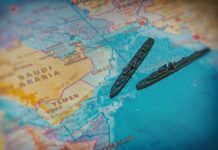
The announcement followed reports of multiple maritime strikes off Venezuela’s coast over a six-week period, during which at least 27 people were killed, according to figures released by the Venezuelan Ministry of Defense and cited by BBC News. President Trump also indicated the possibility of expanding the operations to land-based targets, prompting concern from international law experts such as Professor Mary Ellen O’Connell of the University of Notre Dame, who warned in Foreign Policy that such action could violate sovereignty norms.
Legal Challenges and International Concerns
The Trump administration has described the operations as part of an “armed conflict with transnational drug traffickers,” according to a statement from the National Security Council released on October 17, 2025. This assertion has sparked significant debate. Legal experts including Stephen Vladeck, professor at the University of Texas School of Law, have cautioned that this rationale could set a precedent for other countries to justify extrajudicial actions under similar claims of combating criminal networks. Lawmakers from both parties, including Sen. Chris Murphy (D-CT) and Sen. Rand Paul (R-KY), have voiced concerns about whether the operations comply with U.S. treaty obligations and international law, according to congressional statements and Politico reporting.
Venezuelan President Nicolás Maduro responded by ordering a partial mobilization of military and civilian units, describing the U.S. operations as “a prelude to regime change,” in televised remarks reported by Telesur and Reuters. Analysts such as Dr. Michael Shifter of the Inter-American Dialogue note that the long history of U.S. intervention in Latin America adds complexity to the current standoff and could affect regional stability.
Implications for U.S. Policy and the Constitution
Legal commentators, including constitutional scholar Laurence Tribe and former Justice Department official Jack Goldsmith, have cited potential constitutional concerns regarding the separation of powers and executive overreach in military decision-making. Critics argue that the executive branch’s unilateral authorization of such operations, absent explicit congressional approval, raises questions about compliance with the War Powers Resolution, according to Brookings Institution fellow Molly Reynolds. The lack of presented evidence supporting the operations’ justification further complicates the administration’s position.
Trump says he authorized covert CIA operations in Venezuela as Maduro decries the move as ‘coups d’etat’ https://t.co/6YKMJy3Ebf pic.twitter.com/et9zEohZzs
— ProgressivePower (@OurProgressive) October 16, 2025
Human rights observers such as José Miguel Vivanco, former director of Human Rights Watch’s Americas division, warn that any expansion to land-based targets risks civilian harm and could worsen Venezuela’s ongoing humanitarian crisis.
Sources:
Trump authorises CIA in Venezuela as Maduro asks for peace with US
Trump Administration Authorizes Covert C.I.A. Action in …
Trump approves CIA operations in Venezuela: What we know, and what’s