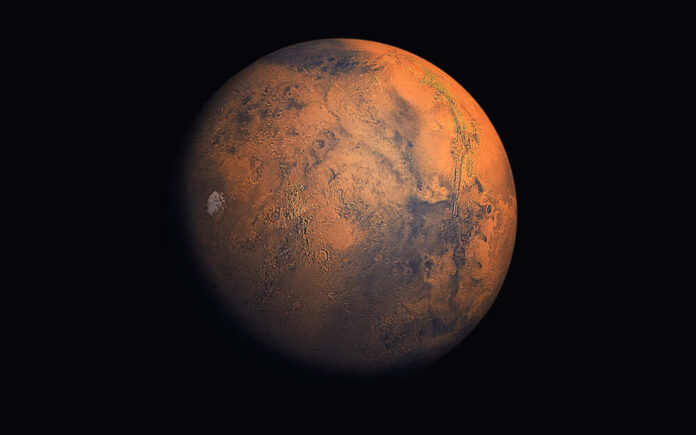
NASA’s Perseverance rover has discovered the most compelling evidence yet for ancient microbial life on Mars, potentially answering humanity’s most profound question about whether we are alone in the universe.
Story Highlights
- Perseverance rover found distinctive “leopard spots” and organic carbon signatures in Martian mudstone that closely resemble terrestrial microbial activity
- The “Sapphire Canyon” sample was collected from an ancient river system in Jezero Crater, representing 3.5 billion-year-old potential biosignatures
- NASA’s acting Administrator called this discovery “the closest we have ever come to discovering life on Mars”
- Scientists maintain careful scientific caution, emphasizing Earth-based laboratory analysis is needed for definitive confirmation
Breakthrough Discovery in Ancient Martian River System
NASA’s Perseverance rover has identified what scientists describe as the most compelling evidence yet for ancient life on Mars within a mudstone sample called “Sapphire Canyon.” The sample was collected from a rock formation nicknamed “Cheyava Falls” in July 2024, located within the Bright Angel formation in Neretva Vallis. This ancient river channel, approximately 400 meters wide, once carried water into Jezero Crater’s lake system 3.5 billion years ago, creating ideal conditions for preserving potential signs of microbial life.
The discovery stands apart from previous findings due to its combination of multiple lines of evidence, including distinctive mineral patterns, organic carbon content, and crucial geological context. Unlike earlier potential biosignature discoveries that relied on single indicators, this finding presents a comprehensive package of evidence that closely resembles patterns associated with microbial activity on Earth. The sample contains distinctive “leopard spots” that bear striking similarities to formations created by terrestrial microorganisms in similar ancient environments.
The discovery that could finally prove there was once life on Mars https://t.co/FB3bFFiYob pic.twitter.com/72856lmZTf
— The Independent (@Independent) October 5, 2025
Scientific Rigor Guides Conservative Assessment
Acting NASA Administrator Sean Duffy emphasized that this represents “a groundbreaking discovery” while maintaining appropriate scientific caution about definitive claims of life. Professor Sanjeev Gupta from Imperial College London stressed that while the findings are exciting, the discovery “does not mean we have discovered life on Mars” and requires Earth-based laboratory analysis for confirmation. This measured approach reflects the scientific community’s commitment to rigorous standards when making extraordinary claims about extraterrestrial life.
The research team, led by Joel A. Hurowitz from Stony Brook University, published their findings in the prestigious journal Nature in September 2025, representing over a year of detailed analysis since sample collection. The study authors acknowledge that “unknown, nonbiological chemistry could also explain the signals,” demonstrating the careful scientific skepticism necessary for such momentous discoveries. This conservative approach ensures that any eventual confirmation of ancient Martian life will meet the highest standards of scientific evidence.
Strategic Implications for American Space Leadership
The discovery reinforces America’s position as the global leader in planetary exploration and scientific discovery. Under President Trump’s renewed space agenda, NASA’s Mars exploration program represents a triumph of American technological superiority and scientific excellence. The Perseverance mission demonstrates how focused, well-funded American space programs deliver results that capture the world’s attention and advance human knowledge. This achievement stands in stark contrast to the previous administration’s scattered approach to space exploration priorities.
The Sapphire Canyon sample has been sealed by Perseverance for potential return to Earth through future Mars Sample Return missions, where sophisticated laboratory instruments can provide definitive answers about the biological origins of the observed features. Matthew Cook from the UK Space Agency highlighted how international collaboration, led by American expertise, will be crucial in determining whether these samples represent genuine biological processes. This discovery potentially accelerates timelines for sample return missions and reinforces the strategic importance of continued Mars exploration under strong American leadership.
Sources:
Scientists find ‘strongest evidence yet’ for ancient life on Mars
NASA announces discovery of life on Mars with high degree of confidence
NASA says Mars rover discovered potential biosignature last year
Mars samples must be returned to Earth to prove if life existed there