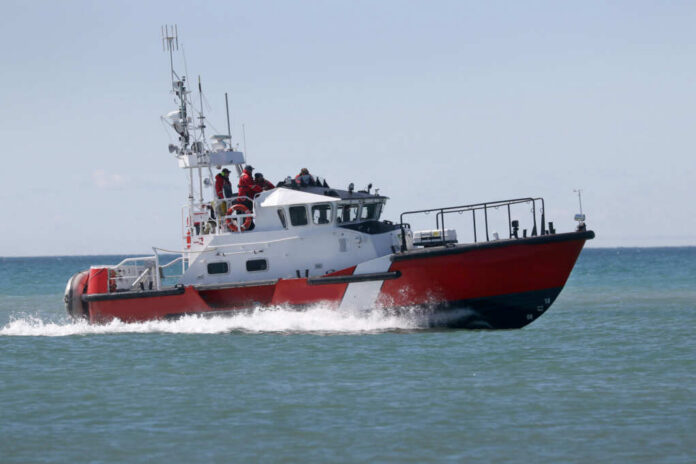
The U.S. Coast Guard’s seizure of a Michigan mom’s sailboat turned a mysterious overseas disappearance into a high-stakes federal evidence hunt.
Quick Take
- The Coast Guard seized the 45-foot sailboat Soulmate as it left the Bahamas for the U.S., escalating the investigation into Lynette Hooker’s disappearance.
- Lynette Hooker vanished April 4 near Elbow Cay, Bahamas; her husband, Brian Hooker, reported she fell overboard from their dinghy around 7:30 p.m.
- Investigators are seeking potential witnesses, including occupants of a nearby sailboat believed to be in the area the night she disappeared.
- Bahamian authorities detained Brian Hooker for five days and released him without charges; no body has been found and U.S. officials have not announced charges.
Coast Guard Seizure Moves the Case Into U.S. Custody
U.S. Coast Guard personnel seized the sailboat Soulmate during its departure from Marsh Harbour, Bahamas, as it headed toward the United States, and the vessel was later seen docked at the Coast Guard station in Fort Pierce, Florida. The seizure matters because it places the central physical scene in U.S. hands, allowing investigators to control access and preserve potential evidence while the Coast Guard Investigative Service continues its probe.
The underlying case began April 4 near Aunt Pat’s Bay by Elbow Cay, part of the Abaco Islands’ Hope Town area, where Lynette Hooker disappeared at night. Brian Hooker told authorities she fell from their dinghy around 7:30 p.m. and reportedly had the ignition key, leaving him unable to start the motor. He then described an exhausting overnight effort to reach help, arriving at a marina around 4 a.m.
A Timeline That Raises Questions, Without Proving a Crime
The known timeline remains simple but consequential: a nighttime incident on April 4, an early-morning report to authorities on April 5, and a detention period in the Bahamas that ended without charges. The long gap between the alleged fall overboard and the moment help was reached has drawn public attention, but the available reporting does not establish what happened in the water or on the dinghy beyond the husband’s account and investigators’ ongoing work.
Bahamian authorities initially led the response and held Brian Hooker for about five days, then released him. U.S. investigators have not publicly laid out forensic findings, and officials have indicated the case remains active. That lack of disclosure can be frustrating for families and the public, but it is typical when investigators are still conducting interviews, collecting tips, and preparing to analyze physical evidence—especially when a case may shift from a missing-person search into a criminal inquiry.
Investigators Expand the Witness Net Near Elbow Cay
Investigators have asked for help identifying and interviewing the occupants of another sailboat believed to have been near Soulmate around the time Lynette Hooker disappeared. That request is a practical signal that authorities are working to reconstruct who was where, when, and what they may have seen in a busy sailing area. In cases with limited direct evidence and no recovered body, third-party observations can become the difference between speculation and verifiable facts.
Why Maritime Authority and Jurisdiction Matter Here
Because the vessel was headed toward the United States, U.S. maritime authority becomes a central legal and investigative lever. Reporting has highlighted that the Coast Guard can act under maritime enforcement powers in ways that differ from typical on-land policing, including securing a vessel without the same warrant process people associate with domestic searches. For Americans already skeptical that government agencies move quickly and transparently, this case shows the system can act decisively—at least once evidence is within reach.
Missing mom Lynette Hooker’s sailboat seized by US Coast Guard in the Bahamas — as investigators seek new piece of evidence #Coastguard #Missingpersonhttps://t.co/Ox4Sd41vSs
— jason hosea (@jasonhosea29702) May 12, 2026
For Lynette Hooker’s family, the seizure is a sign the case is not being shelved, even if public updates are limited. For everyone else, it is a reminder that “true crime” narratives can outpace confirmed facts, especially online. The key point now is narrower and more sober: investigators have a boat in custody, a defined timeline, and a set of witnesses to find. What that produces—accident confirmation or criminal charges—depends on what the evidence shows.
Sources:
Coast Guard seizes Brian Hooker sailboat as it leaves Bahamas in wife’s disappearance: source
Coast Guard seizes sailboat in Lynette Hooker investigation