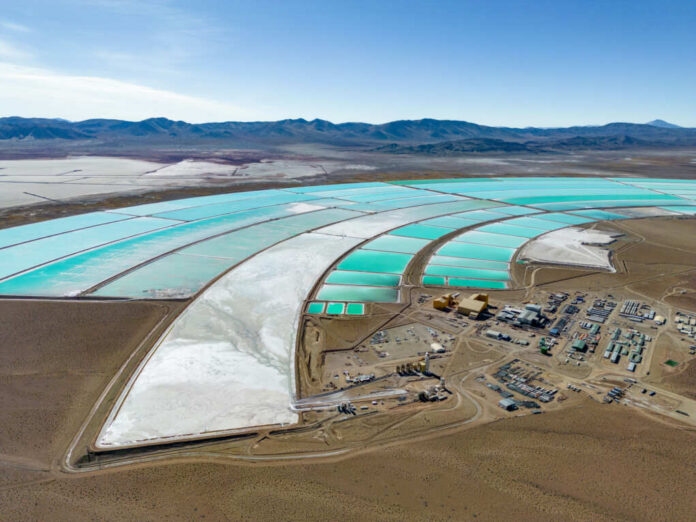
A University of Rochester research team has cracked one of desalination’s biggest environmental headaches — toxic liquid brine waste — using nothing but sunlight, and the implications for fresh water supply worldwide could be enormous.
Story Highlights
- University of Rochester engineers developed a solar-powered desalination system that produces drinking water from seawater with zero liquid brine discharge.
- The system requires no chemical additives for pre-treatment, making it cleaner and simpler than conventional desalination methods.
- Dissolved minerals are recovered as dry solids rather than toxic concentrated liquid, turning waste into a potentially valuable resource.
- The research, published in the journal Light: Science & Applications, is currently a proof-of-concept and still requires scaling for real-world deployment.
A Solar Solution to a Toxic Problem
Traditional desalination plants have long wrestled with a damaging byproduct: concentrated liquid brine, which is typically discharged back into the ocean or surrounding environment at roughly a one-to-one volume ratio with fresh water produced. This brine is harmful to marine ecosystems and poses serious disposal challenges. The University of Rochester team, led by researcher Chunlei Guo, set out to eliminate that problem entirely — and their results suggest they may have done exactly that.
The new solar-thermal process converts ocean water into drinking water while capturing dissolved salts and minerals as dry solids rather than liquid waste. Researchers describe the system as achieving zero brine discharge — a significant departure from every conventional desalination approach currently in wide use. The method also eliminates the need for chemical pre-treatments that standard systems rely on, reducing both operational complexity and environmental risk.
The “Coffee Ring” Effect Puts in the Work
The technology leverages a naturally occurring physical phenomenon known as the “coffee ring” effect — the pattern left behind when a liquid evaporates and deposits its dissolved contents at the edges of the evaporation zone. By engineering surfaces and solar-thermal conditions to harness this effect at scale, the Rochester team guides dissolved minerals to concentrate and crystallize into recoverable solid form. The result is clean water vapor on one end and harvestable mineral solids on the other, with no toxic liquid stream in between.
The recovered solids include minerals that could potentially be collected and reused, turning what was previously an environmental liability into a resource stream. Reporting from multiple science and engineering outlets confirms the system can recover close to 100% of dissolved solids in solid form. This dual output — fresh water plus mineral byproducts — could give the technology an economic advantage over conventional systems that simply dispose of concentrated waste.
Promising Science, Real-World Hurdles Ahead
Experts and cautious observers are right to note that this remains a proof-of-concept system. The gap between a successful laboratory demonstration and a deployment-scale desalination facility is substantial. Questions about how the system handles varying water chemistries, what happens to residual wash water, and whether solar input alone can drive meaningful output volumes at industrial scale have not yet been fully answered in publicly available reporting.
Additive-free and brine-discharge-free solar-thermal desalination with simultaneous complete mineral mining from ocean water | Light: Science & Applications https://t.co/tg8rEY303Z
— Barry Bunin (@barrybunin) June 1, 2026
That said, the core scientific result is published in a peer-reviewed journal and has drawn attention from water treatment industry observers and engineering publications alike. Water scarcity is a growing global concern, and the United States itself faces long-term freshwater stress in regions like the Southwest. A solar-powered, chemical-free desalination method that eliminates toxic waste represents exactly the kind of practical, resource-smart innovation worth watching — one driven by engineering ingenuity rather than government mandates or billion-dollar green subsidies. The next step is scaling the technology to prove it performs outside the lab.
Sources:
[1] Web – New solar desalination breakthrough makes fresh water without toxic …
[2] Web – University of Rochester’s Zero-Waste Solar Desalination Breakthrough
[3] Web – Sun-powered desalination system makes fresh water and recovers …
[4] Web – Solar-powered desalination system turns ocean water into drinking …
[5] Web – What breakthrough technologies are emerging in solar desalination?
[6] Web – Mineral-Rich, Additive-Free Solar Desalination Without Brine
[7] Web – What happens to brine from solar desalination?
[8] Web – The Sea Change in Solar Desalination – Water Treatment USA 2026
[9] Web – Desalinating seawater without brine. A new energy-efficient method
[10] Web – Solar Desalination Breakthrough Yields Brine-Free Water