A 17-year-old boy’s brief misstep at Yellowstone has reignited debate about personal responsibility, government warnings, and the perils of ignoring common sense in America’s most iconic national park.
Story Snapshot
- Teen suffers severe burns after stepping through thin crust into a Yellowstone hot spring near Lone Star Geyser.
- This is the park’s first reported thermal injury incident of 2025, despite years of warnings and safety infrastructure.
- Yellowstone’s geothermal features have caused more than 20 deaths and numerous grisly injuries in the past century.
- Park officials renew calls for visitors to follow rules, as debate simmers about balancing public safety and personal responsibility.
Yellowstone’s Deadly Beauty: A Sobering Reminder of Nature’s Power
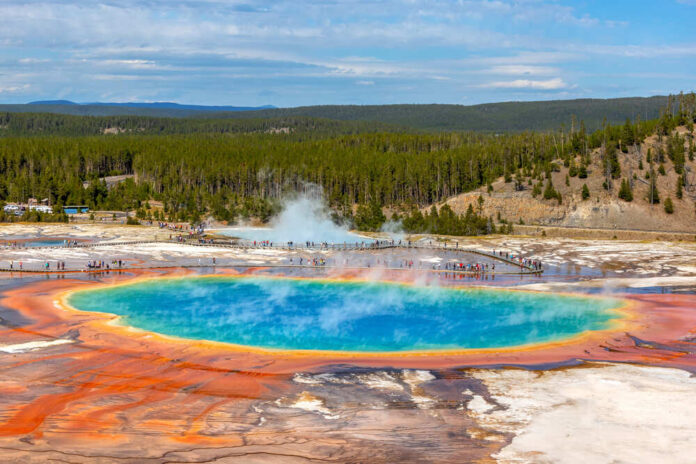
Yellowstone National Park, the crown jewel of America’s public lands, is famous for its roaring geysers and stunning hot springs. But beneath those postcard-perfect photos lurks a lethal danger. On a Monday in August 2025, a 17-year-old boy learned this the hard way when he stepped off the designated path near Lone Star Geyser, broke through a thin crust, and landed in scalding, superheated water. Emergency responders rushed to the scene, treating the teen for significant burns to his foot and ankle and evacuating him for further care. Park officials wasted no time reminding the public that these geothermal features aren’t just beautiful—they’re deadly, with more than 20 deaths and countless severe injuries on the books since 1890.
National Park Service (NPS) officials repeat these warnings every year, and yet, every year, someone ignores them. The park’s principal geologist, Hank Heasler, has gone on record saying, “Geothermal attractions are one of the most dangerous natural features in Yellowstone, but I don’t sense that awareness in either visitors or employees.” It’s not for lack of trying—NPS has installed boardwalks and signage everywhere. Still, the siren song of adventure (or, let’s be honest, a reckless sense of invincibility) lures people off the path and straight into harm’s way. This latest incident is the first of 2025, but unless something changes, it probably won’t be the last.
Who’s Responsible? The Endless Tug-of-War Between Rules and Reason
The NPS has a tough job: keeping millions of visitors safe while maintaining the park’s natural beauty and accessibility. Some say the answer is more fencing, more rangers, and more restrictions—classic government overreach that treats adults like children. Others argue the rules are already crystal clear, and personal responsibility should be enough. After all, these geothermal features have been around for millennia, and the dangers are plastered on every sign. When did common sense become so rare that every risk must come with a warning label and a bureaucrat to enforce it?
Stories like this one, tragic as they are, fuel the debate about where government safety ends and individual accountability begins. The NPS, for its part, continues urging visitors to “stay on designated boardwalks and trails,” warning that water in hot springs can cause “severe or fatal burns.” Yet, with millions of people passing through Yellowstone each year, the temptation to step off the beaten path—sometimes for a selfie, sometimes for a shortcut—remains irresistible to a reckless few.
History Repeats: Lessons Ignored and the Price Paid
This isn’t the first time Yellowstone has made headlines for a grisly accident, nor will it be the last if history is any guide. In September 2024, a 60-year-old woman suffered severe burns near Old Faithful after leaving the boardwalk. In 2016, Colin Scott’s fatal plunge into a hot spring in Norris Geyser Basin became a cautionary tale. The list goes on: more than 20 people dead, countless more injured, and every single case involved someone ignoring the rules. The park’s geothermal features form a treacherous landscape, with crusts so thin they can’t support a person’s weight and water temperatures hot enough to dissolve flesh in seconds.
The lesson? Yellowstone isn’t Disneyland. It’s a wild place where nature’s rules—not bureaucrats’—are in charge. For families planning that bucket-list trip, maybe it’s time to have a frank conversation about risk, responsibility, and why those fences and signs are there in the first place. Because the price of ignoring them isn’t just a ruined vacation—it’s a life forever changed, or, in the worst cases, ended.