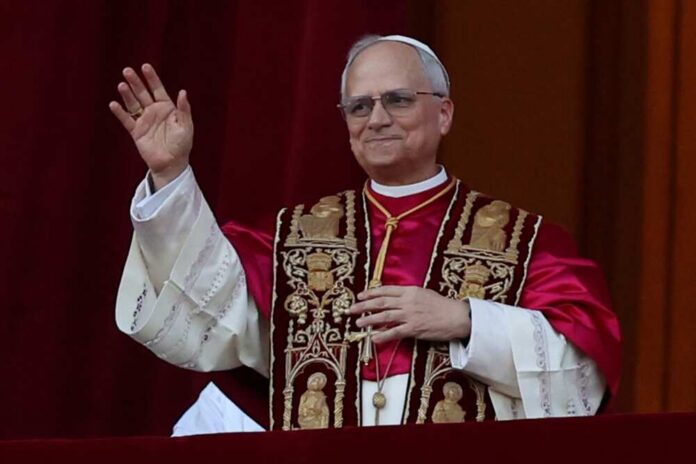
An American-born pope openly challenging a sitting U.S. president—over war and deportations—is turning a policy dispute into a global test of moral authority versus elected power.
Quick Take
- Pope Leo XIV has publicly rebuked President Trump on the Iran war and the administration’s mass deportation push, an unusually direct clash between the Vatican and the White House.
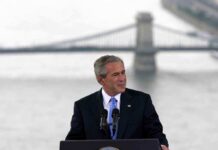
- Trump fired back on Truth Social, calling the pope “weak on crime and terrible for foreign policy,” and rejecting calls to apologize.
- Key U.S. Catholic leaders have criticized the Iran campaign as a “war of choice” and condemned ICE tactics, even while saying they support strong borders.
- The feud is exposing a growing tension inside the Catholic electorate that backed Trump on border security but is uneasy with deportations that reach long-term residents with U.S.-citizen children.
A rare Vatican-White House confrontation goes public
Pope Leo XIV, the first American-born pontiff, has stepped beyond the Vatican’s usual practice of speaking in broad moral terms and into an unusually personal, high-profile conflict with President Donald Trump. The dispute spans two flashpoints dominating U.S. politics in 2026: the war involving Iran and the Trump administration’s mass deportation policies. The escalation matters because it pits spiritual authority and diplomatic tradition against the hard-edged realities of executive power and domestic enforcement.
The timeline shows how quickly the rhetoric hardened. After war broke out in late February, a ceasefire was negotiated on April 8 following Trump’s threats aimed at Iran. Within days, Pope Leo began a tour of Africa and said he had “no fear of the Trump administration,” a statement that made the conflict impossible to dismiss as a quiet disagreement. Trump responded the same day with direct attacks on the pope’s judgment and priorities.
Iran war debate: deterrence versus “just war” concerns
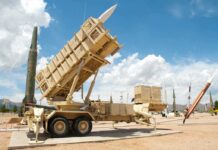
Trump has framed the Iran campaign as necessary to prevent Tehran from achieving nuclear and ballistic missile capabilities, arguing that the U.S. cannot accept a nuclear Iran. Pope Leo’s criticism has focused less on partisan politics than on the moral limits of war rhetoric and the duty to pursue peace. Several prominent U.S. cardinals have echoed that concern, with Cardinal Robert McElroy calling the conflict “a war of choice,” signaling a serious challenge to how the administration justifies escalation.
Cardinal Blase Cupich has also criticized what he described as the “gamification” of the war on social media, warning that public commentary can turn human suffering into entertainment. Those remarks do not prove policy illegality or misconduct, but they highlight a widening cultural divide over how leaders communicate about war. For conservatives who prioritize strength abroad, the key question is whether the administration can maintain deterrence while avoiding language and strategies that alienate major faith communities at home.
Deportations: strong borders collide with church objections
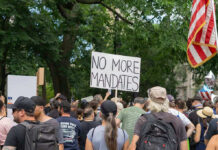
On immigration, the disagreement is sharper because it connects directly to day-to-day enforcement. The research indicates the administration’s mass deportation drive has reached people across the country, including long-term residents with U.S.-citizen children. Catholic leadership has responded forcefully, even when acknowledging the legitimacy of border security. That split captures a familiar American frustration: voters want the law enforced, but they also expect predictable, constitutional processes rather than sweeping actions that feel indiscriminate.
Cardinal Joseph Tobin’s claim that ICE has acted as a “lawless organization,” including by hiding identities and violating constitutional guarantees, is one of the most serious accusations in the debate. Based on the provided reporting summary, the specific evidence for that charge is not fully detailed, and the overall scale of deportations is not quantified. Still, the mere fact that senior church leaders are using such language underscores why enforcement transparency and due process have become central to public trust.
Political fallout among Catholics and beyond
The feud is also politically awkward because Trump won the Catholic vote 55% to 43%, with many Catholics emphasizing border security and deportations during the campaign. Now, the reporting suggests some Catholics are reconsidering what they endorsed, not on the idea of enforcement but on the breadth and methods of removal. That tension mirrors a broader national pattern: Americans across ideologies say Washington institutions respond to incentives—media attention, fundraising, career protection—more than to practical solutions that restore order and stability.
Symbolism, personal attacks, and the limits of persuasion
Both sides have added symbolism that keeps the story alive. Pope Leo has signaled priorities by planning to spend July 4, 2026—the U.S. 250th anniversary—at a major European migrant entry point instead of in the United States. Trump, for his part, amplified the personal nature of the dispute through sharp public statements and by posting, then deleting, an image of himself in the likeness of Jesus Christ. Those moves may energize bases, but they also risk lowering the temperature-control needed for workable diplomacy.
The larger takeaway is not that Americans must choose between faith and national sovereignty, or between secure borders and compassion. The real test is whether leaders can keep debates anchored in constitutional norms, measurable outcomes, and respect for human dignity—without turning every disagreement into a loyalty contest. With Republicans controlling Congress and the presidency, the administration has the power to set policy; the question is whether it can also sustain legitimacy when major moral authorities publicly reject its methods.
Sources:
Pope Leo responds to Trump, saying he will continue to …
Trump lashes out at Pope Leo XIV amid Iran war rebuke
Two Americans, two powers: Pope and Trump collide over …