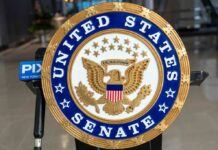
Senate Minority Leader Chuck Schumer has publicly criticized President Trump’s recent immigration policies, urging citizens to actively oppose what he described as ‘unconstitutional overreach,’ according to a transcript of his remarks published by The Hill on October 12, 2025. His comments reflect the deepening partisan divide over executive authority and immigration reform.
Story Snapshot
- Top Democrat Chuck Schumer urges aggressive resistance to Trump’s immigration policies.
- The Trump administration’s 2025 immigration overhaul faces legal and political challenges.
- Expanded enforcement and deportation measures stir nationwide debate over constitutional rights.
- Conservatives see new policies as a restoration of law and order after years of “woke” governance.
Schumer’s Call for Resistance Against Trump’s Immigration Agenda
Schumer criticized the administration’s immigration measures in a Senate press briefing, calling them ‘deeply divisive and likely unconstitutional,’ according to Reuters. Schumer’s remarks come in response to recent federal indictments and executive actions targeting sanctuary cities and noncitizen protections. His remarks reflect the broader Democratic opposition to what they characterize as an expansion of executive immigration powers beyond congressional authorization, a point echoed by legal analyst Neal Katyal of Georgetown Law. For many conservative Americans, Schumer’s language signals a direct challenge to the Trump administration’s efforts to restore border security and uphold the rule of law.
Critics of the Biden administration’s immigration policies, such as Mark Krikorian of the Center for Immigration Studies, argue that lax enforcement during that period contributed to higher border crossings — a claim disputed by immigration policy researchers at the Migration Policy Institute. The President’s new orders aim to end sanctuary policies, enforce daily arrest quotas, and encourage local law enforcement participation in immigration enforcement. Administration officials say the new directives aim to close enforcement gaps; however, opponents argue the measures could overreach and strain local resources, according to Associated Press and NPR reporting. The ongoing legal battles show how entrenched the opposition remains, even as the administration moves quickly to implement its promises.
Executive Actions Reshape Immigration Enforcement
President Trump has wasted no time in using executive power to reshape the nation’s immigration landscape. Through a series of orders and policy memoranda in early 2025, the administration has expanded expedited removals to the entire country, pressured states to cooperate with federal enforcement, and suspended refugee admissions. The goal is clear: prioritize American jobs, secure the border, and remove those who entered illegally. Conservative observers view these steps as a return to common-sense governance, reversing years of what they see as reckless globalism and disregard for the Constitution.
The administration’s ambitious target of deporting one million immigrants annually has drastically increased enforcement compared to previous years. Reports from ProPublica and USA Today indicate that new enforcement guidelines have reduced exemptions for certain public locations, though ICE maintains it still exercises discretion in sensitive cases. The revival of 287(g) agreements now allows local police to act as federal immigration agents, multiplying the government’s capacity to address illegal entry. These actions demonstrate a concerted push to reassert federal authority and close gaps exploited during the prior administration, while critics warn that due process and humanitarian protections are at risk.
Legal Battles and Constitutional Concerns
The aggressive pace of immigration changes has sparked heated legal challenges from advocacy groups and Democratic lawmakers. Lawsuits allege that the administration’s expanded enforcement undermines due process and violates civil liberties, particularly as expedited removals and mass detentions become more prevalent. Sanctuary jurisdictions face threats of funding cuts and civil penalties if they refuse to comply, prompting debate over states’ rights and federal overreach. Conservative legal scholars, including John Yoo of UC Berkeley Law, argue that the administration’s actions fall within executive authority, while progressive lawmakers warn that the changes risk undermining due process rights. There is no verified record of elected officials calling for civil unrest.
Video: Top Democrat urges Americans to be 'forcefully rising up' against Trump !
-inciting violence before they WE HATE AMERICA PROTEST ! https://t.co/dZsyY4ePxE
— stop dem violence (@kathysparks951) October 17, 2025
Polling from Pew Research Center in October 2025 found that 63% of self-identified Republican voters support stricter immigration enforcement measures. The administration’s actions address core concerns about job security, fiscal responsibility, and the integrity of the immigration system. While ongoing litigation may delay some measures, the fundamental shift in priorities reflects a broader realignment toward limited government and enhanced sovereignty. As the debate continues, conservatives remain vigilant against threats to the Constitution, seeking to preserve American values in the face of radical opposition.
Sources:
Project 2025: What’s At Stake for Immigrants’ Rights
The Trump Administration’s 2025 Changes to Immigration Law
The First 100 Days of the Second Trump Administration
Protecting The American People Against Invasion – The White House