As Russia escalates its campaign to freeze Ukraine into submission, Americans should question whether our leadership is prepared to defend true national interests—or if globalist distractions and failed leftist policies have left the West dangerously exposed.
Story Snapshot
- Russia’s attacks on Ukraine’s energy grid now target heating systems, aiming to cripple civilian life during winter.
- International agencies warn of a humanitarian crisis as Ukrainian cities face blackouts and heating outages.
- Ukraine responds with counterstrikes on Russian energy infrastructure, escalating the conflict’s economic and social toll.
- The West’s response highlights the consequences of years of globalist entanglement and misplaced priorities.
Russia’s Shift: From Lights to Heat in Ukraine’s Energy War
Russia has intensified its assault on Ukraine’s critical infrastructure, moving beyond the electricity grid to target heating systems as winter approaches. This deliberate escalation is designed to break Ukrainian morale and force political concessions, especially as dropping temperatures increase reliance on centralized heating. The campaign’s timing—coinciding with the coldest months—reveals a calculated effort to maximize civilian hardship and pressure Ukraine’s leadership in ways not seen in modern European conflict.
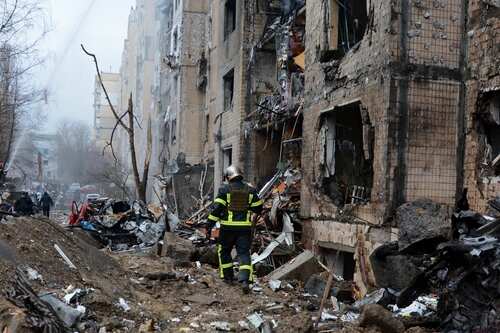
Ukraine’s centralized energy system, a legacy of Soviet planning, leaves millions vulnerable to targeted strikes. Since late 2022, Russia has repeatedly attacked power plants, transmission lines, and, more recently, heating and gas infrastructure. The largest drone and missile attack to date occurred in September 2025, with over 800 drones and multiple missiles deployed to cripple both electricity and heating across major cities. These attacks have caused rolling blackouts and heating shortages, with repairs struggling to keep pace with destruction.
Humanitarian Crisis Looms as Attacks Intensify
International organizations, including the World Health Organization and the United Nations, have warned of a looming humanitarian crisis as attacks continue and temperatures drop. Vulnerable populations—elderly, children, and the sick—face increased health risks from exposure and disrupted medical services. Emergency responders and energy workers operate under constant threat, racing to restore services after each new wave of destruction. The scale of devastation is unprecedented, with up to half of Ukraine’s power generation capacity destroyed by mid-2024 and ongoing strikes hampering any hopes of recovery.
The strain on emergency services and social fabric grows with each blackout, fueling fears of mass displacement and economic collapse if shortages persist through winter. Neighboring countries are bracing for potential refugee influxes, and the global energy market is feeling the ripple effects of both Ukrainian and Russian infrastructure attacks. The West’s ability to respond effectively is hindered by years of overspending, inflation, and political division—remnants of leftist mismanagement and globalist distractions that have weakened America’s global standing.
Ukraine’s Counterstrikes and the Global Consequences
Ukraine has responded with a measured but significant counter-campaign, targeting Russian oil refineries and energy facilities. These strikes are intended to deter further Russian attacks and disrupt the revenue fueling Moscow’s war machine. While some analysts see this as a necessary escalation to defend Ukraine’s sovereignty, others warn of risks if the conflict spirals further. The energy war’s economic toll is mounting: infrastructure damage, lost industrial output, and social disruption are compounded by rising energy costs and health crises.
Expert analysis from leading think tanks and humanitarian agencies consistently highlights that Russia’s energy war is designed to undermine Western resolve as much as Ukrainian resilience. U.S. and NATO support remains critical to Ukraine’s survival, but persistent attacks threaten to overwhelm air defense systems and repair crews. The West’s credibility—and, by extension, America’s standing as a defender of liberty and order—rests on its willingness to prioritize real national interests over failed globalist experiments and virtue-signaling policies at home.
Broader Lessons for American Security and Priorities
Russia’s tactics recall Soviet-era coercion: using energy as a weapon to destabilize rivals. This brutal strategy should serve as a wake-up call for Americans who have watched, with frustration, as leftist agendas and open-border policies erode national security and economic strength. The humanitarian crisis unfolding in Ukraine underscores the dangers of dependency and complacency. It is a stark reminder that defending the Constitution, family values, and American sovereignty requires focus, strength, and a rejection of the globalist distractions that have left the West vulnerable.
As winter deepens in Ukraine, the world is confronted with the consequences of weak leadership and misplaced priorities. Now is the time for America to refocus on its core principles—limited government, strong defense, and unwavering support for allies who share our values. Anything less risks emboldening adversaries and undermining the foundations of freedom at home and abroad.
Sources:
Timeline of the Russo-Ukrainian war (1 January 2025 – 31 May 2025) – Wikipedia
Russian strikes against Ukrainian infrastructure – Wikipedia
Ukraine, Russia, and the Energy War: Oil, Gas, and the Battle for Winter – Time
IAEA Interactive Timeline: Ukraine Conflict and Nuclear Safety
Positive Developments for Ukraine in a Time of Challenge – Brookings