In modern budget fights, the most decisive moves are often made in seconds: one well-timed objection, aligned with the calendar and the rules, can determine whether billions are spent or silently lapse. That is the essence of how a single Senate floor maneuver protected the Trump administration’s “pocket rescission” cuts from a quick reversal and spotlighted a recurring struggle over who truly wields the power of the purse.
At a Glance
- A lone objection on the Senate floor can derail fast-track efforts to reverse executive budget actions; that is what happened when Sen. Ron Johnson objected to Democrats’ unanimous-consent request to nullify the Trump administration’s rescissions.
- The tactic at the center, a “pocket rescission,” exploits timing in the Impoundment Control Act: if Congress cannot act before funds expire, unspent appropriations lapse.
- Democratic leaders and the Government Accountability Office argue pocket rescissions are unlawful because they sidestep Congress’s power of the purse; the administration’s allies argue the statute’s timing windows permit them.
- The episode illustrates a durable truth of fiscal governance: procedure plus calendar can outweigh policy preference, and watchdog opinions rarely settle separation-of-powers fights without litigation or legislation.
What Johnson’s objection did—and why the timing mattered
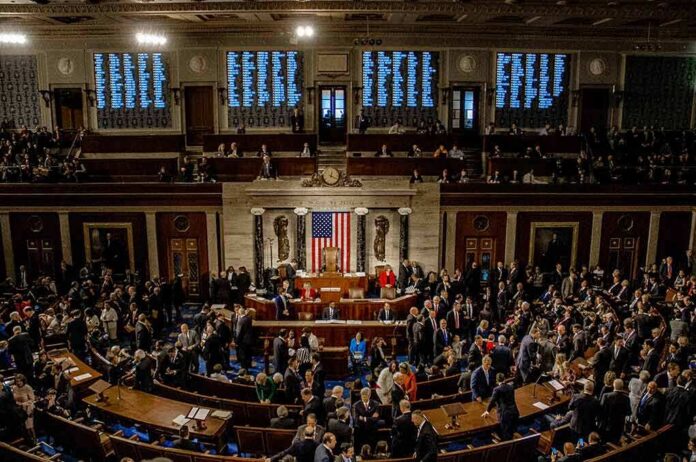
Democrats sought a rapid Senate vote to nullify the administration’s rescission of roughly $810 million in previously appropriated funds. Procedurally, they tried to pass a bill by unanimous consent, a tool the Senate uses to skip debate and vote thresholds when no member objects. Johnson objected on the floor; that single word—“I object”—instantly denied the fast-track route and, in practical terms, protected the administration’s maneuver at the critical end-of-fiscal-year juncture. Bloomberg Government chronicled the moment plainly: Johnson blocked an attempt to reverse the White House’s use of the pocket rescission “loophole” to cut $810 million in congressionally approved funding.
This was not a mere delay for delay’s sake. The architecture of pocket rescissions is all about the calendar. Under the Impoundment Control Act (ICA), a president submits a rescission proposal to Congress; if Congress does not enact a rescission within a set period, the default is that funds must be released. But if the request arrives so late that the statutory review window runs into the expiration of the funds’ availability, the money can simply run out of time. That is the pocket rescission logic: deny Congress the practical opportunity to act and let the clock do the cutting. The Associated Press and other outlets have described the timing gambit in similar terms in prior rounds of the same fight.
The legal fight behind the floor fight
Democratic leadership did not disguise their view of the legality. Senator Schumer called the rescissions “illegal,” vowing to challenge the cuts “every chance” they had. That position aligns with the Government Accountability Office’s repeated conclusions that pocket rescissions are not permitted by the ICA. GAO’s general counsel has argued that allowing an administration to withhold funds through their expiration date would effectively let the executive change the period of availability that Congress set—an encroachment on Congress’s constitutional power of the purse. GAO reiterated the point after the $810 million decision, labeling the tactic unlawful under the ICA’s structure and purpose.
Those opinions matter, but they do not automatically compel the executive or resolve disputes absent court orders or new legislation. The neutral legislative research community captures the limbo well: pocket rescissions are infrequent, courts have rarely reached the merits, and GAO contends Section 1012(b) cannot be used to effect them—leaving a gap between watchdog interpretation and enforceable judicial precedent. In that gap, calendar and procedure become policy.
How the mechanism actually works
The ICA was enacted in the 1970s to rein in executive impoundment—refusals to spend duly appropriated money. It created two relevant channels. First, deferrals: temporary pauses in obligation for specified reasons. Second, rescissions: permanent cancellations that require Congress to pass a rescission bill within a defined window. The pocket rescission gambit tries to invert the default. By sending a rescission late enough in the fiscal year, an administration withholds funds pending congressional action; if Congress cannot enact a response before those funds expire by law, the unspent balances lapse. Proponents claim the ICA’s mechanics allow such withholdings during the review window; critics answer that the law permits only temporary withholdings that do not run past expiration, precisely to prevent end-runs around congressional control.
What made Johnson’s objection potent is that unanimous consent is the Senate’s shortcut around the institution’s inherent friction. When the fiscal clock is near midnight, the difference between consent and a single objection is the difference between a recorded vote the same day and a time-consuming, multi-day path requiring floor time, cloture, and 60 votes. In other words, one senator can erase the Senate’s ability to move at calendar speed—without defeating the idea on the merits. That is what happened here.
Competing claims, weighed
On the facts of the floor action, the record is straightforward: Democrats attempted a swift nullification; Johnson’s objection blocked it; the clock favored the administration’s cuts at fiscal year-end. That chain is not meaningfully disputed in contemporaneous reporting. The disagreement lies in legality and remedy. Schumer and allied lawmakers say the move was unlawful and promised to keep pressing, in court or through subsequent legislation, to safeguard programs affected by the rescission. GAO’s analysis supports their legal critique, and it has done so consistently across administrations when variants of pocket rescissions have been floated.
But the specific rescission at issue was not unwound that day, which is why characterizations of the episode as a “checkmate” resonated with partisan commentators: procedures and timing beat intent. Still, “checkmate” overstates finality. A blocked unanimous-consent request is a tactical loss, not a substantive adjudication. Future vehicles—appropriations riders, supplemental fixes, or litigation—remain available, albeit slower and more politically costly. This is the rhythm of separation-of-powers disputes: decisive in the short run, revisitable over longer horizons.
What this reveals about the power of the purse
Two durable lessons emerge. First, Congress’s power of the purse is only as strong as its ability to act within the windows that its own statutes create. When deadlines compress to hours, individual senators exercising routine rights can determine outcomes with outsized effect. Second, watchdog pronouncements—even from GAO—do not settle constitutional contests; they set markers for Congress and the courts. Until appellate courts squarely address whether the ICA permits withholding that runs funds into expiration, or Congress amends the ICA to foreclose pocket rescissions explicitly, administrations inclined toward aggressive timing will continue to test the edges—and floor tacticians will continue to decide which tests succeed in practice.
Practical implications for future budget showdowns
If you traffic in federal budgeting—appropriators, agency CFOs, grantees—assume that the last 45 days of availability are the highest-risk period for unobligated balances whenever a rescission is rumored. The operational hedge is banal but effective: obligate earlier when permissible, reduce exposure to end-of-year lapses, and track congressional calendars as closely as program burn rates. For lawmakers, the cleanest resolution is legislative: clarify that proposed rescissions cannot be paired with withholdings that extend to the expiration of funds, codifying what GAO has argued for years. Failing that, expect more nights where one objection at the right hour does what months of messaging cannot: decide who wins the fiscal inning, even if the game is far from over.
Sources:
democrats.senate.gov, apnews.com, news.bgov.com, commondreams.org