The loudest rumors in American politics often turn on a simple confusion: what people want a president to do versus what a president can do. The current flap over “martial law” and a midterm election takeover is a case study in that gap—outside allies may clamor for dramatic moves, but U.S. election law leaves very little space for any president to commandeer voting.
The Short Version
- Outside Trump allies have publicly urged extraordinary election actions, including “martial law” and a “national-security emergency,” and CNN reported those appeals reached the White House from figures like Peter Ticktin and Wayne Allyn Root.
- The White House has said those outsiders have no role in election policy; there is no announced plan by President Trump to declare martial law or seize control of midterms.
- Even if a president declares a national emergency, U.S. law vests election administration primarily in the states and Congress—not the executive branch.
- Rumors flourish in polarized media, but the legal architecture and modern precedent make a federal election “takeover” extraordinarily unlikely to withstand scrutiny.
What’s actually being claimed—and by whom
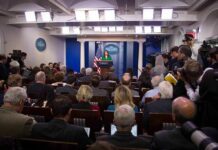
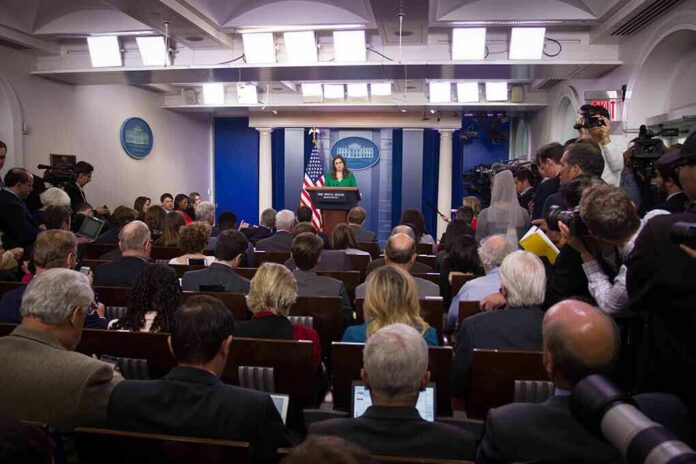
CNN’s Jake Tapper framed the core allegation succinctly: outside advisers urged President Trump to declare a national emergency and “seize federal control of the midterms.” The on-air segment attributed the pressure to named allies—attorney Peter Ticktin and commentator Wayne Allyn Root among them—and cited exhortations ranging from “either martial law, or step aside” to calls for a “national-security emergency” aimed at reshaping voting rules before ballots were cast. Other coverage amplified the same thrust, tying the pressure campaign to those figures and reporting their proximity to the president’s media ecosystem.
Two clarifications matter. First, multiple outlets simultaneously reported there is no formal plan on the president’s desk, and a White House official told The Atlantic—relayed in secondary reports—that Ticktin, Root, and Tina Peters have “no role” in White House election policy. Second, the language in circulation—martial law, national emergency, national-security emergency—gets used interchangeably in commentary, though the mechanisms and authority for each differ. That imprecision is why understanding the legal architecture is more important than parsing any single soundbite.
Martial law, national emergency, and the law of elections: what the president can’t do
Start with the constitutional map. States administer U.S. elections—including federal contests—subject to rules Congress may set under the Elections Clause. The president has no general constitutional power to run, suspend, or redesign elections, and there is no modern precedent for using a national emergency to centralize federal control of voting logistics nationwide. Put more starkly, contemporary legal analysis concludes there is no free‑standing presidential authority to declare “martial law” in the United States; if martial law exists at all, it is a creature of specific statutory authorization or, in some contexts, state power—neither of which offers a turnkey pathway to federalize election administration.
Emergency declarations under the National Emergencies Act unlock discrete statutory tools already on the books; they do not create new powers. None of the typical emergency statutes hand the executive branch authority to dictate voter ID rules, shutter polling sites, or override state canvassing processes. Attempts to shoehorn election control into defense or cybersecurity authorities would invite immediate injunctions. Courts would ask the only question that matters: what statute clearly gives the president the power he is asserting?
How we got here: rumor velocity meets real institutional limits
The rumor pipeline is familiar. Outside figures float maximalist options in interviews or columns. A major outlet reports the chatter with named sources. Partisan sites then reframe it: alarm as proof of looming authoritarianism, or dismissal as baseless smear. In this case, CNN’s segment lit the fuse, and the story pinballed across antagonistic ecosystems that reward outrage and panic in equal measure. Social science on misinformation dynamics helps explain why these cycles are sticky: rumors concentrate in polarized networks and are hard to correct once identity and ideology have fused with the claim.
At the same time, the institutional picture is more prosaic. A White House denial of outsider influence on election policy is exactly what one should expect—administrations keep official policy channels separate from media allies in form, even if the rhetoric overlaps in public. And because the constitutional structure is so clear, the practical path to any sweeping federal “takeover” would run through Congress, not a late‑stage executive declaration; that legislative path does not exist today.
Where the genuine dispute lies
The disagreement is not about what the law currently allows; on that, constitutional scholars and nonpartisan analyses are remarkably aligned: states and Congress hold the levers of election administration, not the Oval Office. The dispute is political and rhetorical: whether talk of emergencies is serious policy exploration or strategic messaging to energize a base, pre‑dispute refereeing of close races, or bait for opponents. CNN’s reporting places specific voices near the president advocating extreme measures; counter‑coverage emphasizes that no formal plan has been announced and those voices have no official remit. Both statements can be simultaneously true.
Presidents routinely entertain a wide range of proposals from outside allies; most die on contact with law or logistics. What matters is not whether a figure like Ticktin or Root sent an email or aired an idea on air, but whether any such idea crossed the critical thresholds: an internal legal memo, a draft order tied to a statutory hook, or an operational directive to agencies. On the public record surfaced here, none of those thresholds have been met.
there
have been rumors they want to do martial law before the midterms . he’s pushy about his bunker ballroom
and no press because he knows americans besides maga hate his ass. trump doesn’t want to go to prison either— Tiffany 🦸🏾♀️♊️🇵🇸🙏🏾🪄 (@tiffany__4prez) September 26, 2026
Consequences and safeguards that actually matter
The most durable lesson is structural, not sensational. America’s decentralized election system is a feature, not a bug, when it comes to resisting unilateral executive action. Fifty states run millions of moving parts on different timelines under layers of state law, with election boards, secretaries of state, and local officials sharing authority. Litigation readiness is high; any novel assertion of emergency power over voting would be in federal court within hours, with state officials, civil‑rights groups, campaigns, and even Congress as potential plaintiffs. Modern precedent supplies no off‑the‑shelf authority to sustain such a move.
None of this means rhetoric is harmless. Floating extraordinary remedies conditions supporters to see regular administration as illegitimate and can encourage fringe actors to test the edges of law. But the abiding constraint is still the law itself—written allocations of power, verified by courts, and backed by a professional election infrastructure that has conducted contests through wars, pandemics, and constitutional crises without executive seizure. Rumors may run hot; institutions run deeper.
Sources:
twitchy.com, themirror.com, cnn.com, hindustantimes.com, politicalemails.org, balleralert.com, transcripts.cnn.com, ground.news, allchronology.com