

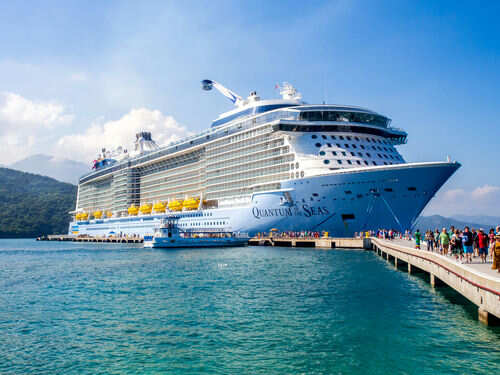
A brief “open window” in the Strait of Hormuz let five stranded cruise ships escape the Persian Gulf—then Iran reportedly tightened restrictions again after new attacks on cargo vessels.
Quick Take
- Iran temporarily reopened the Strait of Hormuz for commercial traffic during a ceasefire, allowing multiple cruise ships to transit out of the Gulf.
- Five ships cleared the strait, while at least one cruise ship remained stuck as conditions worsened again.
- Industry reporting says the “thumbed their noses” framing is overstated; operators coordinated transits with authorities and no direct IRGC confrontation was reported.
- Iran later reimposed restrictions after projectile strikes on two cargo vessels, underscoring how fast conditions can flip in a key global energy chokepoint.
A narrow escape route opened—then started closing again
Iran’s decision to reopen the Strait of Hormuz during a ceasefire created a short, high-stakes opportunity for cruise lines that had been effectively trapped in Gulf ports. Multiple vessels had been stranded as commercial traffic slowed or stopped during the conflict, and companies moved quickly once the channel reopened. Reports indicate ships began departing from ports including Dubai, with itineraries and repositioning plans rapidly adjusted to prioritize getting passengers and crews safely out.
Cruise operations reporting shows that the successful transits were concentrated across a single weekend, with ships departing in sequence to take advantage of improved conditions. Celestyal Discovery departed Dubai and headed toward the Suez route after transiting the strait, while Celestyal Journey also completed passage and continued onward. MSC Euribia, another high-profile ship in the group, departed Dubai and ultimately cleared Hormuz en route back toward Northern Europe, allowing the line to restart planned European operations.
Which ships cleared Hormuz—and which one didn’t
Across the industry coverage, the core fact pattern is consistent: five Gulf-stranded cruise ships made it through Hormuz during the reopening. Those ships included MSC Euribia, Celestyal Discovery, Celestyal Journey, and TUI’s Mein Schiff 4 and Mein Schiff 5. Another vessel—Aroya Manara—was still reported stranded after the transit window closed. That detail matters because it highlights the real-world cost of uncertainty: timing and political conditions can determine whether a ship moves or remains stuck.
MSC described its transit in practical terms, emphasizing that the ship “safely transited” the strait in close coordination with authorities. That phrasing aligns with the broader reporting that the passage was not an act of defiance so much as a calculated, managed movement through a narrow chokepoint where Iran’s security forces exert heavy influence. For passengers, the takeaway is simple: in regions like this, a vacation itinerary can turn into a geopolitical contingency plan overnight.
The “brave defiance” narrative runs ahead of the documented facts
The headline framing that ships “thumbed their noses” at the IRGC plays well on social media, but the reporting support is thin. The available sources describe coordination rather than confrontation, and none cite an incident where the IRGC directly challenged or intercepted these specific cruise ships during the reopened window. That distinction matters for credibility and for public understanding: it is one thing to acknowledge risk in IRGC-patrolled waters, and another to imply a showdown that the evidence does not document.
Why this chokepoint keeps testing U.S. interests and global markets
The Strait of Hormuz is not just a regional shipping lane; it is a global economic pressure point, moving roughly a fifth of the world’s oil trade. When access becomes conditional—opened, restricted, then reopened again—insurance costs rise, routing decisions change, and energy prices can react. For Americans already worn down by inflation and high living costs, instability in a major energy corridor is not an abstract foreign-policy issue; it can feed directly into the price of goods, travel, and fuel.
More Brave Cruise Ships Just Thumbed Their Noses at the IRGC in the Strait of Hormuzhttps://t.co/L67anFrQXl
— RedState (@RedState) April 19, 2026
As of April 19, the situation appeared to deteriorate again after Iran reportedly struck two cargo vessels with projectiles and reimposed restrictions tied to a wider U.S.-Iran impasse. That rapid reversal is the core lesson for policymakers and the public: when a strategic chokepoint is effectively controlled by a hostile regime’s security apparatus, “normal commerce” can become a bargaining chip. The cruise ships’ weekend escape may prove less a victory lap than a reminder of how fragile freedom of navigation can be.
Sources:
Five Gulf-Stranded Cruise Ships Clear Strait of Hormuz
Iran Reopens Strait of Hormuz, Potentially Clearing Path for Stranded Cruise Ships