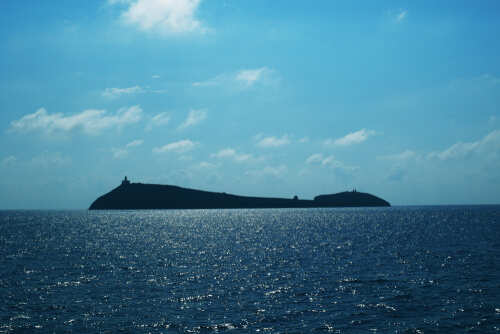
A new study reveals that a remote Mediterranean island is drowning in microplastics and microrubber, raising alarms about unchecked global pollution.
Story Highlights
- Scientists discovered alarming levels of microplastics and microrubber on Illa Grossa island, threatening local coral ecosystems.
- The findings highlight the global reach of pollution, affecting even protected marine reserves.
- The Mediterranean’s only reef-building coral, Cladocora caespitosa, is at significant risk.
- Calls for stricter international regulations on plastic waste are intensifying.
Unprecedented Pollution Levels Found in Protected Marine Reserve
Researchers from Kiel University and the Helmholtz Center Hereon conducted a sediment survey on Illa Grossa, part of the Columbretes Islands, a marine reserve off Spain’s coast. They found unprecedented concentrations of microplastics and microrubber, reaching over 1,500 particles per kilogram of sediment, with some samples exceeding 6,300 particles. These alarming figures pose a severe threat to the Mediterranean’s only reef-building coral, Cladocora caespitosa.
The study, published in August 2025, underscores the vulnerability of even remote, protected ecosystems to global pollution. Despite its status as a marine reserve, Illa Grossa is a hotspot for marine debris, largely due to the Northern Current funneling waste into its bay. The research highlights the lack of local pollution sources, implicating global ocean currents as the main vector for contamination.
Impact on Marine Life and Local Communities
The microplastic and microrubber pollution poses immediate threats to the coral species and the broader marine ecosystem. The particles are small enough to be ingested by marine life, which can lead to severe health issues. Dr. Daniel Pröfrock, a microplastics expert, emphasizes that these materials are found in higher concentrations than ever before, making them a direct health risk to sensitive coral species.
Local communities that rely on the sea for food and income face potential health risks, as these pollutants enter the food chain. The decline of coral reefs would also lead to biodiversity loss and impact ecosystem services, threatening the livelihoods of fishing-dependent families. The findings call for urgent international action to address plastic waste and implement stricter regulations to protect marine environments.
Calls for Global Action Intensify
The study has sparked calls for increased monitoring and stricter regulations on plastic waste. Dr. Lars Reuning, the study’s lead author, stated, “Our findings are deeply concerning. Even protected areas are severely affected by global plastic pollution, which particularly endangers sensitive coral species.” The scientific community is urging governments worldwide to strengthen environmental policies and invest in technologies to mitigate pollution effects.
Efforts are underway to pilot new technologies, such as underwater robots and acoustic restoration, to protect the vulnerable coral reefs. Scientists and environmental agencies underscore the need for international collaboration to combat the pervasive issue of marine pollution, which threatens not only marine biodiversity but also the economic and food security of coastal communities.
Sources:
Scientists find alarming plastic waste levels in Mediterranean coral reefs
Study reveals concerning levels of microplastics in remote island
Microplastics mission highlights global pollution reach
Environmental science reports on microplastic threats