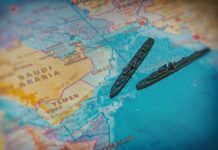


President Trump’s deployment of military force against alleged drug traffickers in the Caribbean marks a dramatic escalation in America’s fight to secure its borders and defend constitutional authority.
Story Highlights
- The U.S. military conducted its tenth strike against suspected drug boats in the Caribbean, killing six and intensifying America’s anti-narcotics campaign.
- President Trump and Defense Secretary Hegseth spearheaded a new era of direct, lethal force targeting criminal networks threatening national security.
- The Pentagon’s deployment of a Navy carrier strike group signals heightened resolve, but has triggered diplomatic tension with regional governments.
- Congress and foreign leaders are raising legal and ethical challenges, warning of potential civilian harm and broader conflict.
Unprecedented Military Action Targets Drug Trafficking Threats
The United States military executed a targeted strike against a vessel in the Caribbean Sea, reportedly operated by the Venezuelan gang Tren de Aragua. This action, resulting in six fatalities, continues a decisive campaign begun in September to disrupt the persistent flow of narcotics from South America into American communities. Unlike prior operations that relied on law enforcement and Coast Guard interdiction, these strikes represent a bold shift to direct military involvement, driven by President Trump’s commitment to aggressive anti-drug measures. The administration’s public disclosure of operations and casualty figures underscores its resolve to confront cartels with overwhelming force.
President Trump’s approach is a marked departure from his predecessor’s policies, which many conservatives criticized as weak on border security and ineffective against transnational crime. The latest operation on October 24 was announced by Defense Secretary Pete Hegseth, who confirmed the deaths and revealed plans to deploy a Navy carrier strike group to Latin America. This strategic move signals not only increased military presence but also a clear message to cartels and terrorist-designated organizations that the U.S. will use all available means to protect its sovereignty. The administration’s actions reflect deep frustration with prior “catch and release” tactics and the perceived erosion of law and order under the previous administration.
🚨Alert: War Department kills 6x Cartel drug traffickers during nighttime strike in Caribbean Sea, War Secretary Hegseth says! pic.twitter.com/rpZ8TNKhXp
— US Homeland Security News (@defense_civil25) October 24, 2025
Escalation Prompts Regional Tensions and Congressional Debate
With at least 45 people killed in ten strikes since September, the U.S. campaign has expanded geographically, reaching both the Caribbean and Eastern Pacific. While supporters hail these actions as necessary to deter drug trafficking, critics warn of diplomatic fallout and risk to civilians. Colombian President Gustavo Petro has condemned the strikes, accusing the U.S. of “murder” and alleging that at least one victim was a fisherman rather than a smuggler. In response to Petro’s criticism, the U.S. Treasury imposed sanctions on the Colombian president and his family, further straining relations with regional partners. Congressional leaders from both parties have expressed concern over the legality of deploying lethal force without explicit legislative authorization, igniting debate over war powers and constitutional limits.
The administration’s strategy has reignited controversy over executive authority, with lawmakers calling for a vote to block further military action absent congressional approval. Legal scholars and human rights advocates caution that the current campaign risks setting dangerous precedents for the use of force in international waters, especially when evidence supporting the identification of targets is not made public. These developments reflect broader anxieties among constitutional conservatives regarding government overreach and the safeguarding of due process rights.
Impact on Communities, Law, and Conservative Values
The immediate effects of these strikes include disruption of maritime drug routes and increased fear among coastal populations, particularly fishermen and maritime workers at risk of misidentification. Economically, the campaign threatens both illicit and legitimate maritime commerce, while socially it fosters uncertainty and distrust. Politically, America’s aggressive posture has strained relations with key Latin American countries and intensified domestic debate over the proper balance between executive power and legislative oversight. National security analysts describe the deployment of a carrier strike group as a “major escalation,” questioning whether targeting lower-level smugglers will truly dismantle cartel leadership or merely shift trafficking routes to land. For conservatives, these actions reaffirm the importance of decisive leadership, border security, and constitutional checks, but also demand vigilance against any erosion of individual liberties or family safety.
As President Trump’s administration doubles down on aggressive counter-narcotics operations, Americans are witnessing a test of resolve against transnational crime, and a critical debate over the future of constitutional governance. The stakes are high—not only for national security, but for the values of limited government, individual freedom, and adherence to the rule of law that define the American conservative movement.
Sources:
What we know about U.S. strikes on alleged drug boats in the Caribbean
U.S. military strikes 10th suspected narco boat, killing six, Pentagon says