A refugee system designed to protect the world’s most vulnerable is now being used for a carveout so narrow it risks looking like politics, not humanitarian relief.
Quick Take
- President Trump’s Executive Order 14204 created an expedited refugee pathway for Afrikaners/white South Africans while broader U.S. refugee admissions were largely frozen.
- The first known group—59 people—arrived at Dulles International Airport on May 12, 2025, welcomed by Deputy Secretary of State Christopher Landau.
- U.S. officials argued the program addresses “race-based persecution,” while South Africa’s government rejected claims of organized anti-white persecution.
- Reporting and academic analysis dispute “white genocide” narratives, noting South Africa’s high violent crime affects multiple groups without clear evidence of unique targeting of whites.
Executive Order 14204 and the “Mission South Africa” Exception
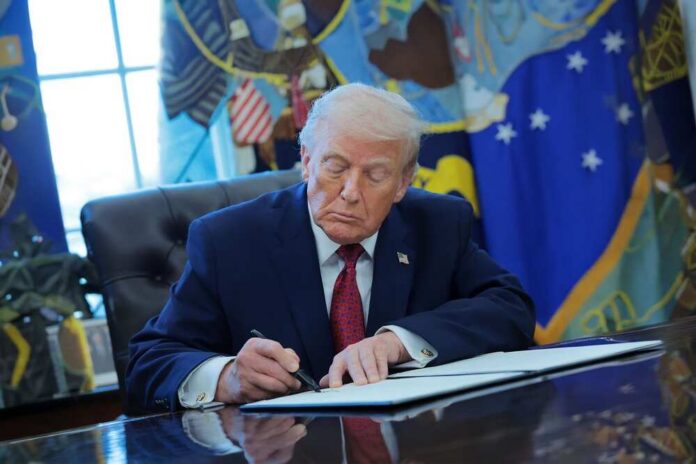
President Trump’s second-term immigration reset included a broad shutdown of U.S. refugee admissions, with a notable exception: white South Africans, particularly Afrikaners, processed through what has been described as “Mission South Africa.” The key policy hook was Executive Order 14204, signed February 7, 2025, which also ended U.S. foreign aid to South Africa and directed prioritization of Afrikaner resettlement through the U.S. Refugee Admissions Program.
Early reporting indicated the State Department planned to process up to 4,500 applications per month, including by adding temporary infrastructure—trailers—at the U.S. Embassy in Pretoria to handle the workload. The scale matters because it suggests a pipeline large enough to change refugee processing priorities in practice, even if approvals remain “case-by-case” and dependent on State and DHS review within a broader admissions freeze.
Who Arrived, When They Arrived, and What’s Known Publicly
On May 12, 2025, the first documented group of 59 white South Africans arrived at Dulles International Airport. Deputy Secretary of State Christopher Landau publicly welcomed them, and reporting described the group as English-speaking, with about one-third having relatives in the United States. Beyond that initial arrival, available sources provide limited verified detail on how many additional people ultimately entered, partly due to bureaucratic delays inside a system constrained by the broader pause.
That lack of publicly confirmed follow-through is important for readers trying to separate rhetoric from results. Plans to move thousands of cases a month are one thing; an immigration system dominated by interagency approvals and political crosswinds is another. Without clearer, ongoing reporting on subsequent arrivals and approval rates, the best-supported facts remain the executive order, the processing push in Pretoria, and the May 2025 entry event.
The Central Dispute: “Race-Based Persecution” vs. Crime and Land-Reform Reality
White House and senior-adviser messaging framed the South Africa situation as a “textbook” refugee scenario involving “race-based persecution.” South Africa’s government flatly rejected the claim of organized anti-white persecution, arguing that violent crime is a national problem affecting many communities. Independent analysis cited in the research also challenges “white genocide” narratives, emphasizing that broad crime levels do not, by themselves, establish targeted persecution unique to whites.
South Africa’s land-reform debate and the Expropriation Act intensified the controversy. The act has been described as allowing land expropriation without compensation in limited cases, but the research notes it was not yet enforced at the time in question. That distinction matters: refugee standards generally require specific, individualized risk, not generalized fear driven by disputed political narratives. Where evidence is unclear, the responsible conclusion is limited: the persecution claim remains contested.
Why This Policy Hits a Nerve in the U.S. Immigration Debate
In a country exhausted by years of border chaos, inflation pressures, and trust breakdown in federal institutions, selective refugee carveouts predictably inflame both sides. Many conservatives favor tight, rules-based immigration and see executive control as preferable to what they view as past globalist overreach. Many liberals see identity-based selection as discrimination. The shared problem is legitimacy: when humanitarian channels appear politically repurposed, public confidence in the entire system erodes.
The U.S. is Ramping Up Its Refugee Admissions — But Only For White South Africans Facing Persecution https://t.co/w50Pq8RqbJ #gatewaypundit via @gatewaypundit
— Fearless45 (@Fearless45Trump) April 10, 2026
For the Trump administration and Republicans in Congress, the practical challenge is proving the refugee program can remain credible while prioritizing any group. For critics, the burden is showing—using verifiable facts rather than slogans—that the policy violates U.S. law or basic equal-treatment norms. Right now, the strongest documented points are procedural: an executive order created a narrow pathway, resources were deployed to process it, and at least one group entered while others waited.
Sources:
White South African refugee program
The Afrikaner exception: race and strategic dismantling
Addressing Egregious Actions of the Republic of South Africa