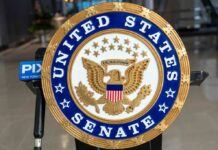
The Trump administration’s request to the Supreme Court to block Lisa Cook’s reinstatement to the Federal Reserve Board highlights a significant battle over governance and judicial authority.
Story Highlights
- The Trump administration seeks to overturn a decision allowing Lisa Cook to remain on the Federal Reserve Board.
- Appeals court previously blocked Trump’s attempt to remove Cook, citing judicial overreach concerns.
- The case underscores tensions between presidential authority and judicial oversight.
- Potential implications for the independence of federal institutions and governance norms.
Trump Administration’s Legal Challenge
The Trump administration has turned to the Supreme Court in a bid to remove Lisa Cook from her position on the Federal Reserve Board. Previously, an appeals court ruled against Trump’s removal attempt, emphasizing the importance of preserving judicial independence and preventing overreach. This case marks a critical moment in evaluating the balance of power within federal governance, a topic that resonates deeply with conservative values surrounding limited government intervention.
Trump’s challenge to Cook’s position is significant not only for its legal ramifications but also for its potential impact on how federal appointees are managed. The administration argues that Cook’s reinstatement contradicts the president’s executive authority, raising questions about the judiciary’s role in such appointments. This move highlights ongoing debates about the extent of presidential powers and the independence of federal entities.
Implications for Federal Governance
At its core, this legal battle could redefine how federal institutions operate and maintain autonomy from political forces. Supporters of Cook’s position argue that her removal would set a dangerous precedent, allowing political motivations to dictate appointments at the highest levels of government. Conversely, Trump’s administration maintains that ensuring appointees align with executive policies is crucial for effective governance and policy implementation.
The outcome of this case could have lasting effects on the Federal Reserve’s independence, potentially influencing future appointments and the operational dynamics of other federal agencies. It serves as a litmus test for the judiciary’s willingness to uphold its interpretative role versus deferring to executive preferences.
Stakeholder Perspectives
Stakeholders from various sectors are closely watching the developments in this case. Legal experts emphasize the importance of maintaining a balance between different branches of government, while political analysts note the potential for increased executive power if the Supreme Court sides with Trump. This case also attracts attention from advocacy groups concerned with preserving institutional integrity against partisan influences.
Trump admin asks Supreme Court to block Lisa Cook’s reinstatement to Fed board
https://t.co/Yw6ZZMmhJd— George Murray Jr (@GeorgeMurrayJr1) September 18, 2025
The broader implications extend to the economic landscape, where stability and predictability in governance are essential. The Federal Reserve’s role in monetary policy means that any disruption or perceived instability could ripple through financial markets, affecting both domestic and international economic conditions.