Washington’s $14 billion Taiwan arms deal has turned into another reminder that America’s leaders can always find billions for wars and weapons, but not clarity or honesty for the people footing the bill.
Story Snapshot
- Taiwan’s president is publicly begging the United States to approve a $14 billion arms sale “as soon as possible” to deter China.
- The Trump administration has quietly “paused” the package, saying U.S. weapons are needed first for the war in Iran.
- Congress already signaled support, but the White House is treating the deal as a bargaining chip with Beijing.
- The fight exposes a deeper problem: a permanent arms backlog, stretched stockpiles, and a system that serves defense contractors and diplomats more than ordinary citizens.
Taiwan’s urgent plea and what is really at stake
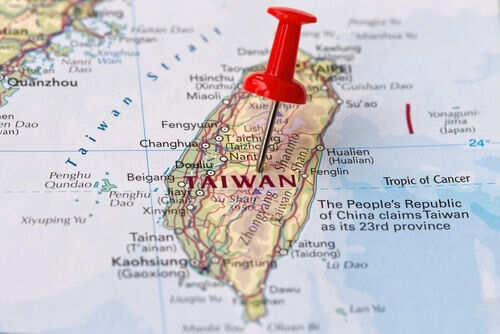
Taiwan’s president William Lai Ching-te told reporters he hopes a proposed $14 billion United States weapons package will be approved “as soon as possible,” stressing that the island rejects unification with China and must strengthen its own defense.[5] Taiwan leans heavily on U.S. backing to counter growing military pressure from Beijing, which claims the island and has not ruled out using force.[4] Lai’s government plans to lift defense spending to more than three percent of its economy, including U.S. systems and homegrown drones.[3]
For people in Taiwan, this is not an abstract debate. Chinese jets and ships push near their airspace and waters on a regular basis. Taipei sees advanced missiles, rockets, and drones as a basic shield against a much larger neighbor. At the same time, many Americans watching from home see another massive foreign deal, more taxpayer-backed hardware, and little say over why their money and factories are tied up in yet another tense corner of the world.
Why Washington is dragging its feet on a deal Congress wants
United States lawmakers already backed the new package, which would be one of the largest arms sales to Taiwan ever, but the deal still needs formal approval from President Trump’s team before it can move.[1] A senior Navy official told senators the administration has put a “pause” on this $14 billion sale so the Pentagon can be sure it has enough munitions for ongoing operations in Iran.[1] Secretary of State Marco Rubio has said the deal is “under review,” signaling that timing is a political choice, not a simple paperwork step.[5]
That mix of reasons sets off alarms for people on both the right and the left. Conservatives see a familiar pattern: Washington promising “America First” while U.S. forces and stockpiles stay stretched across yet another Middle East war. Liberals see an unelected national security class using a faraway conflict and China diplomacy to override open debate. Both sides can recognize how easily a $14 billion decision becomes a bargaining chip in high-level talks, instead of a straightforward question of law and strategy.
Deterrence, diplomacy, and an industrial base running on fumes
Lai insists that Taiwan’s efforts to guard its own security and refuse rule by the Chinese Communist Party should not be viewed as a provocation, and he says U.S. security commitments under American law remain intact.[14] Analysts note that arms sales to Taiwan have long served several U.S. goals at once: signaling willingness to stand up to China, keeping a military balance across the Taiwan Strait, and feeding a powerful defense industry.[9] That mix almost guarantees constant friction, especially when Washington is also sending large quantities of weapons to other conflicts.
Today the basic problem is not only politics but capacity. Research tracking Taiwan’s orders shows a long-running backlog in U.S. arms deliveries, driven by production bottlenecks and slow timelines from approval to shipment.[20] Taiwan’s queue of undelivered systems has grown into tens of billions of dollars. The $14 billion package would pile on top of delays in jets, torpedoes, and other weapons that are already stuck in the pipeline. This is what happens when a small circle of decision-makers keeps promising more security than the system can actually produce.
Global delays, local frustration, and who really benefits
The pause on Taiwan’s package is not unique. Recent reporting shows the United States has warned allies in Europe and Asia that their weapons deliveries could also be slowed so Washington can rebuild its own stocks, including missiles promised to Japan and systems for countries like Norway, Estonia, and Lithuania.[23] At the same time, the administration rushed through $8.6 billion in “emergency” sales to Middle Eastern partners, skipping some normal checks in the name of urgency.[23] That double standard feeds the sense that insiders bend the rules when it suits them.
🔴 Taiwan seeks $14bn US arms sale approval as Beijing escalates pressure
Taiwan's President William Lai Ching-te said Thursday he hopes the United States approves a $14 billion arms sale "as soon as possible", reiterating the island "rejects unification" with China.
A top US… pic.twitter.com/PBauSun405— NewsTongue (@NewsTongueX) June 18, 2026
Many Americans who are tired of forever wars, culture fights, and economic squeeze feel this story in their gut. They see Congress and the White House move fast on huge weapons deals, yet move slowly on border control that actually works, fair trade, or relief from inflation. They see elites talk about “deterrence” and “multipolar order” while local communities deal with crime, debt, and shrinking opportunity. The Taiwan debate is a real security issue—but it is also another example of a foreign policy machine that rarely answers to the people paying for it.
Sources:
[1] Web – Taiwan president says hopes for $14 bn US arms sale ‘as soon as …
[3] Web – Iran war, China thaw complicate U.S. support for Taiwan
[4] Web – US navy chief says $14bn arms sale to Taiwan paused due to Iran war
[5] Web – Taiwan says US hasn’t notified it of any pause in arms sale – AP News
[9] YouTube – U.S. Pauses $14 Billion Arms Sales to Taiwan | China in Focus
[14] Web – Taiwan president says hopes for $14 bn US arms sale ‘as …
[20] YouTube – Will Trump Approve US$14B Arms Sale? | Taiwan Hits Back at China’s …
[23] Web – Taiwan Arms Backlog, June 2024: First Arms Sales to the Lai Ching …