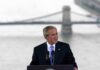
Kentucky Senator Rand Paul’s track record of defying presidents from both parties reveals a rare constitutional conservative willing to prioritize libertarian principles over party loyalty, even as his independence strains relationships within a Trump-dominated GOP now entangled in the very foreign conflicts he warned against.
Story Snapshot
- Rand Paul voted against Trump 26% of the time during his first term, making him the least aligned Republican senator with the administration
- Paul has consistently opposed executive overreach through filibusters and legislative blocks spanning Obama and Trump presidencies, focusing on surveillance powers and war authorizations
- His 94% Heritage Action conservative score demonstrates ideological consistency while his 74% Trump alignment underscores principled independence on civil liberties and foreign intervention
- Paul’s warnings against granting presidents unchecked war powers resonate differently in 2026 as MAGA supporters question the Iran conflict Trump promised to avoid
A Decade of Checking Presidential Power
Rand Paul entered the Senate in 2011 riding the Tea Party wave with a mission to constrain federal overreach, and he has delivered on that promise regardless of which party controls the White House. From his February 2011 vote against Patriot Act extensions under Obama to his 2017 opposition to Authorization for Use of Military Force expansions under Trump, Paul has maintained a consistent pattern of blocking what he views as unconstitutional power grabs. His 10.5-hour filibuster in May 2015 against Patriot Act surveillance provisions demonstrated his willingness to stand alone against bipartisan consensus when constitutional principles were at stake.
The Libertarian Voice in a Populist Party
Paul’s political positions distinguish him sharply from mainstream Republicans who prioritize party unity over ideological consistency. While he supported Trump’s 2017 tax cuts, he blocked certain Affordable Care Act repeal efforts and revealed the impeachment whistleblower’s name in 2019, actions that isolated him from GOP leadership. His lawsuit against the IRS over FATCA in 2014 and his consistent push for Federal Reserve audits through the Federal Reserve Transparency Act reflect his father Ron Paul’s libertarian influence. These stances appeal to constitutionalists frustrated with both establishment Republicans and what they now see as Trump’s broken promise to avoid new wars.
Checking Trump Without Abandoning Conservatism
Paul’s relationship with Trump exemplifies the tension between MAGA loyalty and constitutional conservatism. FiveThirtyEight identified Paul as the least Trump-aligned Republican at 74% agreement by 2018, yet Heritage Action scored him 94% conservative in the 117th Congress with a lifetime rating of 90%. This gap reveals Paul’s selective support: backing tax reform while opposing expansions of presidential war powers. His 2017 statement that an AUMF amendment “grants Trump whatever he wants” on military force proved prescient as the president he partially supported launched the Iran intervention Paul’s base now questions.
Fiscal Accountability Amid War Spending Concerns
As chair of the Homeland Security Committee, Paul has returned $8.3 million to the Treasury and maintained a perfect record of never voting for unbalanced budgets, credentials that resonate with conservatives angry about deficit spending. His blocks on legislation have ranged from a $36 million refugee resettlement bill to IRS treaty expansions, actions supporters view as protecting taxpayer dollars and privacy. Critics argue these moves obstruct governance, but for voters now questioning why their tax dollars fund another Middle Eastern conflict after being promised America First non-interventionism, Paul’s fiscal hawkishness offers a contrast to the bipartisan spending that finances regime change wars.
Rand Paul on being a Republican willing to check the president on various policies
Kentucky Sen. Rand Paul addresses President Trump's decision to launch strikes against Iran, the new Department of Homeland Security secretary and the…
Read more:https://t.co/L7Xn5pj35y pic.twitter.com/EhoI5LkcWr— 𝗫 𝗡𝗼𝘁𝗶𝗳𝗶𝗰𝗮𝘁𝗶𝗼𝗻 (@WeDesist) March 29, 2026
Paul’s independence carries political costs in today’s Republican Party, where Trump loyalty often trumps policy debates. His 2021 impeachment motion was defeated 55-45 with only five Republicans joining him, illustrating his isolation even when defending the former president. Yet his willingness to challenge executive authority on surveillance, spending, and war powers establishes a precedent for constitutional checks that many in the MAGA movement now wish more Republicans had enforced. As frustration grows over energy costs tied to Middle Eastern instability and military commitments that contradict campaign promises, Paul’s decade-long pattern of saying “no” to presidential overreach looks less like obstruction and more like the oversight voters thought they were electing Republicans to provide.
Sources:
Heritage Action Scorecard – Rand Paul
Political positions of Rand Paul – Wikipedia
Rand Paul | Biography & Facts – Britannica
Chairman Rand Paul – Senate Homeland Security Committee